The Espresso Grinder Guide: Why It Outranks Your Machine
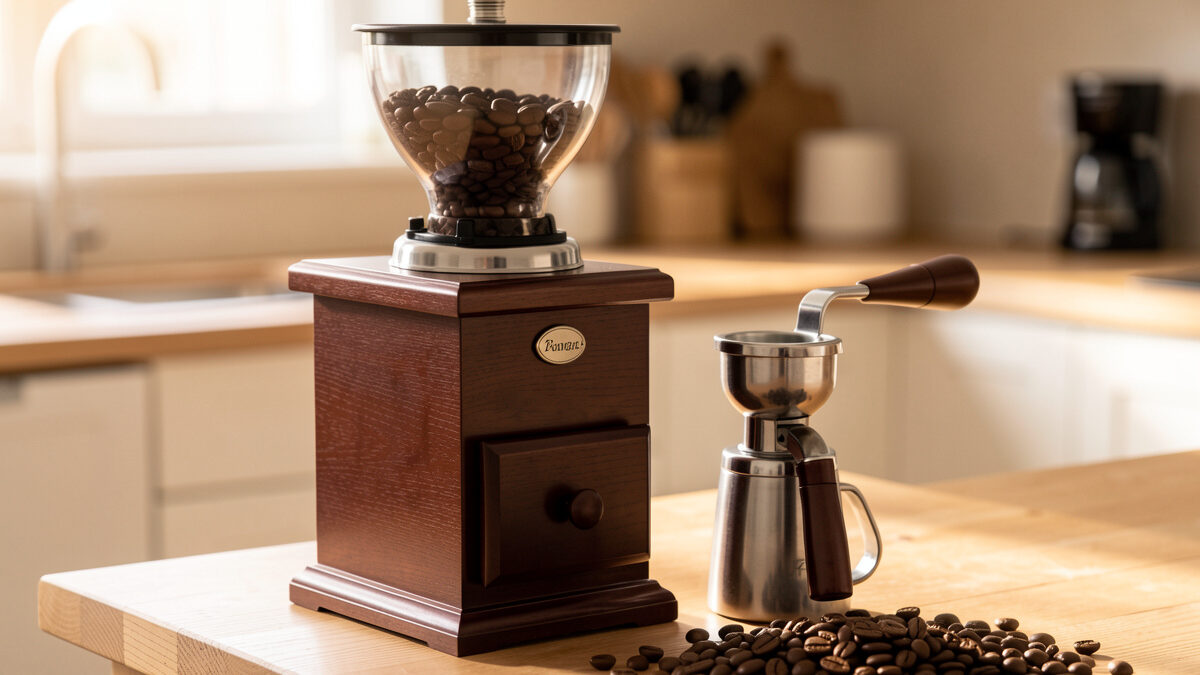
If you only have money for one upgrade in your espresso setup, spend it on the grinder, not the machine. The grinder is the single biggest lever on what ends up in the cup — it controls grind size, grind consistency, and how cleanly you can dial a shot. A great grinder on a modest machine pulls better espresso than a great machine fed by a bad grinder, every single time. That’s not a hot take; it’s the most repeatable result on my counter, and once you’ve tasted it side by side you stop arguing about it.
I run espresso the way I run every other bench in my workshop: change one variable, read the result, log it, repeat. And the variable that moves the cup most violently isn’t the boiler, the PID, or the pre-infusion profile — it’s the particle bed the water has to pass through. Get the grinder right and dialing in becomes a calm, ordered process. Get it wrong and you’ll spend years blaming your machine for problems the grinder created. This guide is the map of that whole decision: what a grinder actually does, why it beats the machine for your money, how burr type and retention and adjustment mechanism change the cup, and which grinder class is right for the espresso you actually drink.
Why the grinder beats the machine for your money
Espresso is a process-control problem. You have roughly three variables that matter — dose, yield, and time, worked through a target brew ratio — and the only way to hit a target is to change the resistance of the puck so the water passes through in the right window. That resistance is set almost entirely by grind size and grind consistency. The machine’s job is comparatively simple: deliver hot water at around nine bar at a stable temperature. A competent machine does that. What it cannot do is fix a grinder that produces a chaotic spread of particle sizes.
Here’s the mechanism. When a grinder produces a wide distribution of particle sizes — a pile of boulders mixed with a cloud of fines — water can’t extract evenly. The fines over-extract and go bitter while the boulders under-extract and stay sour, and you get both faults in the same cup. No machine setting rescues that. Worse, an inconsistent grinder makes dialing in miserable: every adjustment behaves unpredictably because the bed’s behaviour is noisy. A good grinder narrows that distribution, and suddenly your shots become repeatable. You move the dial one step and the shot moves one predictable step. That repeatability is the entire game, and it’s why I tell everyone to fix the grinder before they so much as look at a shinier machine.
There’s an economic version of this argument too, and it’s brutal. Spend an extra few thousand kronor on the machine and you’re mostly buying temperature stability and convenience — real, but marginal, gains for someone still learning. Spend the same on the grinder and you move from “I can’t get this bean to taste like anything” to “I can dial any bag in three shots.” The grinder is where money reaches the cup. Everything past a solid grinder is increasingly cosmetic. The fundamentals of working those three variables live in my guide to dialing in espresso — but none of it lands cleanly without a grinder that can hold a setting.
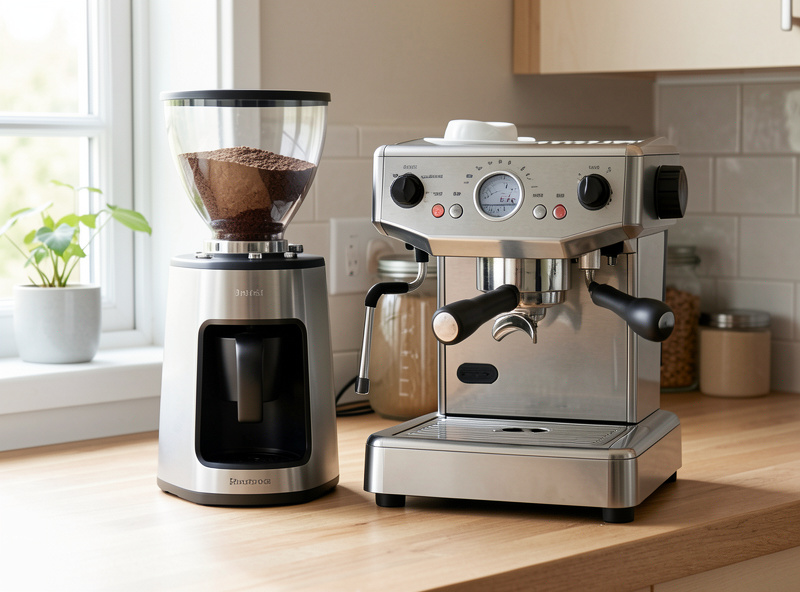
What a grinder actually controls in the cup
It helps to be precise about what you’re buying when you buy a grinder, because the marketing buries it under burr-diameter numbers and motor wattage. Three things actually matter, in this order:
- Grind size, finely adjustable. Espresso lives in a narrow band of fineness, and the difference between a good shot and a choked or gushing one can be a hair of adjustment. The grinder has to let you make small, repeatable moves inside that band. This is the adjustment mechanism question, and it’s why stepless versus stepped adjustment is a real decision and not just a spec-sheet line.
- Grind consistency (the particle distribution). This is the burrs’ job — their geometry, sharpness, and alignment. A tight distribution is what gives you clean, sweet, repeatable shots. It’s the single most important quality difference between a cheap grinder and a good one, and it’s largely set by burr type and geometry.
- Workflow honesty (retention and dosing). A grinder that holds back a gram of old coffee inside it and hands you yesterday’s grounds is lying to your scale. Retention is why single-dosing exists, and it’s the difference between weighing your dose and actually getting it.
Notice what’s not on that list: motor wattage, burr diameter as a headline number, build weight, the colour of the anodising. Those are either secondary or pure cosmetics. A 64mm flat in a well-aligned grinder beats an 83mm flat in a sloppy one. Diameter is a lever on throughput and a mild lever on consistency; it is not the thing you’re buying. You’re buying a tight distribution and fine, repeatable adjustment. Keep that straight and the whole market suddenly makes sense.
The grinder classes, and who each is for
Home espresso grinders sort into a handful of classes, and the right one depends entirely on the espresso you actually drink and how you live with your gear. I’ve run every one of these side by side against the same beans on the same counter, and the verdicts below come from logged shots, not spec sheets.
Entry electric (the gateway)
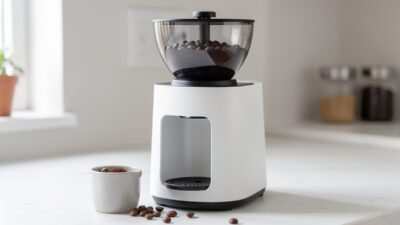
This is the sub-300 USD electric grinder — the first thing that’s genuinely good enough for espresso rather than just “a grinder that technically goes fine enough.” A decent entry electric gives you a tight-enough distribution and fine-enough adjustment to dial real shots and learn the craft. It’s where most people should start, and it’s exactly the segment I dig into in the best espresso grinder under 300 breakdown. The compromise is usually higher retention and a coarser adjustment than the tier above.
Single-dose electric (the enthusiast standard)
Single-dosing means you weigh exactly the beans you want for one shot, grind all of them, and the grinder gives (nearly) all of them back. No hopper full of stale beans, near-zero retention, dose freshness on tap, and the freedom to switch beans between shots. It’s become the default workflow for serious home baristas, and for good reason — but it’s not automatically worth the premium for everyone. Whether the single-dose grinder is worth it depends on how many beans you rotate and how much you care about the workflow.
Hand grinders (don’t underestimate them)
A good hand grinder will out-grind most sub-300 electrics on consistency, full stop. The premium hand-grinder burr sets are excellent, retention is essentially zero by design, and there’s no electronics to fail. The cost is the daily effort — grinding espresso-fine by hand is real work, and whether you’ll keep doing it every morning is the honest question. I cover exactly that in using a hand grinder for espresso daily. For travel, for budgets, and for people who genuinely don’t mind the cranking, it’s one of the best value plays in espresso.
Prosumer and shop-tier flats (diminishing returns, real differences)
Above the enthusiast single-dosers sit large-format flat-burr grinders that chase the cleanest, most separated cup — the kind of clarity that makes a great light roast sing. The differences are real and tasteable, but they’re refinements, not transformations, and the price climbs fast. This is firmly upgrade-path territory, not where anyone should start.
Grinder class comparison
| Class | Typical price band | Consistency | Retention | Best for |
|---|---|---|---|---|
| Entry electric | $120–300 | Good enough to learn | Moderate–high | First real grinder; one or two beans on rotation. |
| Single-dose electric | $350–900 | Very good | Near zero | Bean rotators; freshness and workflow obsessives. |
| Hand grinder (premium burrs) | $150–400 | Very good | Essentially zero | Travel, budget-consistency, low daily volume. |
| Prosumer / shop-tier flat | $900+ | Exceptional clarity | Varies | Light-roast clarity chasers; upgrade-path end game. |
Burr type: flat versus conical, in the cup
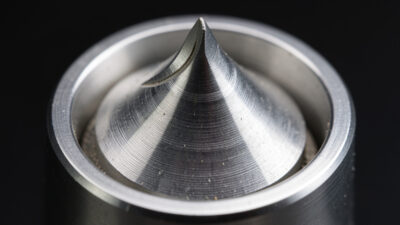
The flat-versus-conical debate gets framed as a religious war, and it shouldn’t. Both geometries make excellent espresso. The honest, tasted summary: conical burrs tend to give a slightly more textured, heavier, syrupy shot with a touch more mid-range body; flat burrs tend to give a more separated, clear, articulate shot where individual flavours stand apart. Neither is “better” — they’re different flavour signatures, and which you prefer depends on the beans and the cup you’re chasing.
What matters far more than the geometry is the quality of the implementation: sharpness, alignment, and burr-set design swamp the broad flat-versus-conical distinction. A well-aligned conical beats a poorly-aligned flat and vice versa. I unpack exactly what you taste from each, and when the difference is actually audible in the cup, in flat versus conical burrs for espresso. The short version for buyers: don’t pick a grinder because it’s conical or flat — pick a good grinder, and let its burr geometry be a flavour preference, not a deciding spec.
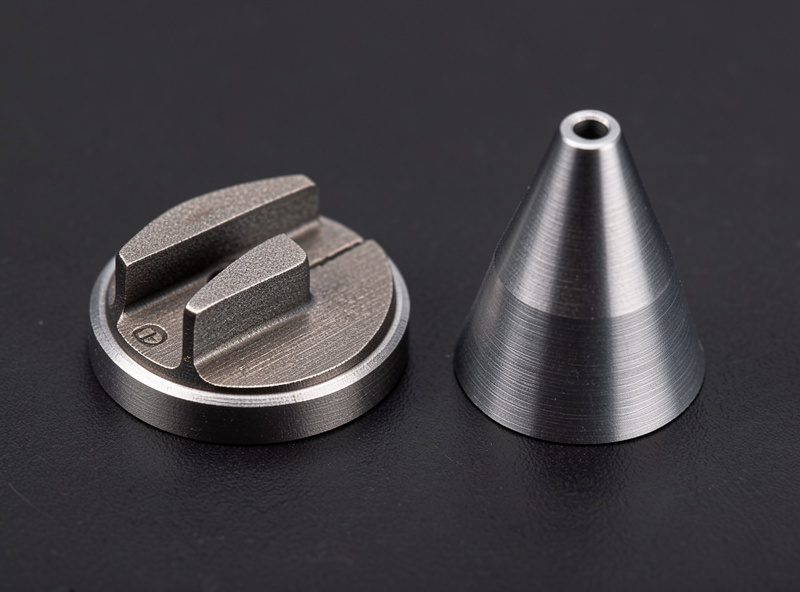
Retention: the gram that lies to your scale
Retention is the coffee that stays inside the grinder after you grind — trapped in the burr chamber, the chute, the exit path. It matters for two reasons. First, freshness: retained grounds are stale by the next shot, and they come out mixed into your next dose, dragging flavour down. Second, dosing accuracy: if you weigh 18 grams of beans in but a gram stays behind and a gram of yesterday’s comes out, your scale is reading a fiction. For people chasing repeatable shots, that’s maddening.
This is the entire reason single-dosing and low-retention designs exist. A near-zero-retention grinder gives back what you put in, fresh, every time. I explain how retention actually works, how to measure your grinder’s, and the bellows-and-tapping tricks that reduce it, in coffee grinder retention explained. If your shots are inexplicably inconsistent bag to bag, retention is one of the first suspects I’d check.
Adjustment mechanism: stepless versus stepped
How a grinder lets you change grind size is more important than it sounds. Stepped grinders click between defined positions; stepless grinders move continuously, letting you land anywhere. For espresso — which lives in a razor-thin band of fineness — the ability to make micro-adjustments can be the difference between hitting your target and being stuck one click too fine and one click too coarse with nothing in between. That said, plenty of excellent espresso grinders are stepped with fine-enough steps, and stepless brings its own annoyance: no repeatable reference to return to. I lay out the real trade-off in stepless versus stepped adjustment. For a single-machine, single-bean household, fine-enough steps are plenty; for someone chasing the edge of a light roast, stepless earns its keep.
Burrs wear out: when to replace them
Burrs are consumables. They’re hard steel (or ceramic), but every gram of coffee that passes between them dulls them a little, and dull burrs grind worse — more fines, a muddier distribution, a shot that won’t dial the way it used to. Most home grinders go a very long time before this matters, but it does eventually matter, and the symptoms are sneaky because they creep in slowly. I cover the signs, the rough lifespan by burr material, and how to tell a worn burr from a dialing problem in when to replace coffee grinder burrs. If your trusty grinder suddenly “can’t make a good shot anymore” after years of service, the burrs are a prime suspect — and replacing a burr set is far cheaper than replacing the grinder.
How to actually choose: the decision in order
Strip away the brand worship and the buying decision is short. Work it in this order:
- Set a real budget, grinder-first. If you’re building a setup from scratch, weight the budget toward the grinder. A modest machine and a good grinder beats the reverse.
- Pick the class by your workflow. One or two beans, simplicity, lower cost → entry electric. Rotating beans, freshness obsession → single-dose. Travel, budget consistency, low volume → hand grinder. Light-roast clarity chasing → prosumer flat.
- Inside the class, buy consistency and adjustment. Read the distribution quality and the fineness of adjustment, not the burr diameter or the motor wattage.
- Treat burr type as a flavour preference, not a deciding spec. Both geometries are excellent. Pick the good grinder; let conical-versus-flat be the tiebreaker by the cup you want.
- Plan for retention and burr wear as ownership realities. They’re not deal-breakers — they’re things you’ll manage over the life of the grinder.
Do that and you’ll skip the most expensive mistake in home espresso: buying the prettiest machine and starving it with a grinder that can’t feed it. The grinder is the engine. Everything else is the chassis.
The kit that earns its place beside the grinder
A grinder only pays off if you can read what it’s doing. The two cheapest tools that make a good grinder visible are a 0.1-gram coffee scale — so you actually know your dose and yield rather than guessing — and a WDT distribution tool, which breaks up the clumps a grinder throws and lets the grind quality show in the cup instead of being wrecked by channeling. Neither is glamorous; both do more for your shots per krona than almost any machine upgrade.
As an Amazon Associate I earn from qualifying purchases. These are tools I actually use on my own bench; buying through the links costs you nothing extra.
The polymath aside: it’s the same loop
I’ll be honest about why this clicks for me. Dialing an espresso grinder and trimming a 3D printer’s first layer are the same problem: a process with a few coupled variables, where the only way through is to change one thing, read the result, log it, and repeat. The 0.1-gram scale under my portafilter is the same scale discipline I bring to every other bench in the workshop. Espresso is just the calibration I happen to drink. Treat the grinder as the precision instrument it is — not a coffee accessory — and the whole craft turns from mysticism into engineering you can taste.
Related guides
- How to dial in espresso: the full dose-yield-time method
- Best espresso grinder under $300 for espresso
- Is a single-dose grinder worth it?
- Flat versus conical burrs: the taste difference
- Coffee grinder retention explained
- Using a hand grinder for espresso daily
- Stepless versus stepped adjustment
- When to replace your grinder’s burrs
Frequently asked questions
Is the grinder or the espresso machine more important?
The grinder. It controls grind size and grind consistency, which set how evenly the water extracts the puck — the single biggest lever on what ends up in the cup. A good grinder on a modest machine beats a great machine fed by a poor grinder every time. If you only have budget for one upgrade, upgrade the grinder.
Do I need a dedicated espresso grinder?
For espresso, yes — you need a grinder that can grind fine enough and adjust precisely enough inside the narrow espresso band. Many all-purpose grinders are too coarse or too imprecise at the fine end to dial espresso properly. A grinder built or rated for espresso gives you the fine, repeatable adjustment the shot demands.
How much should I spend on an espresso grinder?
A genuinely capable entry electric starts around 120 to 300 USD and is enough to learn and pull good shots. Single-dose enthusiast grinders run 350 to 900, and prosumer flats climb past 900. If you are building a setup from scratch, weight the budget toward the grinder rather than the machine — that is where the money reaches the cup.
Are conical or flat burrs better for espresso?
Neither is universally better — they are different flavour signatures. Conical burrs tend to give a heavier, more textured, syrupy shot; flat burrs tend to give a cleaner, more separated, articulate cup. The quality of the burr set — sharpness and alignment — matters far more than the geometry. Pick a good grinder and treat burr type as a flavour preference.
What is grinder retention and why does it matter?
Retention is the coffee that stays trapped inside the grinder after grinding. It matters because retained grounds go stale and come out mixed into your next shot, hurting freshness, and because it throws off dosing accuracy — what you weigh in is not exactly what comes out. Low-retention and single-dosing designs exist specifically to fix this.
Do espresso grinder burrs wear out?
Yes. Burrs are consumables that dull slowly with use, eventually producing more fines and a muddier grind that no longer dials the way it used to. Most home grinders last a very long time before this matters, and a replacement burr set is far cheaper than a new grinder. If a long-trusted grinder suddenly cannot make a good shot, worn burrs are a prime suspect.
Related guides — Complete Spoke List
Full spoke list of the Espresso Grinders cluster:
- “Stepless vs Stepped Grinder Adjustment for Espresso”
- “Using a Hand Grinder for Espresso Daily: The Reality”
- “Coffee Grinder Retention Explained (and How to Beat It)”
- “Flat vs Conical Burrs: What You Actually Taste”
- “Is a Single-Dose Grinder Worth It? An Honest Take”
- “Best Espresso Grinder Under $300: What Actually Matters”
- “When to Replace Your Coffee Grinder Burrs”
More From This Site
Other guides across espresso grinders and the rest of the Espressospecs library:
- “Renting vs Buying an Espresso Machine: The Honest Math”
- “Espresso Machine Features That Actually Matter”
- “Espresso Machine for a Small Kitchen: How to Choose”
- “Single Boiler vs Heat Exchanger Explained”
- “Best Espresso Machine Under $500: Honest Picks”
- “Used Espresso Machine Buying Checklist”
- “Is the Gaggia Classic Pro Worth It? An Honest Verdict”
- “First Espresso Machine: A Beginner Buying Guide”
- “Stepless vs Stepped Grinder Adjustment for Espresso”
- “Using a Hand Grinder for Espresso Daily: The Reality”
- “Coffee Grinder Retention Explained (and How to Beat It)”
- “Flat vs Conical Burrs: What You Actually Taste”
- “Is a Single-Dose Grinder Worth It? An Honest Take”
- “Best Espresso Grinder Under $300: What Actually Matters”
- “When to Replace Your Coffee Grinder Burrs”
- “Reading a Bottomless Portafilter Pour: What Your Shot Is Telling You”
- “Espresso Yield by Drink Type: Match the Shot to the Cup”
- “How Long Should an Espresso Shot Take? (Time Is a Read-Out)”
- “The Right Dose for an 18g Basket: It Is All About Headspace”
- “Espresso Shot Too Bitter? The Fix
- “Espresso Ratio Explained: Why 1:2 Is Your Default (and When to Break It)”
- “Espresso Shot Too Sour? The Fix
- “How to Dial In Espresso: Dose