Coffee Grinder Retention Explained (and How to Beat It)
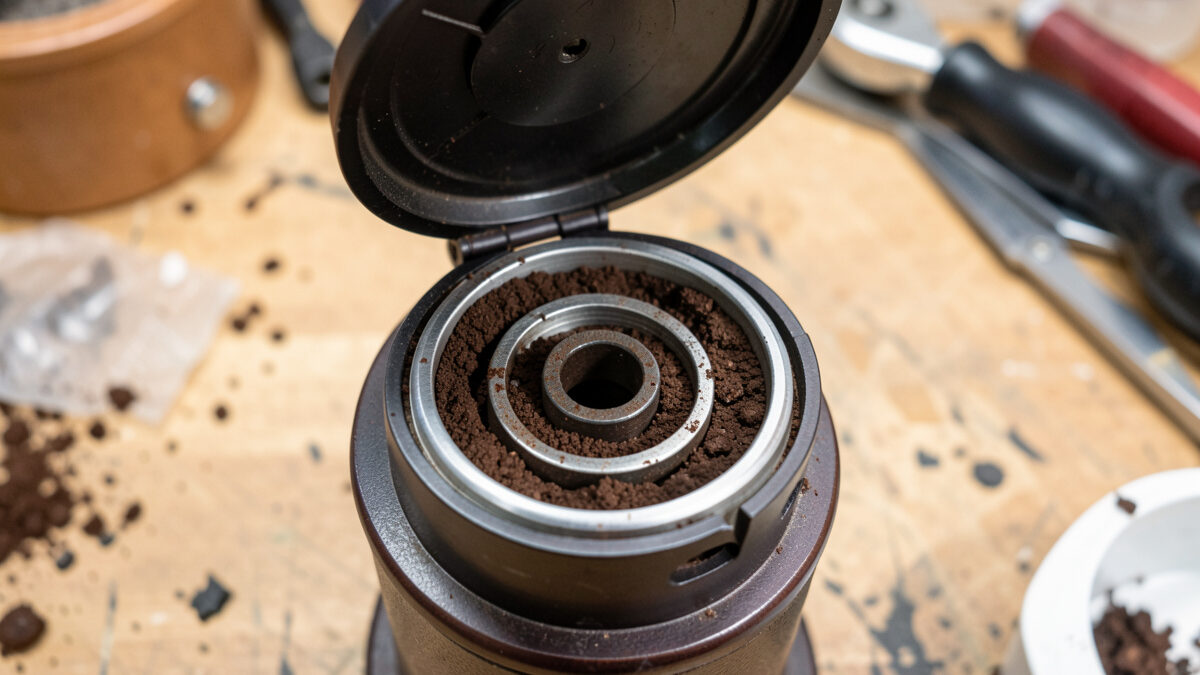
Grinder retention is the coffee that stays trapped inside the grinder after you grind instead of coming out into your dose. It matters for two reasons: the retained grounds go stale and contaminate your next shot, and the gram-or-so left behind throws off your dosing so the weight on your scale lies to you. Low-retention designs and single-dosing exist specifically to defeat it, and a few simple habits — bellows, tapping, a settling routine — cut it on almost any grinder. Once you understand retention, a whole category of “why are my shots randomly inconsistent?” mysteries dissolves.
This is one of those topics that sounds like trainspotting nerdery until it’s quietly ruining your espresso. If your shots drift bag to bag for no reason you can pin down, or your carefully-weighed 18 grams for the basket keeps coming out as 17.3 out, retention is a prime suspect. Let me explain exactly what it is, why it does what it does, how to measure yours, and how to beat it — without buying a new grinder. It’s a core part of why the grinder matters more than the machine in the first place.
What retention actually is
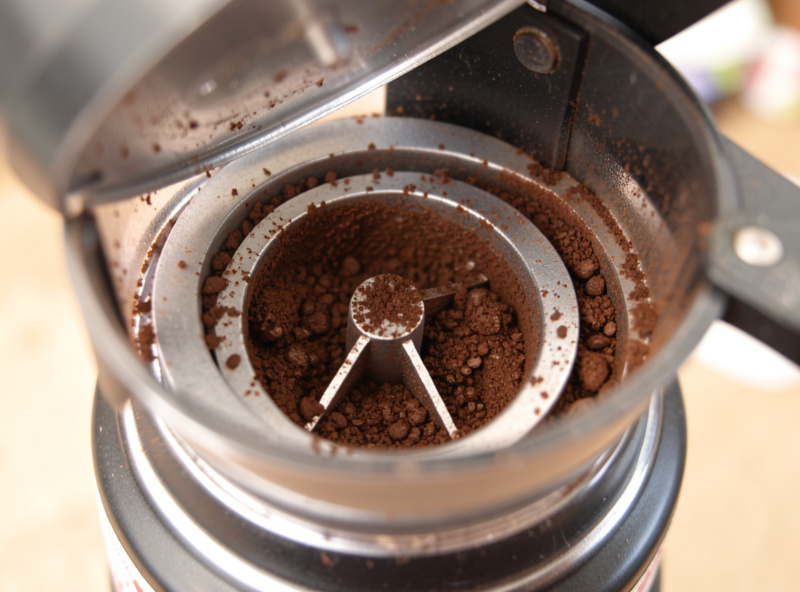
When beans pass between the burrs, the resulting grounds have to travel out of the burr chamber, down a chute, and into your portafilter or cup. Along that path, some grounds get stuck — clinging to the burrs, lodged in the chute, held by static against plastic surfaces. That stuck coffee is retention. It doesn’t come out this shot; it sits inside until the next grind shoves some of it loose, mixed in with fresh grounds.
Two kinds matter. Static retention is the baseline amount a grinder always holds — grind 18 grams, get 17 out, and roughly a gram lives in there permanently, only ever exchanging old for new. Dynamic retention (or “grind-by-grind” carryover) is how much of this grind stays behind to come out in the next. High retention means more staling and more dosing drift; low retention means what goes in comes out, fresh, now.
Why retention hurts your espresso
Two distinct problems, both real:
- Staleness and contamination. Retained grounds sit exposed to air inside the grinder, going stale, and then come out blended into your next shot. You think you’re pulling fresh-ground coffee; you’re actually pulling mostly-fresh with a stale tax. On a high-retention grinder switching beans, the contamination is worse — your first “new bean” shot is partly the old bean still trapped inside.
- Dosing inaccuracy. This is the one that drives logging baristas mad. You weigh 18.0 grams of beans in, but a gram stays behind and a gram of the previous grind comes out, so your actual ground dose isn’t what your bean weight said. Your dose-and-yield discipline — the foundation of dialing in — quietly drifts. You chase grind settings to fix a problem that’s really a dosing-weight problem.
This is exactly why I flagged retention as one of the workflow-honesty pillars of grinder quality. A grinder that lies to your scale undermines the entire instrumented approach to espresso.
How to measure your grinder’s retention
You don’t need lab gear — just your 0.1-gram scale and two minutes:
- Weigh out a known dose of beans, say exactly 18.0 g.
- Grind all of them, single-dose style (no hopper reserve feeding in).
- Weigh the grounds that came out.
- The difference is roughly your static retention. 18.0 in, 17.1 out means about 0.9 g held back.
Do it a few times and you’ll see your grinder’s characteristic figure. Near-zero (under ~0.2 g) is excellent and typical of dedicated single-dose designs; a gram or more is common on hopper-fed entry grinders. Neither is “broken” — it’s just the number you’re working with, and knowing it lets you compensate.
How to beat retention without a new grinder
The good news: most retention is manageable with habits and a couple of cheap tools. In rough order of effectiveness:
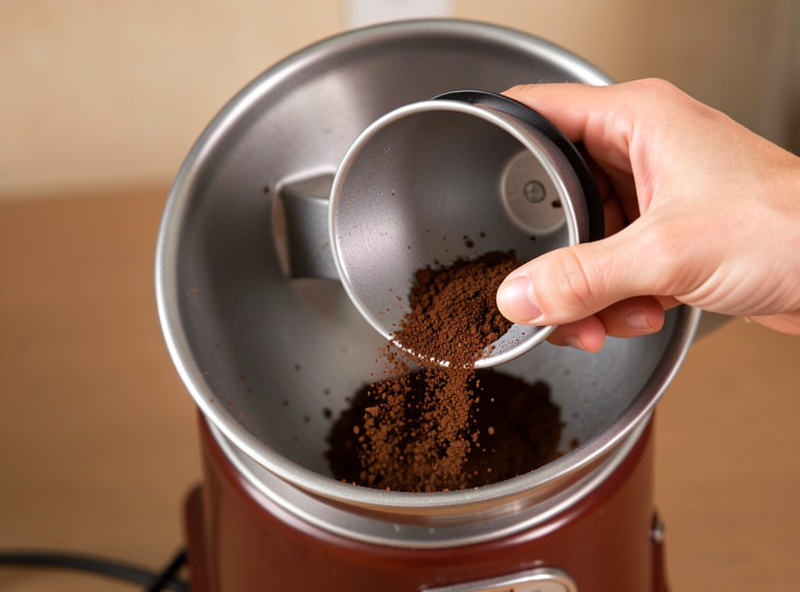
- Bellows / blow out the chamber. A puff of air through the grinder after each dose pushes stuck grounds out. Many single-dosers ship with bellows; you can add a small blower to almost any grinder. This is the single biggest lever on dynamic retention.
- The RDT trick (a spritz of water). A tiny spritz of water on the beans before grinding (the “Ross Droplet Technique”) kills the static charge that makes grounds cling. Drier grounds means fewer fly away and stick. It noticeably reduces the static mess and some retention.
- Tap and settle. Tapping the grinder firmly after grinding dislodges grounds clinging in the chute. Crude, but it works.
- Grind nose-down or use the chute design. Some grinders dose better at a slight angle or with a knock routine that clears the exit path.
Combine a bellows puff with an RDT spritz and you’ll get most hopper grinders down to a workable, repeatable carryover — close enough that your dosing stays honest. You don’t need to spend a fortune to fix retention; you need a routine.
When low retention is worth paying for
If you rotate beans constantly or you’re a dedicated logger, designed-in low retention is genuinely worth money — it’s most of the reason single-dose grinders exist. If you drink one bean and you’re not weighing every yield to the decigram, a higher-retention grinder plus good habits is completely fine. Decide by how you actually drink: retention is a problem in proportion to how much your workflow depends on freshness and dosing precision.
To work on retention you need two cheap things: a 0.1-gram coffee scale to measure it in the first place and confirm your in-equals-out, and a grinder bellows blower to clear the chamber after each dose. Together they turn retention from an invisible saboteur into a number you control.
As an Amazon Associate I earn from qualifying purchases. These are tools I actually use on my own bench; buying through the links costs you nothing extra.
Bottom line
Retention is the gram of coffee that lies to your scale and stales your next shot. Measure yours with nothing more than a scale, knock it down with a bellows puff and an RDT spritz, and the random shot-to-shot drift that retention causes largely disappears. It’s one of the cheapest fixes in espresso — a routine, not a purchase — and understanding it is what separates people who chase grind settings in circles from people who actually know what their grinder is doing.
Related guides
- The espresso grinder guide: why it beats the machine
- Is a single-dose grinder worth it?
- Flat versus conical burrs: what you taste
- How to dial in espresso: the full method
Frequently asked questions
What is grinder retention?
Grinder retention is the coffee that stays trapped inside the grinder after grinding — clinging to the burrs, lodged in the chute, or held by static — instead of coming out into your dose. It only emerges in your next grind, mixed with fresh grounds, which means staling and dosing inaccuracy.
Why does grinder retention matter for espresso?
For two reasons. First, retained grounds go stale and contaminate your next shot, hurting flavour and freshness. Second, it throws off dosing — the weight of beans you put in is not the weight of grounds that comes out, so your carefully-weighed dose drifts and your dialing-in loses its reference point.
How do I measure my grinder’s retention?
Weigh a known dose of beans, say 18.0 grams, grind them all single-dose style, then weigh the grounds that come out. The difference is roughly your static retention — 18.0 in and 17.1 out means about 0.9 grams held back. Repeat a few times to find your grinder’s characteristic figure.
How do I reduce coffee grinder retention?
Use a bellows to puff air through the grinder after each dose, spritz the beans with a tiny bit of water before grinding to kill static (the RDT trick), and tap the grinder to dislodge grounds in the chute. Combining a bellows puff and an RDT spritz gets most hopper grinders down to a workable, repeatable carryover.
Is low retention worth paying extra for?
It is worth it if you rotate beans constantly or weigh every yield precisely, since designed-in low retention keeps your dosing honest and your beans fresh — that is most of why single-dose grinders exist. If you drink one bean and do not log obsessively, a higher-retention grinder plus good habits is completely fine.