Best Espresso Grinder Under $300: What Actually Matters
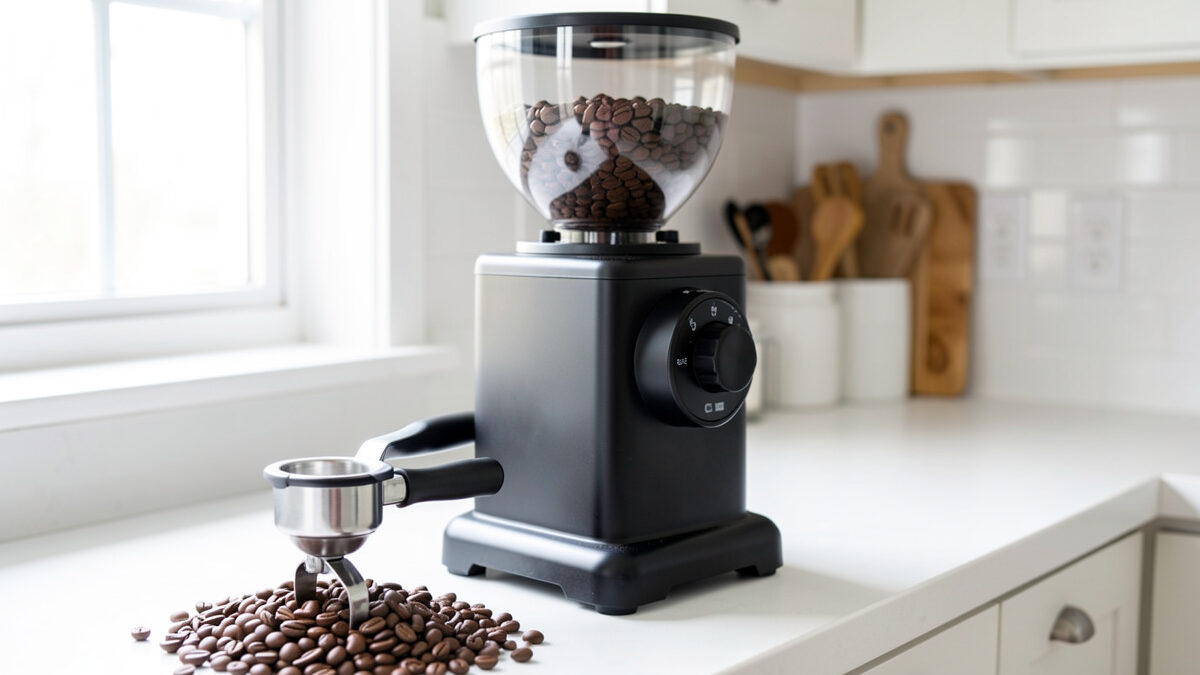
The best espresso grinder under $300 is the cheapest grinder that gives you a tight-enough particle distribution and fine, repeatable adjustment to dial espresso — and at this price that means a dedicated espresso grinder, not a do-everything one. Spend the money on consistency and adjustment, ignore the burr-diameter and wattage marketing, and you’ll get a grinder that genuinely pulls good shots and teaches you the craft. I’ve run the sub-$300 segment hard against my reference grinders, same beans, same day, and the honest news is that this price band crossed the “actually good for espresso” line years ago.
This is the most important purchase a new home barista makes, and the most commonly botched. People drop their whole budget on a shiny machine and then strangle it with a $60 blade-style or all-purpose grinder that can’t grind fine enough or evenly enough to make espresso behave. The grinder is the engine — I make that case in full in the espresso grinder guide — and the sub-$300 tier is where that engine first becomes genuinely capable. Let me show you what to look for, what to ignore, and where the real compromises hide.
What “good enough for espresso” actually requires
Espresso is unforgiving about two grinder properties, and forgiving about almost everything else. The two that matter:
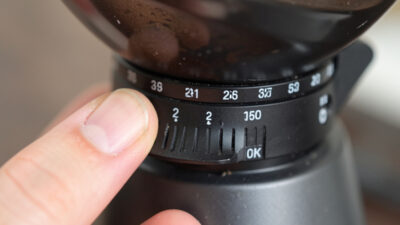
- Fine, repeatable adjustment. Espresso lives in a razor-thin band of grind size. A grinder that jumps in coarse steps will leave you stuck one notch too fine (the shot chokes) and one notch too coarse (it gushes) with nothing usable between — shot time is the read-out that tells you which way to move. Under $300 you want a grinder whose espresso range has plenty of usable adjustment resolution — many entry grinders give you stepped clicks fine enough to land a shot, and a few give you stepless micro-adjustment.
- A tight-enough particle distribution. This is the burrs doing their job: producing grounds that are mostly one size rather than a chaos of boulders and fines. Conical steel burrs are the norm at this price and they’re genuinely capable. A tight distribution is what makes your shots repeatable and lets you actually taste your dialing-in changes.
What you do not need to chase at this price: enormous burr diameter, a powerful motor, a fancy display, or a particular brand badge. A modest conical burr set, well made, beats a big sloppy one. Throughput (how fast it grinds) barely matters for a home setup pulling one or two shots. Don’t pay for grams-per-second you’ll never use.
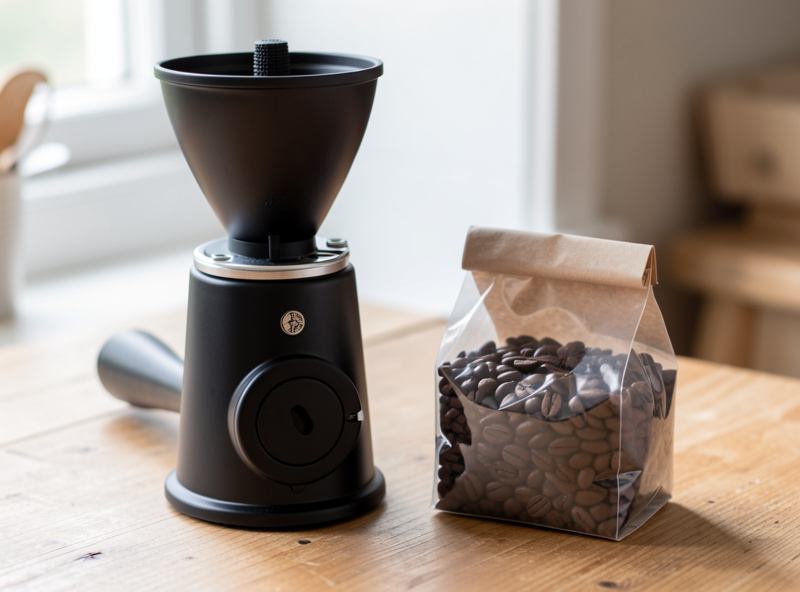
The classes you’ll find under $300
Shop this segment and you’ll meet three kinds of grinder. Knowing which is which saves you from the classic mistakes.
Dedicated entry espresso grinders (buy here)
These are conical-burr electric grinders built or clearly rated for espresso, with an adjustment range that goes fine enough and resolves finely enough to dial a shot. This is the category you want. They’re the gateway grinder that made home espresso democratic — capable, repeatable, and good enough that you’ll outgrow your skills long before you outgrow the grinder. The compromises are usually moderate-to-high retention and an adjustment that’s a touch coarser than the tier above, but neither stops you from pulling excellent shots.
All-purpose “espresso to French press” grinders (be careful)
Some grinders in this price range advertise a huge range from espresso to French press. The trap: stretching the burrs across that whole range often means the espresso end is the worst-resolved part of the dial — exactly where you need the most precision. Some do it well; many give you espresso as a marketing checkbox rather than a usable, finely-adjustable range. If espresso is your priority, a dedicated espresso grinder beats a jack-of-all-trades almost every time.
Blade grinders (never, for espresso)
A blade grinder chops coffee into a random mess of sizes — the opposite of what espresso needs. No amount of price or technique rescues it. If you’re pulling espresso, a blade grinder isn’t a budget option, it’s a non-option. Skip it entirely.
What to actually compare when shopping
| Property | Why it matters for espresso | What to look for under $300 |
|---|---|---|
| Adjustment resolution | Espresso needs micro-changes; coarse steps strand you between settings | Fine stepped clicks (or stepless) across a usable espresso range |
| Burr type | Sets distribution quality and shot repeatability | Conical steel burrs, the segment standard |
| Retention | Stale carryover and dosing inaccuracy | Lower is better; accept moderate at this price |
| Single-dose friendly? | Bean rotation and freshness | A nice bonus, not a must-have at entry |
| Burr diameter / wattage | Mostly throughput, mild consistency effect | Largely ignore as a headline spec |
The single best filter: does the grinder give you fine, repeatable adjustment across a real espresso range, and a tight distribution? If yes, the rest is detail. The flavour-signature question of conical-versus-flat barely applies here — conical dominates the price band — and I cover what that geometry actually changes in what burr geometry changes in the cup if you want to understand what you’d gain by spending up later.
The real compromise: retention
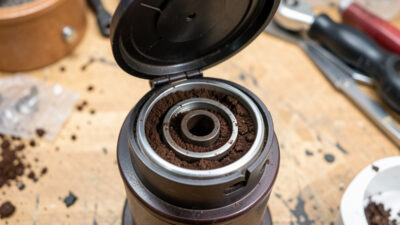
The honest weak spot of the sub-$300 tier is retention — coffee stuck inside the grinder that comes out stale in your next dose; if you want to fully understand this problem before it frustrates you, the coffee grinder retention explained breakdown covers the mechanics and the fixes in detail — coffee that stays stuck inside the grinder and comes out stale in your next dose, while throwing off how much you actually get. Entry grinders weren’t designed around single-dosing, so they tend to hold back more than the enthusiast tier. It’s manageable: a few taps, a bellows puff, or simply grinding through a couple of grams will clear most of it. But it’s the thing you’ll notice if you weigh obsessively. If near-zero retention matters to you from day one, that’s an argument to either spend up or look hard at hand grinders. I unpack the whole topic in the grinder guide.
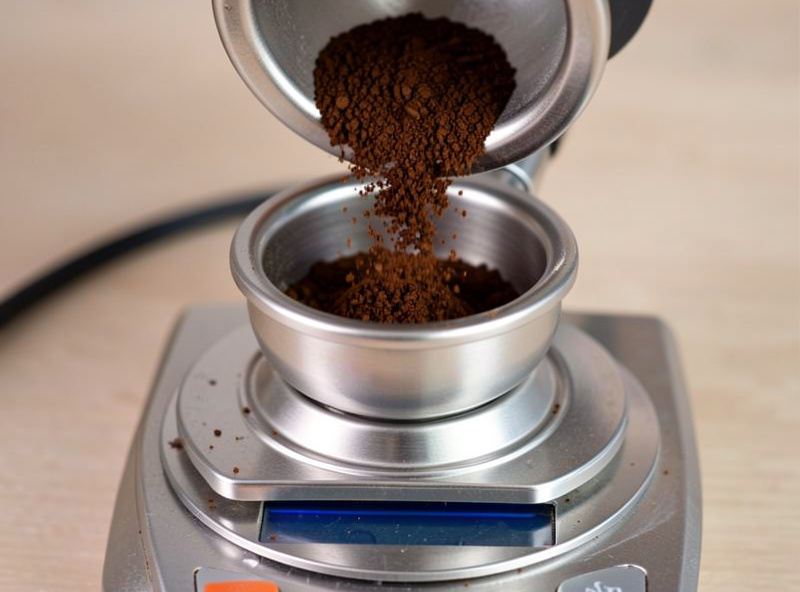
The gear that makes a budget grinder shine
A capable entry grinder rewards two cheap additions far more than it rewards spending up on the machine. First, weigh everything: a 0.1-gram coffee scale turns your dose and yield from guesses into numbers, which is the whole foundation of dialing in — start with the right dose for your basket and a target ratio. Second, deal with the clumping that budget grinders produce: a WDT distribution tool breaks up the clumps so they don’t channel and waste the grind quality you paid for. And if you want to actually see whether your puck is even, a bottomless portafilter shows channeling instantly — and reading that pour tells you whether the fault is your puck prep or your grind. Three modest tools that do more for the cup than any machine upgrade in this budget.
As an Amazon Associate I earn from qualifying purchases. These are tools I actually use on my own bench; buying through the links costs you nothing extra.
Bottom line
Under $300, buy a dedicated espresso grinder with conical steel burrs and fine, repeatable adjustment, and don’t agonise over the badge. The differences between the good options in this band are smaller than the difference between any of them and the blade grinder or all-purpose compromise you’re tempted by. Pair it with a scale and a WDT tool, accept that retention is the price of admission at this tier, and you’ll pull espresso that embarrasses café machines fed by worse grinders. Then learn to use it — the grinder only matters because it lets you control dose, yield and time, which is the whole dialing-in method.
Related guides
Frequently asked questions
Can you get a good espresso grinder under $300?
Yes. The sub-300 USD tier crossed the genuinely-good-for-espresso line years ago. A dedicated entry espresso grinder with conical steel burrs and fine, repeatable adjustment will pull excellent, repeatable shots and teach you the craft. The main compromise at this price is higher retention, not poor grind quality.
What should I look for in a budget espresso grinder?
Two things above all: fine, repeatable adjustment across a real espresso range so you can make the micro-changes espresso needs, and a tight particle distribution from a good burr set. Largely ignore headline specs like burr diameter and motor wattage — they mostly affect throughput, which barely matters for a home setup.
Is a dedicated espresso grinder better than an all-purpose one?
For espresso, almost always yes. All-purpose grinders that stretch from espresso to French press often have their worst adjustment resolution at the espresso end — exactly where you need the most precision. A grinder built for espresso concentrates its usable range where the shot lives.
Are conical burrs fine for a budget espresso grinder?
Yes — conical steel burrs are the standard at this price and they are genuinely capable. Burr geometry is a flavour preference rather than a quality ranking, and at the budget tier conical dominates and performs well. Spend on adjustment quality and distribution, not on chasing a particular burr type.
Should I buy the machine or the grinder first on a tight budget?
If you have to choose, weight the budget toward the grinder. A modest machine fed by a good grinder out-pulls a great machine fed by a poor grinder every time, because the grinder controls grind size and consistency — the biggest levers on what reaches the cup.