When to Replace Your Coffee Grinder Burrs
Replace your coffee grinder’s burrs when they’ve ground enough coffee to dull — typically signalled by a grind that suddenly won’t dial the way it used to, more dust and fines, slower grinding, and shots that go muddy and harsh no matter what you adjust. Steel burrs last a very long time in home use (often years and hundreds of kilos of coffee); the symptoms creep in slowly, which is exactly why people blame their machine instead of their worn burrs. A replacement burr set is far cheaper than a new grinder. I’ve worn burrs down and swapped them, and the before-and-after in the cup is real — a fresh set restores clarity you’d forgotten you’d lost.
Burrs are consumables, and almost nobody at home thinks of them that way until a long-trusted grinder mysteriously “stops making good espresso.” Let me lay out the honest signs, the rough lifespan, how to tell a worn burr from a dialing problem, and why this is one of the best-value fixes in espresso — restoring a grinder you already love for a fraction of replacing it. (For the bigger picture of why the grinder is the thing to invest in and maintain, see the espresso grinder guide.)
Why burrs wear out
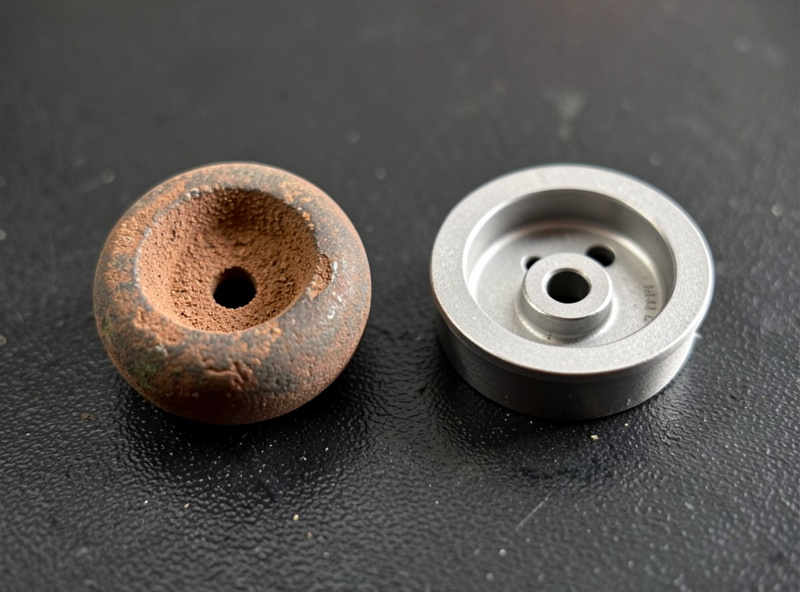
Burrs grind by shearing and crushing beans between hard cutting edges. Coffee is surprisingly abrasive, and every gram that passes between the burrs takes a microscopic toll on those edges. Over time the sharp cutting geometry rounds off. Dull burrs don’t slice cleanly — they smash and tear, producing a wider, messier particle distribution with more fines and dust. That’s the exact opposite of what espresso needs, and it’s why a worn set quietly degrades every shot.
Material matters for lifespan. Hardened steel burrs are the common espresso choice and they’re durable, lasting a very long time in home use. Ceramic burrs resist heat and corrosion and also last well but can chip if a stone or foreign object gets in. Either way, “lasts a long time” is not “lasts forever” — they all dull eventually.
The signs your burrs are worn
The symptoms creep in gradually, which is what makes them sneaky. Watch for several of these together:
- It won’t dial like it used to. The single biggest tell. Settings that gave great shots for years now produce muddy, harsh, or unbalanced results, and adjusting doesn’t behave logically anymore. The grinder has lost its old predictability.
- More dust and fines. Dull burrs produce more super-fine particles. You’ll see more dust, and your shots may run slow and bitter from over-extraction of all those fines, even at a coarser setting.
- Slower grinding. Worn burrs cut less efficiently, so a dose takes noticeably longer to grind than it used to (or feels harder on a hand grinder).
- A muddy, flat cup. The clarity and sweetness erode. Shots taste duller and harsher across the board, not on one bean but on everything — that “everything tastes a bit off lately” feeling.
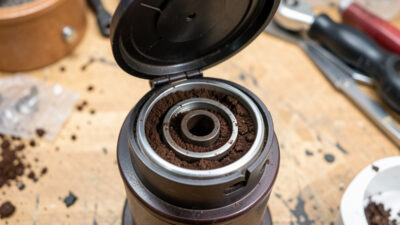
- Visible damage. If you open the grinder and the cutting edges look rounded, nicked, or chipped (especially after something hard got in), that’s a clear replace signal.
One symptom alone might be something else — but several together, especially “won’t dial like it used to” plus more fines, strongly points at the burrs.
Worn burrs vs a dialing problem
Before you blame the burrs, rule out the cheaper, more common culprits — worn burrs are rarer than the basics. Run this check:
| If you see… | Suspect first | Burrs likely if… |
|---|---|---|
| Sudden bad shots on one bean | Stale or different beans, water | It’s bad across all beans |
| Inconsistent dose weight | Retention / dosing drift | Dose is fine but grind is muddy |
| Channeling, sour/bitter mix | Puck prep, distribution | Prep is good but fines are high |
| Can’t find a good setting | Adjustment / resolution | Even good settings taste flat |
| Gradual decline over years | — | Strong burr-wear signal |
The key discriminator: worn burrs degrade everything, gradually, across all beans, and the decline tracks with how much coffee the grinder has ground over its life. A sudden problem on one bag is almost never the burrs. A slow, universal dulling over years very well might be.
Roughly how long burrs last
There’s no single number — it depends on burr material, size, and how much you grind — but the honest framing for a home user is “a long time.” Quality steel espresso burrs endure many hundreds of kilos of coffee, which for a household pulling a few shots a day translates to years, often the better part of a decade. Higher-volume use gets there faster. The practical takeaway: most home grinders never need a burr swap during typical ownership, but a heavily-used or long-owned grinder eventually will — and when the symptoms above all line up, it’s worth doing rather than assuming the grinder is “just getting old.”
Replacing burrs: cheaper than a new grinder
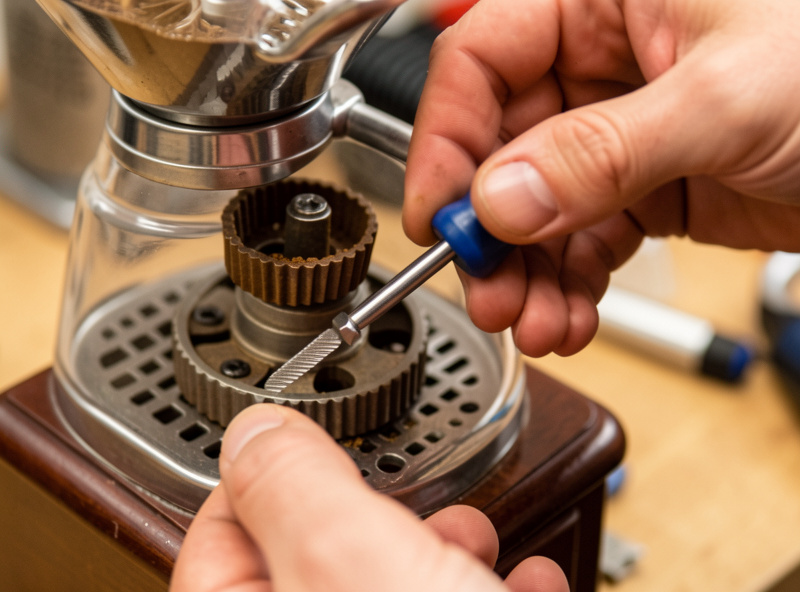
Here’s the value argument. A replacement burr set for most grinders costs a fraction of a new grinder, and swapping them is usually a modest job — remove the old set, seat the new one, re-zero your grind setting (you’ll need to re-dial, since the reference shifts with new burrs). For a grinder you otherwise love, that’s a transformation for short money: you get the clean, sharp grind of a new machine in the body you already own. I’d always check whether a quality replacement set is available before retiring a good grinder over what turns out to be worn burrs.
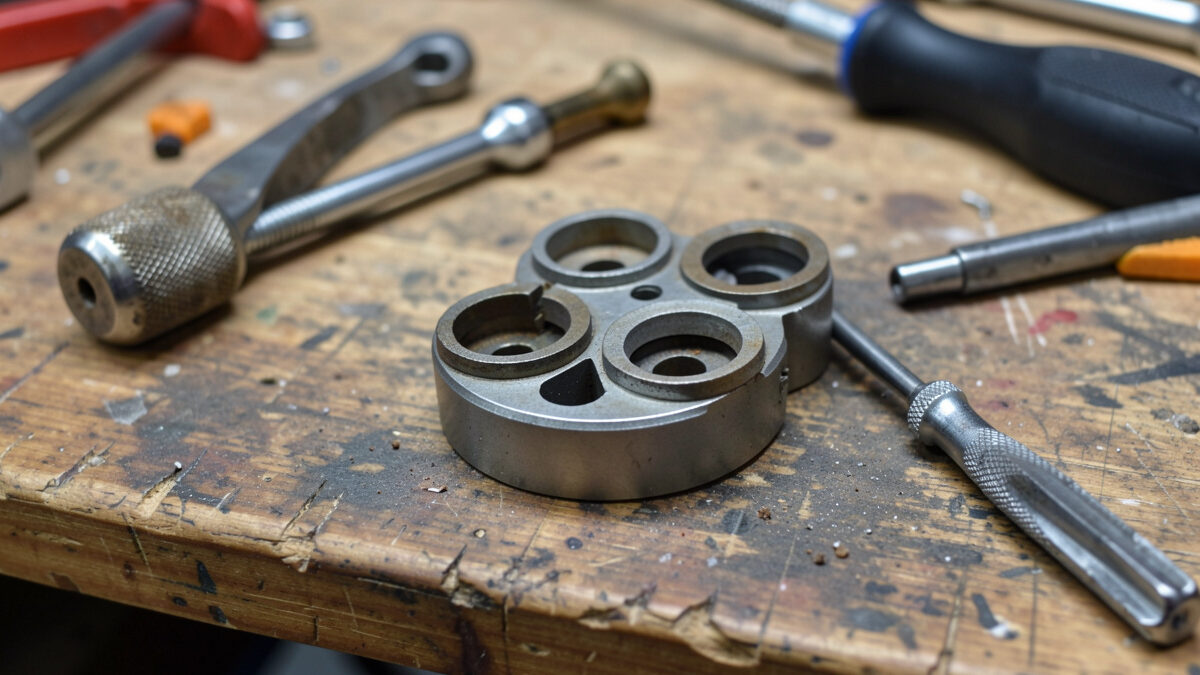
For the swap itself you’ll want a precise precision screwdriver set to remove the burr-carrier screws cleanly, and a small grinder cleaning brush to clear out the chamber and old coffee oils before seating the new set — a clean chamber and a careful re-zero are what make the new burrs perform from the first dose.
As an Amazon Associate I earn from qualifying purchases. These are tools I actually use on my own bench; buying through the links costs you nothing extra.
Bottom line
Burrs are consumables that dull slowly and quietly, eventually producing more fines, a muddier cup, and a grinder that won’t dial the way it once did. Most home grinders go years before this matters, so rule out the everyday culprits — stale beans, retention, puck prep — first. But when the decline is gradual and universal across every bean, suspect the burrs, and remember that a replacement set restores the grinder for a fraction of replacing it. Looking after the burrs is part of respecting the grinder as the precision instrument it is.
Related guides
- The espresso grinder guide: why it beats the machine
- Coffee grinder retention explained
- Stepless versus stepped adjustment
- How to dial in espresso: the full method
Frequently asked questions
When should I replace my coffee grinder burrs?
Replace them when several wear signs line up: the grinder no longer dials the way it used to, you see more dust and fines, grinding gets slower, and shots go muddy and harsh across all beans no matter how you adjust. The decline is gradual and universal. If a fresh, sharp grind no longer comes out of a long-owned grinder, worn burrs are a prime suspect.
How long do espresso grinder burrs last?
A long time in home use. Quality steel espresso burrs endure many hundreds of kilos of coffee, which for a household pulling a few shots a day is years — often most of a decade. Higher-volume use wears them faster. Most home grinders never need a burr swap during typical ownership, but a heavily-used or long-owned one eventually will.
How do I know if it’s worn burrs or a dialing problem?
Worn burrs degrade everything gradually across all beans, tracking with how much coffee the grinder has ground over its life. A sudden problem on one bag is almost never the burrs — suspect stale beans, retention, or puck prep first. A slow, universal dulling over years, with more fines and a grinder that won’t dial like it used to, points at the burrs.
Is replacing burrs cheaper than buying a new grinder?
Usually far cheaper. A replacement burr set costs a fraction of a new grinder, and the swap is typically a modest job: remove the old set, seat the new one, and re-dial since the reference shifts. For a grinder you otherwise love, fresh burrs restore the clean, sharp grind of a new machine in the body you already own.
What happens if you use a grinder with worn burrs?
Dull burrs smash and tear coffee instead of slicing it cleanly, producing more fines and a wider particle distribution. The result is muddier, harsher espresso that over-extracts the fines and won’t balance no matter how you adjust. It also grinds slower. The shots get progressively flatter and less sweet until the burrs are replaced.
More from This Cluster
- “Stepless vs Stepped Grinder Adjustment for Espresso”
- “Using a Hand Grinder for Espresso Daily: The Reality”
- “Coffee Grinder Retention Explained (and How to Beat It)”
- “Flat vs Conical Burrs: What You Actually Taste”
- “Is a Single-Dose Grinder Worth It? An Honest Take”
- “Best Espresso Grinder Under $300: What Actually Matters”
- “The Espresso Grinder Guide: Why It Outranks Your Machine”