How Long Should an Espresso Shot Take? (Time Is a Read-Out)
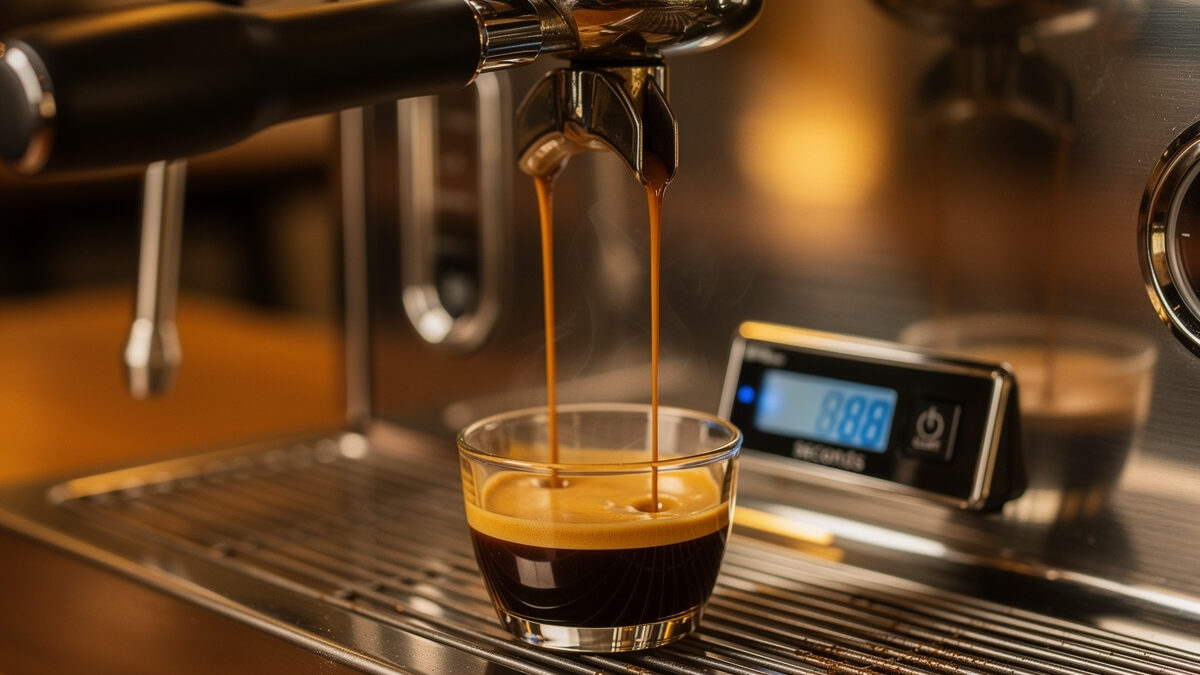
A standard espresso shot should take about 25 to 30 seconds to reach a 1:2 ratio — but that window is a result you read, not a target you chase. The time is what your grind and puck produce on the way to your target yield; it tells you whether the flow rate is sane, nothing more. The most damaging myth in home espresso is “aim for 25 seconds,” because it sends people grinding finer or coarser to hit a number on the clock while ignoring the only things that actually matter: the weight in, the weight out, and the taste.
So the honest answer to “how long should my shot take” is layered. There’s the textbook window, there’s why it exists, and there’s the much more useful question hiding underneath it — “is my flow rate right?” — which is what the clock is really measuring. Let me unpack all three, because once you understand what time represents you stop chasing it and start using it.
The textbook window: 25–30 seconds for a 1:2
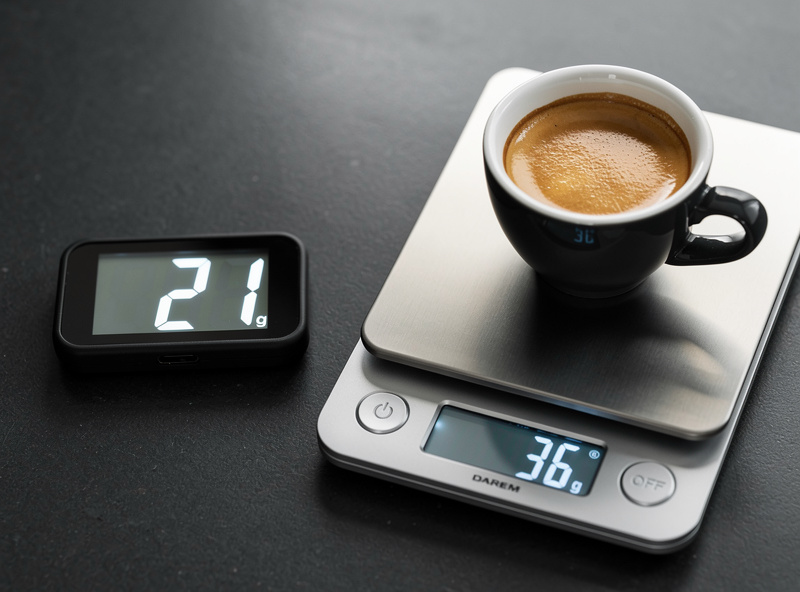
For a normal double — roughly 18 grams in, 36 grams out, a 1:2 ratio — a well-dialed shot lands in the 25-to-30-second range, including pre-infusion, for a typical medium roast. That number isn’t magic; it’s the timeframe in which, at around nine bar of pressure through a properly ground and prepped puck, the water extracts the sweet, balanced middle of the coffee without over-running into the bitter tail. It’s a useful sanity check: if your shot to 36 g is wildly outside that window, something is off. But “inside the window” doesn’t guarantee a good shot, and “outside it” doesn’t guarantee a bad one — which is the part the myth skips.
Why time is a read-out, not a target
Here’s the logic that fixes most people’s dialing. You don’t control time directly. You control dose, target yield (ratio), and grind. When you fix the dose and the yield, the grind determines how long the water takes to push that yield through the puck — and the clock simply reports the result:
- Shot reaches 36 g in 18 seconds → flow too fast → grind too coarse → grind finer.
- Shot reaches 36 g in 45 seconds → flow too slow → grind too fine → grind coarser.
- Shot reaches 36 g in ~27 seconds and tastes balanced → dialed.
Notice you never “grind to hit 25 seconds.” You hold dose and yield, taste the shot, and adjust grind toward balance — and the time falls into a sane range on its own as a side effect. If you instead chase the clock, you can hit 27 seconds with a channeling puck that tastes terrible, or with the wrong ratio entirely. Time confirms; it doesn’t command. This is the same principle that runs through the whole dial-in method: fix what you can measure, let the rest report back.
The question underneath: flow rate
What the clock actually measures is flow rate — grams of espresso per second. A 36 g shot in 27 seconds is flowing around 1.3 g/s, and that’s a healthy ballpark for a 1:2. Thinking in flow rate rather than total time is more useful because it generalises: a longer ratio naturally takes longer in seconds but can have the same healthy flow rate. If you only memorise “25 seconds,” you’ll be confused the first time you pull a longer ristretto-to-lungo shot. If you understand “I want the water moving through the puck at a sane rate,” every ratio makes sense.
This is also why two shots can both run “27 seconds” and taste completely different. Time alone doesn’t capture dose, yield, or whether the flow was even. A clean 27-second shot and a channeling 27-second shot share a number and nothing else.
Shot time by style: a reference
Different shots have different sensible time windows because they have different ratios. Here’s the map, all assuming a healthy flow rate and an 18 g dose:
| Style | Ratio / yield | Sensible time window | Notes |
|---|---|---|---|
| Ristretto | 1:1.5 / ~27 g | 20–25 s | Shorter yield, so less time at the same flow; intense and syrupy. |
| Normale (default) | 1:2 / 36 g | 25–30 s | The standard reference window. |
| Lungo | 1:2.5–1:3 / 45–54 g | 30–40 s | More yield, more time — but watch for over-extraction late. |
| Turbo shot | 1:2.5–1:3, coarser grind | 15–22 s | Deliberately fast flow through a coarse puck; modern light-roast method. |
The pattern: time follows yield and flow, not the other way round. A turbo shot reaches a big yield fast because the grind is coarse and flow is high; a ristretto reaches a small yield in moderate time. Both are “correct” — the seconds just describe what the recipe and grind did.
When the time is telling you something is broken
Time becomes genuinely diagnostic at the extremes. A shot that gushes to yield in under 15 seconds almost always means the grind is far too coarse, the dose is too low, or — commonly — the puck channeled and water found a highway through it. A shot that crawls past 45 seconds to reach a normal yield usually means the grind is too fine or the basket is overdosed and choking. In both cases the fix isn’t the timer; it’s the grind, the dose, or the puck prep. If you’ve ruled those out and the time is still erratic shot to shot with everything else held constant, suspect inconsistent puck prep — the single biggest source of run-to-run timing noise.
Where pressure fits: nine bar and the clock
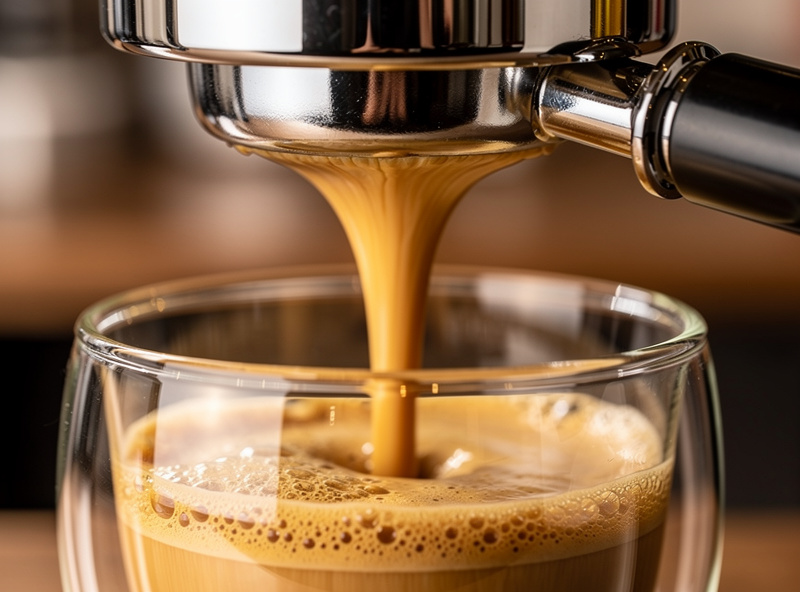
People often conflate time with pressure, so it’s worth separating them. Most espresso machines target roughly nine bar of brew pressure, and that pressure is part of what determines flow rate through a given puck — but you don’t usually adjust pressure shot to shot the way you adjust grind. For the vast majority of home setups, pressure is a fixed property of the machine (sometimes tuned once via an OPV adjustment, as I did on my Classic to bring it to nine bar), and grind is the variable that actually moves your flow and therefore your time. So when your shot runs too fast or too slow, reach for the grinder, not the pump. Pressure profiling and flow-profiling rigs that let you shape pressure live during the shot exist, but they’re a different, more advanced world; on a standard pump machine, think of pressure as a constant and grind as the lever.
The practical upshot: if your shots time out consistently wrong across beans and you’ve confirmed grind, dose, and prep are sane, only then is it worth checking whether the machine’s pressure is badly off (a gauge portafilter tells you in one shot). Nine times out of ten, though, “my shot is too fast/slow” is a grind conversation, and the clock is pointing you straight at the grinder — and if your grinder has stopped responding the way it used to, it may be worth checking when to replace your burrs.
The slow-shot myth: drama is not quality
There’s a persistent belief that a slow, thick, dramatic pour means a better shot — the slower and darker the trickle, the more “intense” it must be. It’s wrong, and it costs people good coffee. A pour that crawls to a normal yield over 50 or 60 seconds has spent far too long in contact with the water and is almost always over-extracted and bitter, no matter how impressive the dark, oily ribbon looks coming out. The thick, slow shot you see in some videos is usually a ristretto (small yield) or simply over-extracted. Speed isn’t the goal and neither is slowness — a sane flow rate to your chosen yield is. If your shots are crawling because you keep grinding finer chasing “thicker,” that’s the grind telling you it’s dragging the shot into bitterness, not concentrating it into something special. Trust the taste and the yield, not the theatre of the pour.
Pre-infusion changes the clock — be consistent about where you start it
If your machine pre-infuses (gently wets the puck at low pressure before ramping to full pressure), the first few seconds aren’t full extraction, and whether you start your timer at the button press or at first drip changes your reading by several seconds even when nothing else differs. I count from the moment I hit the button, pre-infusion included, every single time. The exact convention you pick matters far less than picking one and never deviating — otherwise your “28-second” shots aren’t comparable day to day and you’ll re-dial things that were never broken. Consistency in how you measure is as important as the measurement.
So how long should YOUR shot take?
Put it together: pick your ratio, fix your dose, pull to your target yield, and let the grind move the clock until the shot tastes balanced and lands in a sensible window for that ratio. For a default 1:2 that’s around 25–30 seconds, but the taste is the verdict and the time is just the witness. If it tastes sweet and balanced at 23 seconds, it’s a good shot at 23 seconds. The clock serves the cup, never the reverse.
The gear that makes shot time meaningful
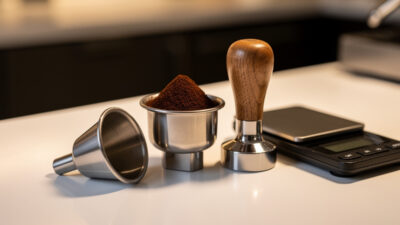
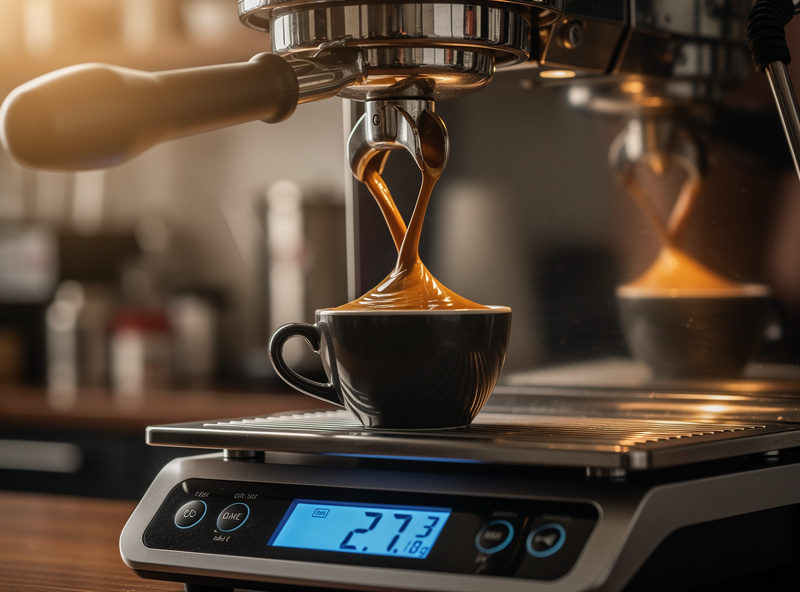
You can’t read flow rate without measuring weight and time together. A scale with a built-in shot timer puts both on one screen so you see grams and seconds at once — which is the only way to think in flow rate rather than blindly chasing 25 seconds. Pair it with a bottomless portafilter so you can see whether a fast or slow time is honest flow or a channeling puck faking the number.
As an Amazon Associate I earn from qualifying purchases. These are tools I use on my own bench; the links cost you nothing extra.
Keep reading
The clock only makes sense once you understand the number it serves: read espresso ratio explained for why yield drives time, and the full dial-in method to see where shot time sits in the whole loop. If your shots are stuck sour or bitter regardless of time, the too-sour and too-bitter fixes pick up where the timer leaves off.
More from This Cluster
- “Reading a Bottomless Portafilter Pour: What Your Shot Is Telling You”
- “Espresso Yield by Drink Type: Match the Shot to the Cup”
- “The Right Dose for an 18g Basket: It Is All About Headspace”
- “Espresso Shot Too Bitter? The Fix
- “Espresso Ratio Explained: Why 1:2 Is Your Default (and When to Break It)”
- “Espresso Shot Too Sour? The Fix
- “How to Dial In Espresso: Dose