Espresso Yield by Drink Type: Match the Shot to the Cup

Espresso yield should match the drink you’re building: pull a shorter, more concentrated shot for milk drinks so the coffee survives the milk, and a balanced 1:2 for anything you’ll drink straight or with just water. The mistake almost everyone makes is pulling the same 36 grams into everything — espresso, cappuccino, latte, americano — and wondering why the milk drinks taste washed out and the straight shots feel thin. Yield is a lever you set per drink, on purpose, and matching it to the cup is what turns a one-note home setup into something that actually makes a proper menu.
Yield is just the weight of liquid espresso you pull, and it’s the output side of your brew ratio. Once your dose is fixed, choosing a yield is choosing a ratio — and the right ratio depends entirely on whether the espresso will stand alone, get diluted with water, or fight its way through textured milk. Let me map yield to each common drink the way I actually pull them on my counter.
Why the drink dictates the yield
Espresso is a base, and different drinks ask different things of that base. A straight espresso wants balance — enough yield to develop sweetness, not so much that it thins out. An americano dilutes the shot with hot water afterward, so the shot itself just needs to be a good balanced espresso; the water does the lengthening, not a longer pull. A milk drink is the interesting case: steamed milk is sweet and heavy, and it will bury an espresso that isn’t intense enough. So milk drinks want a shorter, more concentrated shot — more coffee flavour per gram of liquid — so it punches through the milk instead of disappearing into it.
Get this backwards — a long, thin shot drowned in a flat white — and the drink tastes like warm milk with a memory of coffee. That’s the single most common reason home milk drinks underwhelm, and it’s a yield problem, not a milk problem.

Yield by drink: the working map
Here’s how I set yield for each drink, all from an 18 g dose for consistency. Adjust the dose and these scale with it, but the ratios are the point.
| Drink | Target ratio | Yield from 18 g | Why |
|---|---|---|---|
| Straight espresso | 1:2 | 36 g | Balanced, sweet, full-bodied on its own. |
| Ristretto | 1:1 – 1:1.5 | 18–27 g | Short and syrupy; great for intense dark roasts. |
| Cappuccino | 1:1.5 – 1:2 | 27–36 g | Slightly shorter holds up through foamy milk. |
| Flat white | 1:1.5 – 1:2 | 27–36 g | Concentrated base; milk is the main volume, coffee must cut through. |
| Latte | 1:1.5 – 1:2 | 27–36 g | Lots of milk — a shorter, intense shot keeps coffee present. |
| Americano | 1:2 (then add water) | 36 g + hot water | Pull a normal balanced shot; lengthen with water, not a longer pour. |
The headline pattern: drink it straight or with water → balanced 1:2. Drink it with milk → pull shorter (toward 1:1.5) so the espresso stays loud. That one habit fixes most disappointing home milk drinks.
Milk drinks: why shorter wins
When you steam milk, you’re adding sweetness, body, and a lot of volume. A latte might be 200+ grams of milk against a 36-gram shot — the milk overwhelmingly dominates by weight. If that shot is a long, gentle 1:2.5, it’s already on the dilute, delicate side before the milk even arrives, and the result is muddy and weak. Pull the same dose to a 1:1.5 (27 g) instead and you’ve concentrated the coffee: more intensity per gram, so when the milk floods in there’s still a clear espresso backbone. This is why café flat whites taste of coffee and many home ones don’t — the café is pulling a deliberately short, strong base. You’re not “wasting” coffee by pulling shorter; you’re concentrating it for a drink that’s about to drown it.
There’s a taste nuance too: shorter shots emphasise body and sweetness and pull less of the bright acidity and the bitter tail, which is exactly the profile that pairs well with milk. A longer shot’s brightness can read as sour through milk, and its tail can read as harsh. Short and intense is the milk-drink sweet spot for most beans.
Americano: lengthen with water, not with a long pull
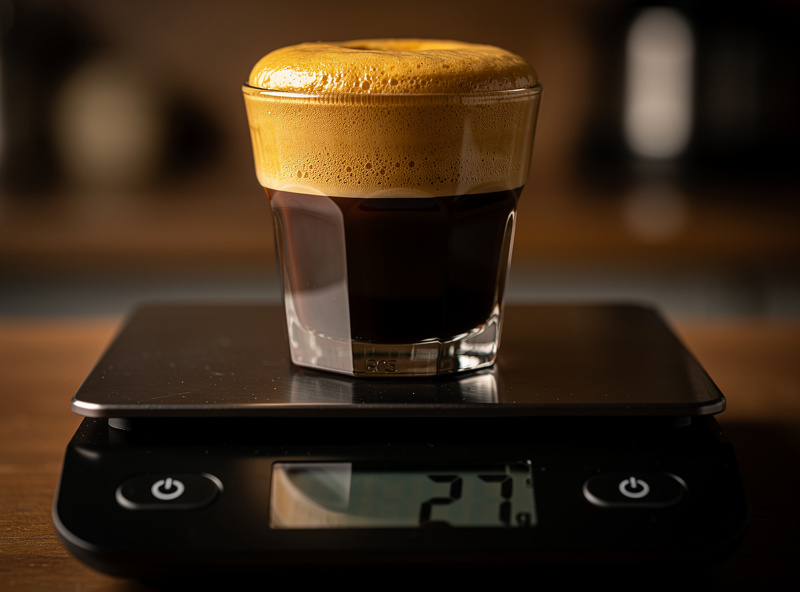
A common error is trying to make a “long coffee” by pulling a huge 1:4 espresso. Don’t — that over-extracts and turns bitter. For an americano, pull a normal, well-balanced 1:2 shot and then add hot water to the length you want. You get the lengthened drink without dragging the extraction into the bitter tail. The order matters a little by preference (water first then shot preserves a bit more crema), but the principle is fixed: dilute after the shot with water; never try to dilute by over-pulling. The shot’s job is to be a good shot; the kettle’s job is to make it long.
The small milk drinks: cortado and macchiato
The shorter-shot logic gets even more important as the milk volume drops, which is counterintuitive until you taste it. A cortado is a short shot cut with a small, roughly equal amount of warm milk; a macchiato is espresso “stained” with just a dab of foam. Because there’s so little milk to hide behind, the shot quality is fully exposed — a thin, under-developed base has nowhere to disappear to. For these I pull a tight, balanced shot (around 1:1.5 to 1:2) and make sure it’s genuinely well-extracted, because the milk isn’t going to rescue it. The rule of thumb: the less milk in the drink, the more the shot has to stand on its own, so don’t get sloppy on a macchiato thinking the milk covers it.
This is also where a great bean earns its keep. In a big milky latte you can get away with an ordinary coffee; in a cortado or a straight shot, the bean’s own character is the whole drink. Match your better beans to your smaller drinks and your everyday beans to the milky ones, and every cup punches above its cost.
Don’t forget to re-dial when you change yield
Here’s the catch that trips people up. Yield and grind are linked: if you shorten your yield for milk drinks, you’re stopping the shot earlier, which means at the same grind it’ll be more under-extracted and possibly sour. So when you deliberately pull shorter, you often need to grind a touch finer to keep the extraction balanced in that shorter window. Conversely, lengthening yield wants a slightly coarser grind to avoid over-extraction. This is why I keep a couple of logged recipes per bean — one balanced 1:2 for straight shots and one shorter, slightly finer setting for milk — rather than pretending one grind setting serves every drink. It’s a small bit of bookkeeping that pays off in every cup. The full dial-in method covers how to log and switch between recipes cleanly.
The gear that makes yield-per-drink easy
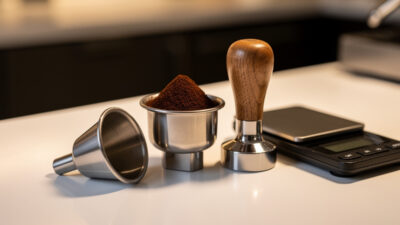
Pulling different yields reliably means weighing the output every time, and switching cups quickly. A small espresso scale with a timer lets you stop each shot at a precise yield — 27 g for the flat white, 36 g for the straight shot — instead of guessing by eye. And a decent milk frothing pitcher sized to your drinks makes the milk side as repeatable as the shot side, so the whole drink comes together the same way each morning.
As an Amazon Associate I earn from qualifying purchases. These are tools on my own counter; the links cost you nothing extra.
Related guides
- How to dial in espresso: the full dose-yield-time method
- Espresso ratio explained: why 1:2 is your default
- The right dose for an 18g basket
Frequently asked questions
What espresso yield should I use for a latte?
Pull a shorter, more concentrated shot — around a 1:1.5 ratio, so roughly 27 grams from an 18 gram dose. A latte contains a lot of milk, and a shorter, more intense shot keeps the coffee flavour present instead of being washed out. A long, gentle shot disappears into the milk.
Should milk drinks use a different espresso yield than straight shots?
Yes. Drink espresso straight or as an americano and a balanced 1:2 (about 36 grams from 18) is ideal. For milk drinks like cappuccino, flat white, and latte, pull shorter — toward 1:1.5 — so the concentrated espresso cuts through the steamed milk rather than being buried by it.
How do I make an americano without it tasting bitter?
Pull a normal, balanced 1:2 espresso and then add hot water to lengthen it. Don’t try to make a long drink by over-pulling the shot to a huge ratio — that drags the extraction into the bitter tail. Dilute after the shot with water; let the shot stay a good shot.
Why does my flat white taste weak?
Almost always because the espresso base is too long and gentle for the amount of milk. Pull a shorter, more concentrated shot (around 27 grams from 18) so there’s a strong coffee backbone for the milk to sit on. Café flat whites taste of coffee because they use a deliberately short, intense base.
Do I need to change my grind when I change yield?
Often, yes. Shortening the yield stops the shot earlier, so at the same grind it can come out under-extracted and sour; grind a touch finer to rebalance. Lengthening the yield can over-extract, so grind slightly coarser. Keeping one logged recipe for straight shots and one for milk drinks handles this cleanly.
More from This Cluster
- “Reading a Bottomless Portafilter Pour: What Your Shot Is Telling You”
- “How Long Should an Espresso Shot Take? (Time Is a Read-Out)”
- “The Right Dose for an 18g Basket: It Is All About Headspace”
- “Espresso Shot Too Bitter? The Fix
- “Espresso Ratio Explained: Why 1:2 Is Your Default (and When to Break It)”
- “Espresso Shot Too Sour? The Fix
- “How to Dial In Espresso: Dose