Stepless vs Stepped Grinder Adjustment for Espresso
For espresso, the difference between stepless and stepped grinder adjustment comes down to resolution versus repeatability. Stepless lets you land on any fineness you want — ideal for the razor-thin espresso band — but gives you no fixed reference to return to. Stepped clicks between defined positions, which is perfectly repeatable but only as precise as the steps are fine. Neither is universally better: a stepped grinder with fine-enough steps beats a stepless one for most people, while a clarity-chaser pushing the edge of a light roast benefits from stepless micro-adjustment. I’ve dialed shots on both for years, and the honest answer is that the marketing makes this sound more decisive than it is.
This question gets treated as a quality tier — stepless = premium, stepped = budget — and that framing is wrong. Plenty of excellent espresso grinders are stepped, and stepless brings its own real annoyance. Let me explain what each mechanism actually does, where each genuinely matters for espresso, and how much weight to give it when you’re choosing a grinder. (For the bigger picture of what to prioritise, see the espresso grinder guide.)
What the two mechanisms are
Adjustment changes the gap between the burrs, which changes grind size. The two ways to control that gap:
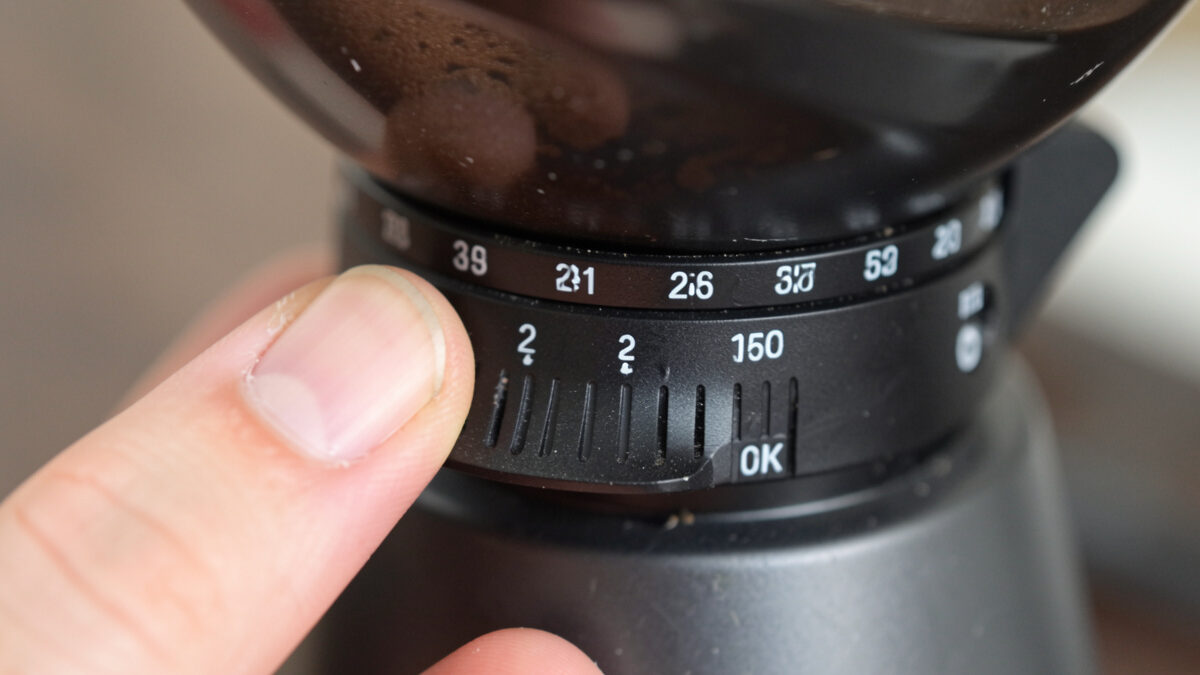
- Stepped: the adjustment moves in discrete clicks, each a defined position. You count clicks — “two finer,” “one coarser” — and you can always return exactly to a known setting. The catch: you can only land on a click, never between two.
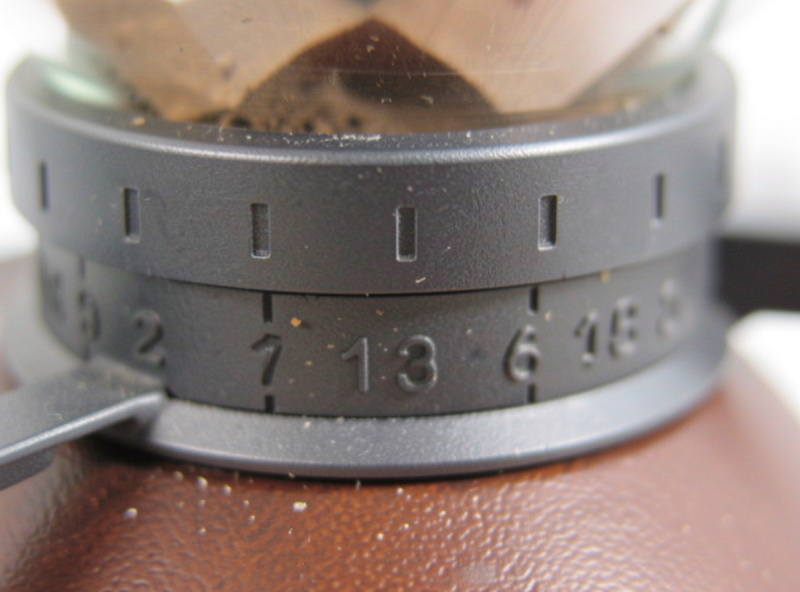
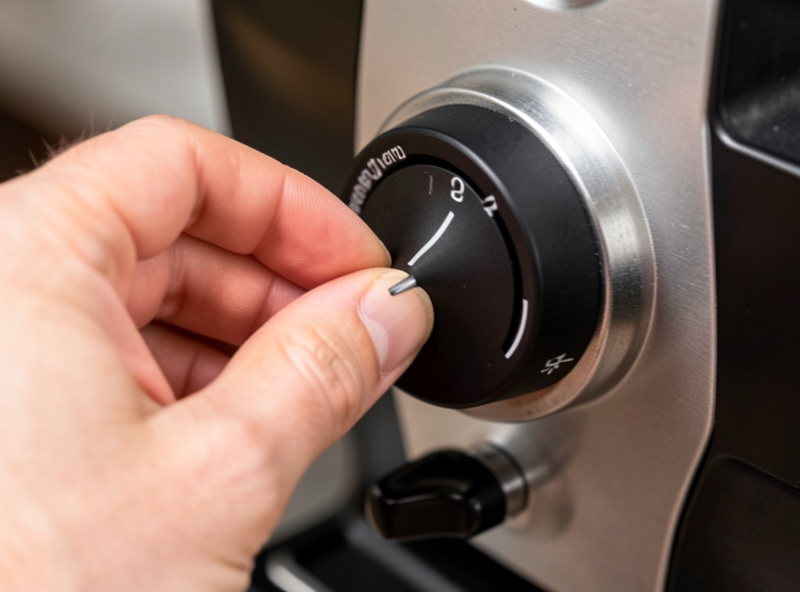
- Stepless: the adjustment moves continuously, like a smooth dial with no detents. You can land on any fineness in the range. The catch: there’s no built-in reference, so returning to a previous setting relies on a marked scale, a memory, or a witness mark you add yourself.
Some grinders are hybrid — stepped with very fine micro-steps, or stepless with a marked ring for reference. Those blur the line in the best way, and they’re often the sweet spot.
Why this matters specifically for espresso
Espresso is uniquely demanding about adjustment because it lives in such a narrow band of fineness. A change imperceptible for filter coffee can be the difference between a choked shot and a gusher in espresso. This is where the resolution question gets real:
If a stepped grinder’s clicks are too coarse for espresso, you hit the classic trap: one click is too fine (the shot chokes, runs forever, tastes bitter) and the next click out is too coarse (it gushes, runs fast, tastes sour) — with no usable setting between them. You’re stuck. That’s the legitimate argument for stepless: it gives you the in-between settings espresso sometimes needs, especially with finicky light roasts where the window is tiny.
But — and this is the part the stepless evangelists skip — many stepped espresso grinders have steps fine enough that you never hit that wall. If each click is a small fineness change, you have all the resolution espresso needs and the bonus of perfect repeatability. The trap only bites when the steps are too coarse for the espresso band, which is a property of the specific grinder, not of stepped adjustment in general.
The repeatability question (stepless’s weak spot)
Here’s stepless’s genuine downside, the one that gets glossed over. With stepped clicks, returning to a setting is trivial: you remember “click 12 for this bean” and you’re there. With stepless, there’s no detent — you’re matching a mark on a ring, or relying on a fuzzy memory of where the dial sat. Switch beans and want to come back? On stepped, you count back. On stepless, you re-dial from scratch or trust an analog mark you may have nudged.
For a single-bean household this barely matters — you set it and forget it. But if you rotate beans (as I do) and want to jump back to a known-good setting for a returning favourite, stepped’s repeatability is genuinely convenient, and stepless can be a small daily friction. The dialing-in fundamentals don’t change — see how to dial in espresso — but how easily you return to a setting does.
Stepless vs stepped at a glance
| Factor | Stepless | Stepped |
|---|---|---|
| Resolution | Infinite — land anywhere | As fine as the steps allow |
| Repeatability | Relies on marks/memory | Perfect — count the clicks |
| Best for | Light-roast edge-chasers, single-bean precision | Bean rotators, repeatable workflow |
| The risk | Losing your reference setting | Steps too coarse for espresso |
| Verdict | Great if you want micro-control | Great if the steps are fine enough |
How much should this drive your choice?
Less than the marketing implies. The honest priority order: first make sure the grinder has enough adjustment resolution for espresso — whether that comes from stepless or from fine-enough steps. After that, the stepless-versus-stepped choice is mostly a workflow preference. If you rotate beans and value snapping back to known settings, lean stepped (with fine steps). If you chase the precise edge of demanding light roasts and want to land between any two settings, lean stepless. For most people pulling one or two beans, fine-enough steps are completely sufficient and the repeatability is a quiet daily convenience.
And remember it’s only one factor among several. Adjustment mechanism sits alongside burr quality, burr geometry, and retention in the overall picture — none of them should be the single thing you buy a grinder for. A great grinder with fine stepped adjustment beats a mediocre stepless one, every time.
Bottom line
Stepless gives resolution but asks you to manage your own reference; stepped gives effortless repeatability but only as much resolution as its steps allow. For espresso, the real requirement is enough fine adjustment to land the narrow window — and either mechanism can deliver that if it’s well designed. Choose stepless if you push the edges and want infinite control; choose stepped-with-fine-steps if you rotate beans and love snapping back to a known setting. Don’t choose a worse grinder just to get the “right” mechanism — the grinder’s overall quality matters far more than this one spec.
Related guides
- The espresso grinder guide: why it beats the machine
- Flat versus conical burrs: what you taste
- Coffee grinder retention explained
- How to dial in espresso: the full method
Frequently asked questions
Is stepless or stepped adjustment better for espresso?
Neither is universally better. Stepless gives infinite resolution so you can land on any fineness, which helps with demanding light roasts; stepped gives perfect repeatability because you count clicks back to a known setting. A stepped grinder with fine-enough steps suits most people, while edge-chasers benefit from stepless micro-adjustment.
What is the difference between stepless and stepped grinders?
Stepped grinders move the burrs in discrete clicks, each a defined position you can return to exactly. Stepless grinders move continuously with no detents, letting you land anywhere in the range but with no built-in reference to return to. Some grinders are hybrid — stepped with fine micro-steps, or stepless with a marked scale.
Do I need stepless adjustment for espresso?
No. You need enough fine adjustment to land the narrow espresso window, and that can come from stepless control or from stepped clicks that are fine enough. The trap to avoid is a stepped grinder whose steps are too coarse for espresso, leaving you stuck between one click too fine and one too coarse.
What is the downside of stepless adjustment?
Repeatability. Because there are no detents, returning to a previous setting relies on a marked ring or your memory rather than counting clicks. For a single-bean household this barely matters, but if you rotate beans and want to snap back to a known-good setting, stepless can be a small daily friction compared with stepped.
Should adjustment type drive which grinder I buy?
Less than the marketing suggests. First confirm the grinder has enough adjustment resolution for espresso; after that, stepless versus stepped is mostly a workflow preference. Burr quality, geometry and retention all matter alongside it, so do not buy a worse grinder just to get a particular adjustment mechanism.