Espresso Ratio Explained: Why 1:2 Is Your Default (and When to Break It)
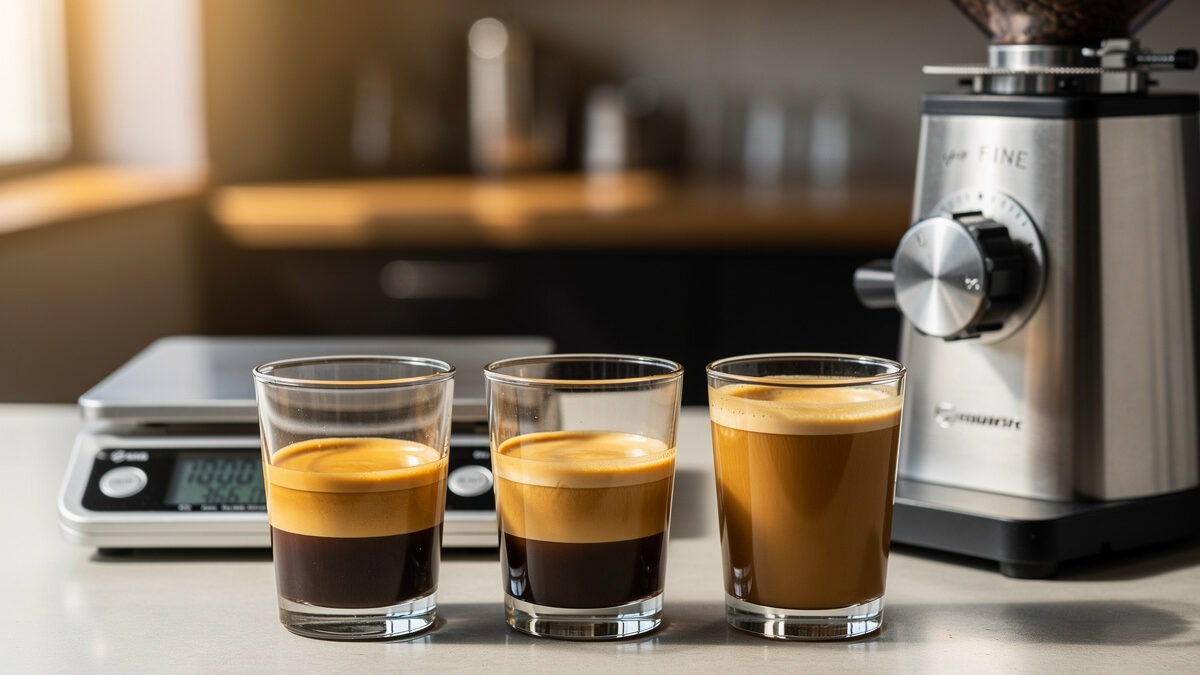
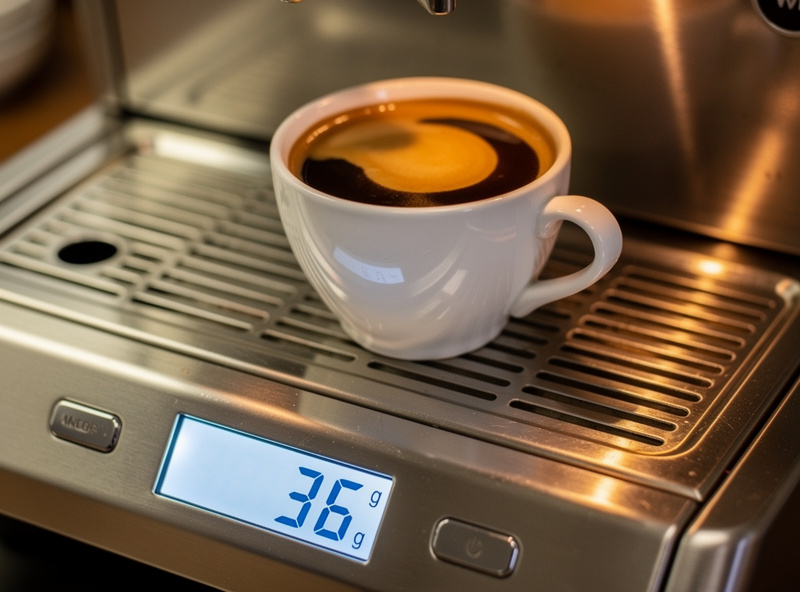
The espresso ratio is the weight of liquid espresso out divided by the weight of dry coffee in — so 18 grams in and 36 grams out is a 1:2 ratio. It’s the single most useful number in espresso because it lets you describe and repeat a shot independent of basket size, machine, or how the crema happens to look that morning. Fix the ratio, fix the dose, and the only thing left to adjust is the grind. That’s the entire reason I weigh every shot on a 0.1-gram scale instead of eyeballing the cup.
Most beginners obsess over shot time and ignore ratio, which is backwards. Time is what the ratio and grind produce; the ratio is what you actually decide. Once you think in ratios, dialing in stops being mysterious and starts being arithmetic you can taste. This is the foundation the rest of my dial-in method is built on, so it’s worth getting completely straight.
What “ratio” actually means in espresso
Brew ratio is just yield ÷ dose, both measured by weight in grams. Written as a ratio, the dose is always “1”:
- 18 g in → 36 g out = 1:2 (the everyday default)
- 18 g in → 27 g out = 1:1.5 (a ristretto-leaning, shorter shot)
- 18 g in → 45 g out = 1:2.5 (a longer, lungo-leaning shot)
Notice we measure the output by weight, not volume. Crema is foam — a variable raft of gas and oils that inflates the visual level of the shot and tells you almost nothing reliable about how much actual liquid you pulled. Two shots can look identically “full” in the cup and differ by ten grams. The scale doesn’t lie; your eyes do. That’s the first discipline: stop reading the shot glass markings and start weighing. The full dial-in method leans on this weighing discipline at every step.
Why 1:2 is the sensible default
A 1:2 ratio became the modern default for good reason: for a typical medium roast it lands in the sweet spot where you’ve pulled enough liquid to extract sweetness and body without dragging out the bitter compounds that come late in the shot. It’s forgiving, it suits most beans you’ll buy, and it gives you a clean reference point to move away from deliberately.
The logic is extraction over time. Early in a shot you get bright, acidic, sometimes sour compounds. The middle brings sweetness and balance. Late in the shot you start pulling harsh, bitter, astringent material. A 1:2 ratio is calibrated to capture the front and middle and stop before the tail goes ugly — for a medium roast at a sensible grind. Pull much shorter and you risk stopping before the sweetness develops (sour); pull much longer and you drag in the bitter tail.
Ratios by style: a working cheat-sheet
The default is a starting point, not a rule. Different drinks and different roasts want different ratios on purpose. Here’s the map I keep in my head, with an 18 g dose for consistency:
| Style | Ratio | Yield from 18 g | What it’s for / how it tastes |
|---|---|---|---|
| Ristretto | 1:1 – 1:1.5 | 18–27 g | Short, intense, syrupy. Great for darker roasts; can trap sourness on lights if too short. |
| Normale (default) | 1:2 | 36 g | The balanced everyday espresso. Best all-round starting point for a new bean. |
| Lungo | 1:2.5 – 1:3 | 45–54 g | Longer, lighter-bodied, more developed. Suits some light roasts; risks bitterness if grind is too fine. |
| Milk-drink base | 1:1.5 – 1:2 | 27–36 g | A touch shorter holds intensity through milk so the espresso isn’t washed out. |
| Turbo / light-roast | 1:2.5 – 1:3 (coarser grind) | 45–54 g | Coarser grind, higher flow, longer ratio — a modern approach to dense light roasts. |
The pattern: shorter ratios concentrate and intensify; longer ratios extract more total material and lighten the body. Where you land depends on the roast and your palate. Matching the ratio to the actual drink you’re building — ristretto, straight double, or a base meant to survive milk — is its own decision worth thinking through before you pull.
How ratio interacts with grind and time
Here’s the part that trips people up: ratio, grind, and time are not independent. When you set a ratio, you’ve fixed the dose and the target yield — the grind then determines how long it takes to reach that yield, and time falls out as a result. So the workflow is:
- Pick your ratio (start at 1:2) and your dose (say 18 g). That fixes your target: stop the shot at 36 g.
- Pull and watch the time. If 36 g arrives in 18 seconds, the grind is too coarse — flow is too fast. Grind finer.
- If 36 g takes 45 seconds, the grind is too fine and flow is choked. Grind coarser.
- When 36 g lands around 25–30 seconds and tastes balanced, you’re dialed. The ratio held; the grind found the time.
This is why I say time is feedback, not a control. You never “grind to hit 28 seconds” — you hold the ratio and let the grind move the clock. The clock simply reports whether your grind matched the ratio you chose; it is the read-out, never the target.
Reading the cup: did the ratio land?
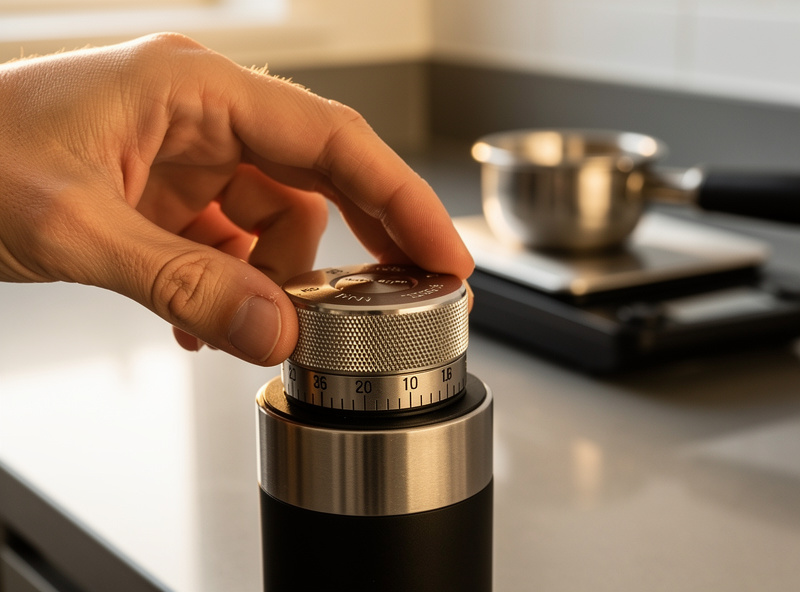
A ratio is only right if the shot tastes right. After you pull to your target yield, taste deliberately:
- Sour and thin? Under-extracted. Try a longer ratio (pull to 40+ g) or grind finer. If pushing the ratio longer fixes the sourness, your default was simply too short for this bean.
- Bitter and harsh? Over-extracted. Try a shorter ratio (stop at 30–32 g) or grind coarser. If a shorter ratio cleans it up, you were dragging in the bitter tail.
- Sweet and balanced? The ratio is right for this bean. Log it.
The reason ratio is such a powerful diagnostic is that it isolates one thing. If you change the ratio and only the ratio — same dose, same grind — and the shot improves, you’ve learned something concrete about that coffee instead of changing five variables and shrugging.
Dose and ratio: the basket sets your room to move
Your basket size constrains the doses you can realistically run, and therefore the ratios that make sense. An 18 g basket run at 18 g and 1:2 gives 36 g out; the same basket forced to 20 g leaves too little headspace and the puck can hit the shower screen, causing channeling that wrecks the ratio you thought you set. Getting the dose right inside the basket is its own small skill, and it’s the foundation the ratio sits on. A clean, consistent dose makes a clean ratio possible; a sloppy dose makes the ratio math meaningless before you even pull.
A common ratio mistake: counting from the wrong moment
One thing that quietly throws people off is when they consider the shot to have started. If your machine has a pre-infusion phase — a gentle pre-wet at low pressure before full pressure kicks in — the first few seconds aren’t really “pulling” yet, and where you start the clock changes how your time looks even when the ratio is identical. I count from the moment I press the button, pre-infusion included, and I keep that convention every single shot. The exact convention matters far less than being consistent with it: if one day you count from button-press and the next from first-drip, your “25 second” shots aren’t comparable, and you’ll re-dial something that was never broken.
The same goes for when you stop. Espresso keeps dripping for a second or two after you cut the pump, so your scale reading climbs past where you stopped. I cut the shot a gram or two short of target and let the drips bring it home to my number. Small thing, but if you don’t account for it you’ll consistently overshoot your ratio and wonder why a 1:2 keeps tasting like a 1:2.3 — over-extracted and a little hollow.
The gear that makes ratio real
Thinking in ratios requires exactly one tool you might not have: a scale you can read to a tenth of a gram, fast enough to catch the shot. A small espresso scale with a built-in timer that fits on the drip tray does both jobs — weight and time on one screen — and it’s the highest-leverage twenty-or-so euros in the whole hobby. Pair it with a set of precision baskets so your stated dose actually fits the basket the way the ratio math assumes, and you’ve got everything ratio thinking needs.
As an Amazon Associate I earn from qualifying purchases — these are tools I keep on my own counter, at no extra cost to you.
Keep reading
Ratio is the first number in the system; the rest of the cluster builds on it. Start with how to dial in espresso — the full dose-yield-time method this ratio thinking plugs into — and you’ll have the whole loop in one place.
Frequently asked questions
What is a good espresso ratio?
A 1:2 ratio — for example 18 grams of coffee in and 36 grams of espresso out — is the sensible default for most medium roasts. It balances sweetness and body without dragging out bitterness. Move shorter (1:1.5) for more intensity or longer (1:2.5) for a lighter, more developed shot once you know how your bean behaves.
Is espresso ratio measured by weight or volume?
By weight, in grams, measured on a scale. Crema is foam that inflates the visual volume of a shot and varies from bean to bean, so judging output by the markings on a shot glass is unreliable. Weigh both the dry dose going in and the liquid espresso coming out.
What does a 1:2 espresso ratio mean?
It means the weight of liquid espresso out is twice the weight of dry coffee in. With an 18 gram dose, a 1:2 ratio gives 36 grams in the cup. The dose is always the 1, and the second number is how many times that weight you pull as liquid.
Should I change ratio or grind to fix my shot?
Try grind first for most adjustments, since it has the biggest effect per change. But ratio is a clean second lever: pull longer to fix a sour, under-extracted shot or shorter to tame a bitter one. Changing only the ratio while holding dose and grind isolates the variable so you learn what the coffee wants.
Does the ratio change for milk drinks?
Often, yes. A slightly shorter ratio — around 1:1.5 to 1:2 — keeps the espresso intense enough to stand up through steamed milk so a latte or cappuccino doesn’t taste washed out. For straight espresso, the standard 1:2 is usually the better balance.
More from This Cluster
- “Reading a Bottomless Portafilter Pour: What Your Shot Is Telling You”
- “Espresso Yield by Drink Type: Match the Shot to the Cup”
- “How Long Should an Espresso Shot Take? (Time Is a Read-Out)”
- “The Right Dose for an 18g Basket: It Is All About Headspace”
- “Espresso Shot Too Bitter? The Fix
- “Espresso Shot Too Sour? The Fix
- “How to Dial In Espresso: Dose