Espresso Beans: The Honest Selection Guide
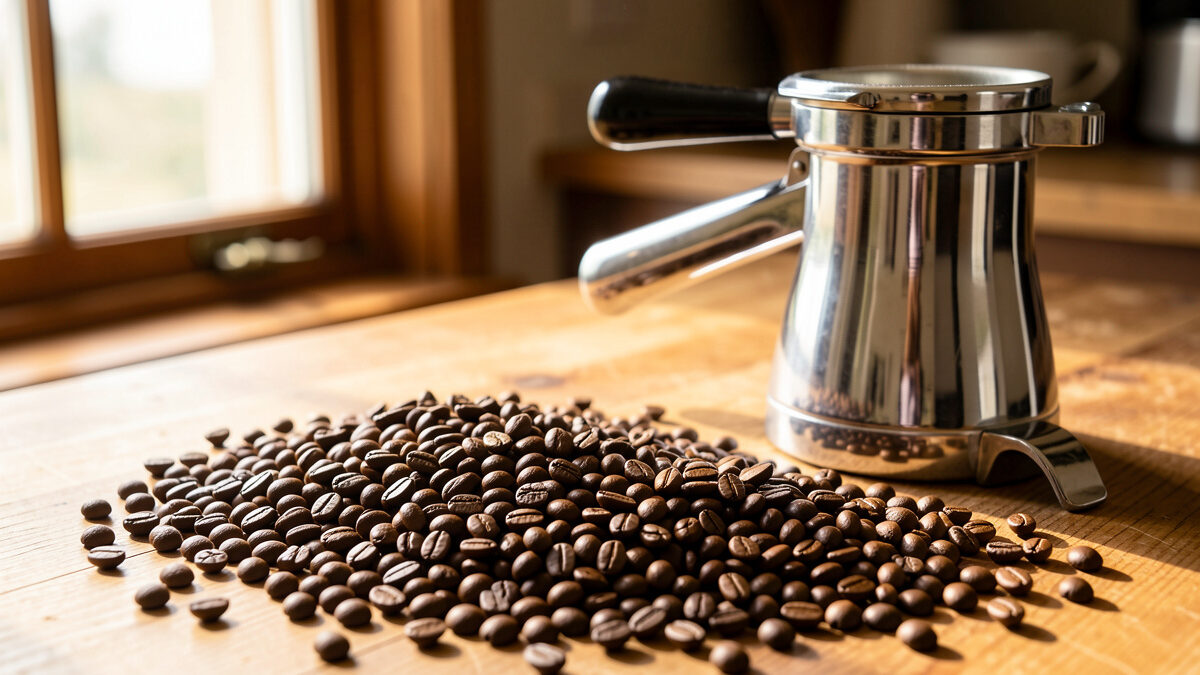
Espresso beans are not a separate species of coffee — they are simply beans chosen, roasted and rested for the way the espresso process treats them. On my counter the single biggest lever for shot quality after the grinder is the bag I open, and a freshly roasted, properly degassed bag will out-shot a “premium” stale one every single morning.
Think of this as the espresso beans guide I wish I had been handed when I was still blaming my machine. I pull shots in Sweden against the same 0.1-gram scale, the same shot log and the same baskets every day, rotating Nordic light roasts against classic Italian-style darks so I can see what the bean — not the marketing — actually changes in the cup. Beans are the one variable you replace every week or two, which makes them the variable most worth understanding.
What Actually Makes a Bean an “Espresso” Bean
Nothing on the green coffee makes it espresso. The label “espresso” describes a roast and a rest window tuned for the nine bars of pressure and short contact time that the Specialty Coffee Association uses to define espresso brewing, not a different plant. A medium-dark roast labelled “espresso blend” is just easier to dial; any bean can be pulled as espresso if you adjust the grind.
Here is the part the cafe romance leaves out: espresso is brutal on beans. You are forcing pressurised water through a compacted puck in under half a minute, so every flaw in the bean — underdevelopment, staleness, uneven roast — gets amplified instead of diluted the way it would be in a pour-over. That is why bean selection matters more for espresso than for any other brew method. A drip cone forgives a mediocre bean. A bottomless portafilter does not. When I dial a new bag I read the pour through the bottomless portafilter first, because the bean tells on itself there before it reaches the cup.
The practical takeaway: stop shopping for a bag that says “espresso” and start shopping for a bag that says when it was roasted, what it is, and how it was processed. Those three facts predict the cup far better than the word on the front.
Roast Level: The First Decision That Changes Everything
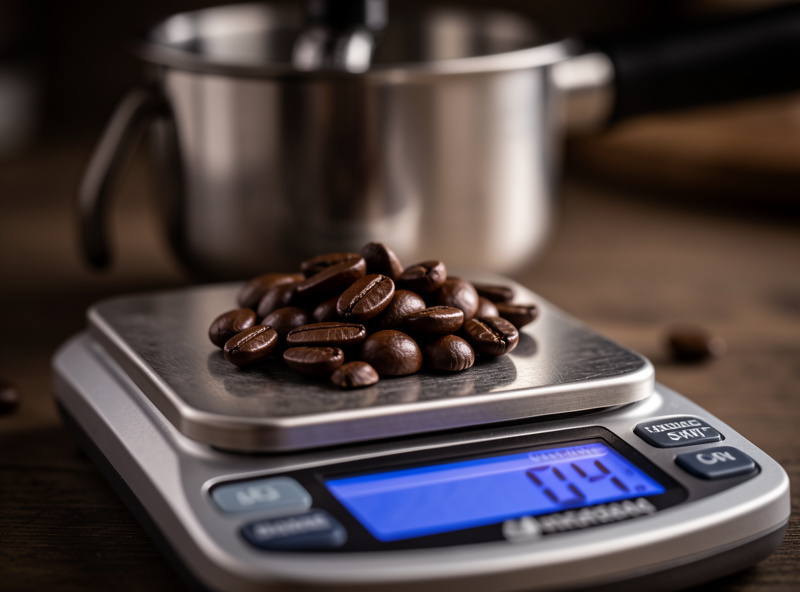
Roast level is the single fact that determines how a bean behaves under pressure. Darker roasts are more soluble and more porous, so they extract faster, need a coarser grind and forgive sloppy puck prep. Lighter roasts are dense and stubborn, demanding finer grinds, higher temperatures and tighter prep to avoid sourness.
This is where most beginners go wrong. They buy a trendy light roast, grind it like a supermarket dark, and pull a sour, thin, fast-running shot — then conclude their machine is broken. It is not. A light roast is a different physical material. On my OPV-modded Gaggia Classic I run light roasts as hot as the machine will give me and grind noticeably finer; on a classic Italian dark I back the grind off and drop the temperature, or the shot turns ashy and bitter. Same machine, opposite settings, because the bean is opposite.
The table below is my working starting map — not gospel, a place to begin the dial-in. You still confirm everything by taste and by the timer.
| Roast level | Behaviour under pressure | Grind starting point | Brew temp lean | Best for |
|---|---|---|---|---|
| Nordic / light | Dense, slow, acidic if under-extracted | Finest | Hottest (94-96°C) | Black espresso, fruit-forward cups |
| Medium | Balanced, the most forgiving | Medium-fine | Mid (92-94°C) | First machine, everyday shots |
| Medium-dark / “espresso blend” | Soluble, fast, chocolatey | Slightly coarser | Lower (90-93°C) | Milk drinks, beginners |
| Italian / dark | Very soluble, bitter if over-extracted | Coarsest | Lowest (88-91°C) | Traditional cappuccino, robust shots |
If you only own a basic machine without PID temperature control, lean toward medium and medium-dark roasts — they hit a good shot across a wider temperature band, which is exactly the forgiveness a temperature-surfed single boiler needs. The deep dive on the bean-side of this lives in my light roast espresso adjustment guide.
Freshness: The Variable Everyone Underestimates
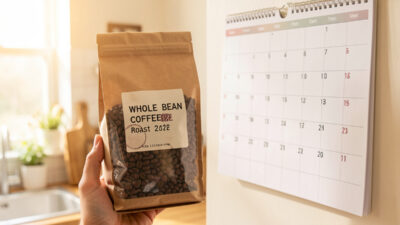
Roast date beats every other claim on the bag. Coffee off-gasses carbon dioxide for days after roasting, and that CO2 both blocks even extraction and inflates fake crema. The usable window for espresso is roughly 7 to 30 days off roast — too fresh gases out and gushes, too old goes flat and papery.
This is the most expensive lesson in home espresso because it is invisible at the shop. A bag with no roast date is a bag hiding its age, full stop. “Best before” dates are a different thing entirely — they can be a year out and tell you nothing about when the bean was actually roasted. In my shot log the clearest pattern across years is that the cup peaks in the back half of the second week and the front of the third, then declines slowly. Pulling a bag the morning it arrives almost always gives me a fast, foamy, hollow shot — that is the CO2 talking, not the coffee.
People also confuse crema with quality. Big, thick crema mostly means fresh-to-the-point-of-gassy beans or a darker, more soluble roast. It is a freshness and roast signal, not a flavour score. I have pulled gorgeous-looking crema off a bag that tasted like cardboard and thin crema off a stunning light roast. I unpack the whole crema myth in the freshness window and crema truth piece, because it derails more beginners than almost anything else.
Storage: Protecting What You Paid For
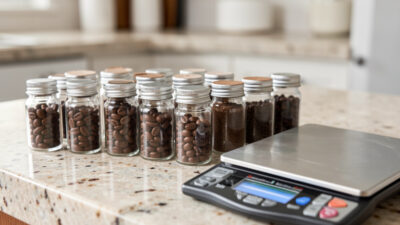
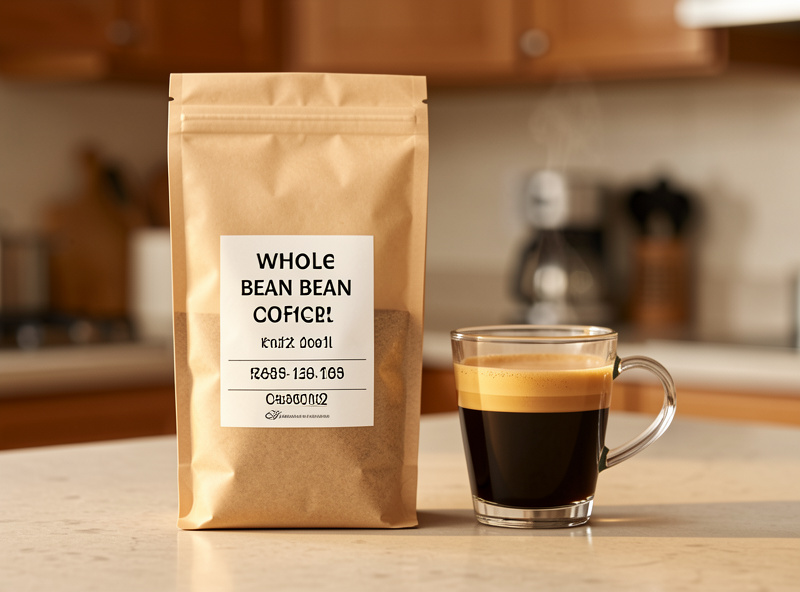
Once you have bought good fresh beans, storage is damage control, not improvement. The four enemies are oxygen, moisture, heat and light, in that order of importance. An airtight, opaque container at room temperature in a dark cupboard preserves the window you bought; everything else is a slow tax on flavour.
The fridge is the classic mistake. It is humid and full of food odours, and beans are aggressively absorbent — they will pick up last night’s dinner and condensation every time the door opens. The freezer is genuinely useful, but only done properly: divided into single-dose or weekly portions, sealed, and never refrozen after thawing. I keep my working bag in an airtight valve canister on the counter and only reach for the freezer for a bag I cannot finish inside a month. The full single-dosing freezer workflow — the one that actually preserves a light roast for months — is in my guide to storing espresso beans for single dosing.
If you are buying one storage upgrade, a proper airtight canister with a one-way CO2 valve does more than any other accessory in this category. You can find a vacuum or valve coffee canister on Amazon for less than the price of a single bag of specialty beans. As an Amazon Associate I earn from qualifying purchases.
Single Origin vs Blends for Espresso
Blends are engineered for consistency and body; single origins are bought for distinctive character. For espresso specifically, a well-built blend is usually the easier, more repeatable everyday choice, while a single origin is the bag you reach for when you want to taste a place rather than a recipe.
There is no snobbery hierarchy here, whatever the forums say. A blend exists to be balanced and stable shot after shot, which is exactly what you want under milk or when you are pulling four cups before work. A single origin can be electric — a washed Ethiopian as straight espresso is one of the best things this hobby offers — but it can also be narrow and unforgiving, with a smaller margin between sour and sweet. I keep one of each open: a dependable medium blend for milk drinks and dialing in new gear, and a rotating single origin for black shots when I have time to chase the dial. If you are new, start with a blend and learn the ratio and timing before you start hunting flavour notes.
Processing Method: Why the Same Origin Tastes Different
Process is how the fruit is removed from the seed, and it shapes the cup as much as origin. Washed coffees are cleaner and more acidic, naturals are fruitier and heavier, and honey processes sit between. For espresso, naturals and honeys often give a more obvious sweetness and body that survives the intensity of the shot.
You do not need to become a processing nerd to use this. Just know that a “wild, boozy, blueberry” tasting note almost always means a natural process, and that those beans can be polarising as espresso — gorgeous to some, muddy to others. Washed coffees are the safer, more transparent starting point. This is also where my curiosity bleeds across benches: the fermentation step in coffee processing is the same controlled-microbe logic I poke at over on Ferment Foundry, and understanding it makes those tasting notes stop sounding like marketing.
The Honest Money Map: Where Beans Sit
Beans are the cheapest meaningful upgrade in espresso and the one with the fastest return. Spending an extra few kronor a bag on fresh, dated, well-processed coffee changes the cup more reliably than a several-thousand-kronor machine upgrade ever will. The order of impact is grinder, then dial-in discipline, then beans, then machine — and beans are the only one of those you get to re-decide every week.
That is worth sitting with if you are tempted to spend big. The grinder outranks the machine because it controls particle size, and particle size is how you express whatever bean you bought. But once your grinder is decent, the bean is the lever you pull most often and pay the least for. A €15 bag of properly fresh single origin through a good grinder beats a €9 stale supermarket dark through the same grinder, every time, and the gap is enormous. I went looking for the floor of that argument deliberately — the surprising honest results are in my supermarket beans honest espresso take.
Decaf, Flavoured, and the Bags to Skip
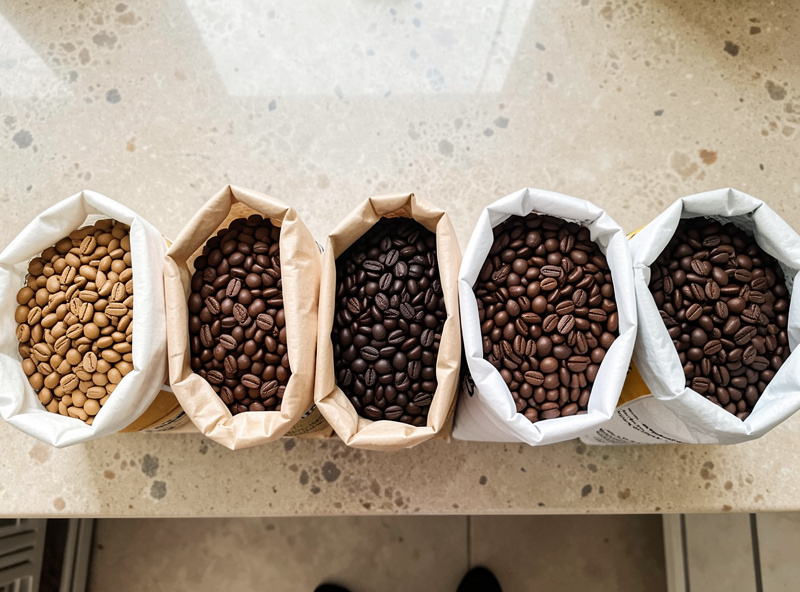
Good decaf espresso is entirely possible — the old “decaf can’t pull a real shot” line is outdated. Modern sugarcane and water-process decafs are dense enough to pull beautifully; the catch is they are usually older off the roaster and slightly more brittle, so freshness and grind matter even more. I keep a decaf in rotation for evening shots and it earns its place.
Flavoured beans, on the other hand, I avoid for espresso — the oils and coatings gum up grinder burrs and the machine, and the flavour is added rather than developed. If you want vanilla, add it to the cup, not the burr chamber. The full reality of caffeine-free shots, including which process to look for, is in my decaf espresso honest reality guide. If you are choosing your first grinder to handle any of these beans well, my grinder picks under $300 and the flat vs conical burrs breakdown are the place to start, and retention matters more than people think when you change beans often.
Matching Beans to Your Machine Class
The machine you own quietly narrows the beans that will reward you. A temperature-stable dual boiler can chase a stubborn light roast all day; a temperature-surfed single boiler is happiest with forgiving medium and medium-dark roasts that pull well across a wider thermal band. Buy beans your machine can actually express.
On my OPV-modded Gaggia Classic — a single boiler — a screaming Nordic light roast is fightable but tedious: I have to surf the temperature on every shot and the margin for error is small. The same bean on the Breville Dual Boiler with its PID is almost relaxing, because the temperature simply holds where I set it. My HX machine sits in between, brilliant once the cooling-flush routine is muscle memory. None of this means a cheaper machine cannot make great espresso — it means you should match the bean to the thermal stability you actually have. If you are still choosing a first machine, this is a reason to start your bean journey with mediums rather than the trendy lights everyone photographs. The same logic decides whether the Gaggia Classic is worth it for the beans you want to drink.
Reading the Bag Like a Barista
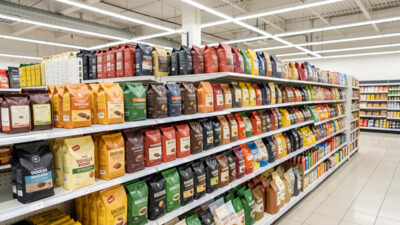
A coffee bag is a spec sheet if you know which numbers matter. The four facts worth finding are roast date, origin or blend composition, processing method, and roast level. Tasting notes are marketing-adjacent and altitude and varietal are nice-to-know, but those four facts predict your shot before you grind a gram.
What I deliberately ignore is almost as important. “Best before” or “best within 12 months” dates tell me nothing about freshness — only the roast date does. Award badges, mountain photography and the word “gourmet” are noise. A wall of romantic tasting notes with no roast date is a bag hiding its age behind poetry, and I put it back. The bags I trust read almost boringly: roasted on a real date, a named farm or region, washed or natural, a clear roast level. That same instinct for reading a spec sheet instead of the marketing is exactly how I judge a water recipe or a grinder — espresso is a process-control problem, and the bag is part of the process. Once you can read a bag in five seconds you stop buying disappointment, which is most of what bean shopping is for beginners.
How I Actually Choose a Bag
My buying checklist is short and ruthless: visible roast date inside the last two weeks, named origin or a stated blend composition, processing method on the label, and a roast level matched to my machine and my morning. If a bag fails the roast-date test, nothing else on the label matters. I would rather buy a humble, honest, freshly dated medium roast than an exotic single origin of unknown age.
For whole bean over pre-ground there is no debate for espresso: ground coffee is stale within minutes and cannot be dialed, so you grind to order or you are not really doing espresso. If you have not bought a grinder yet, fix that before you spend another krona on beans — read the grinder guide and the case for a single-dose grinder first. A good whole-bean grinder is the partner every bag in this guide depends on. You can browse fresh whole-bean espresso coffee on Amazon if your local roaster options are thin.
Frequently Asked Questions
Are espresso beans different from regular coffee beans?
No. Espresso beans are ordinary coffee beans chosen and roasted for the espresso process. The label describes a roast level and rest window suited to nine bars of pressure, not a different plant. Any bean can be pulled as espresso if you adjust the grind.
How fresh should espresso beans be?
Aim for 7 to 30 days off the roast date. Too fresh and trapped carbon dioxide makes shots gush and foam; too old and the cup goes flat and papery. In my shot log the cup peaks in the back half of the second week off roast.
Should I store espresso beans in the fridge?
No. The fridge is humid and full of odours, and beans absorb both, which dulls the shot. Keep your working bag in an airtight opaque canister at room temperature. The freezer works only if beans are pre-portioned, sealed and never refrozen.
Do darker roasts make better espresso?
Not better, just easier. Dark roasts are more soluble and porous, so they extract faster and forgive sloppy prep, which is why beginner espresso blends skew dark. Light roasts can be exceptional but demand a finer grind, higher temperature and tighter puck prep.
Is big thick crema a sign of good espresso beans?
No. Heavy crema mostly signals very fresh, gassy beans or a darker, more soluble roast, not flavour quality. I have pulled thick crema off cardboard-tasting coffee and thin crema off excellent light roasts. Judge the cup, not the foam.
Should I buy single origin or a blend for espresso?
Start with a blend. Blends are engineered for balance and consistency shot after shot, which is ideal for milk drinks and learning your dial-in. Single origins offer distinctive character but a smaller margin between sour and sweet, so save them for black shots once you are confident.