Espresso Accessories That Earn Their Place
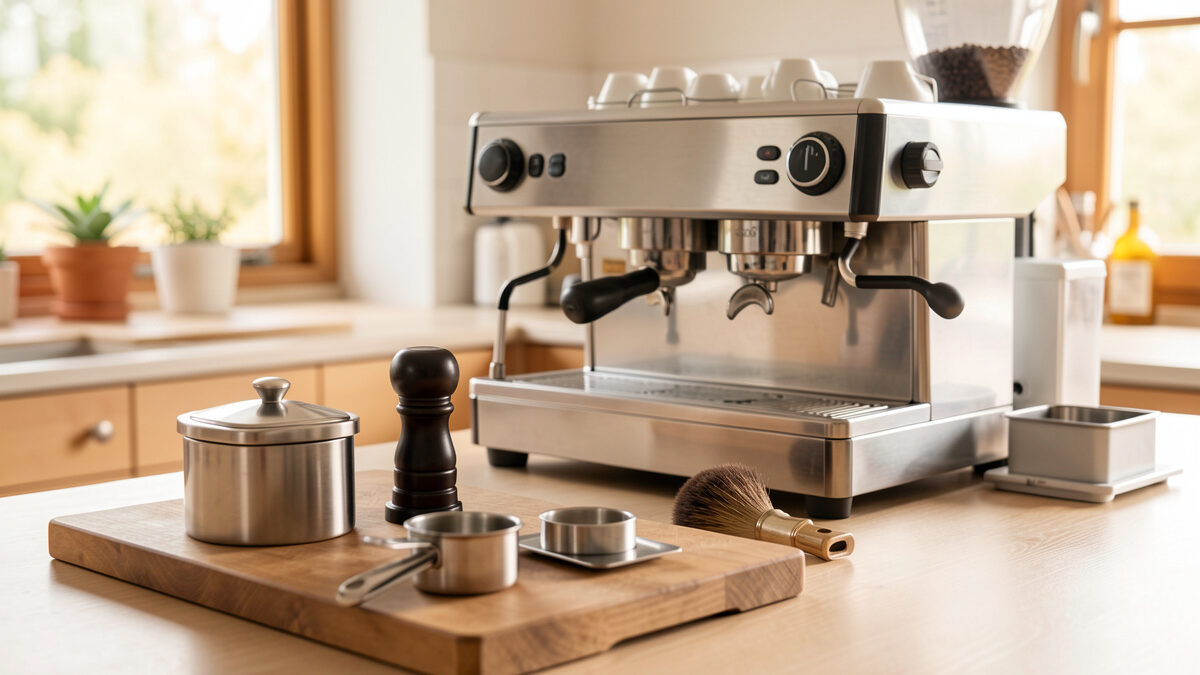
Most espresso accessories are counter decoration. The ones that earn their place do exactly one thing: they remove a variable from your shot. On my counter, an accessory survives only if it makes the next pull more repeatable than the last — a 0.1g scale and a knock box stayed; a chrome tamping stand and a “branded” dosing ring did not.
I run several machines and grinders side by side against the same bag of beans, and I log every shot. That discipline is brutal on gear, because it shows you in numbers which purchases changed the cup and which just changed how the counter photographs. This guide is the map I wish I had when I started: every espresso accessory worth owning, what it actually fixes, and roughly where it sits on the priority list. The honest verdict up front — fewer than half the things sold as “essential” deserve the word.
The Only Test an Accessory Has to Pass
An espresso accessory earns its place if it removes a variable or protects the machine. That is the whole test. A scale removes guesswork on dose and yield; a knock box removes the wet-grounds mess that makes you rush puck prep; a soft cleaning brush protects a group gasket you would otherwise dig at with a spoon. Anything that fails both halves of that test is jewelry.
I sort every purchase into three buckets. Process-control tools change what lands in the cup — a scale, a consistent tamper, a distribution tool. Workflow tools don’t change the shot but make good technique repeatable on a tired Tuesday — a knock box, a dosing cup, a mat that catches grinds. Protection tools keep the machine alive — the right brushes, microfiber cloths, descaling kit. Everything else is the fourth bucket, the one I tell people to skip. If you only read the table below and the spending plan at the end, you’ll already buy better than 90% of new owners.
The Accessory Priority Map (What Each One Changes in the Cup)
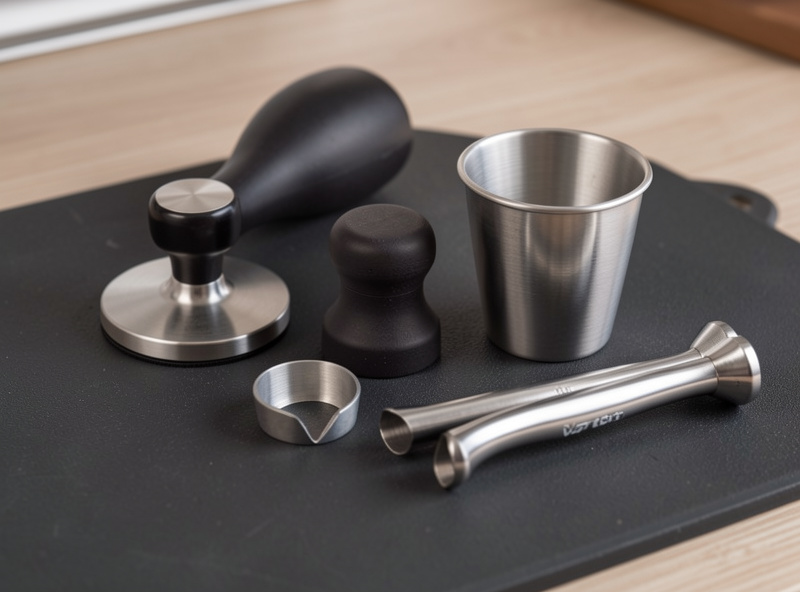
Here is how I rank the core accessories by impact-per-krona, the same way I rank machine upgrades. The single highest-return purchase for most people is a proper scale, because dose and yield are the two variables that move flavor the most and the two people guess at hardest. Everything below it is real, but the returns taper fast.
| Accessory | What it actually changes | Priority | Rough cost |
|---|---|---|---|
| 0.1g espresso scale | Locks dose and yield — the two biggest flavor variables | Buy first | $25-$150 |
| Distribution / WDT tool | Kills channeling at the source; evens extraction | High | $15-$60 |
| Consistent tamper (right size) | Removes tamp angle and fit as variables | High | $20-$90 |
| Knock box | Workflow — clean, fast puck disposal, no sink damage | Medium | $15-$45 |
| Dosing cup | Workflow — clean transfer, weigh-then-load, single dosing | Medium | $12-$35 |
| Cleaning brushes + microfiber | Protection — group, screen and steam wand longevity | Medium | $10-$30 |
| Bench mat / organizer | Workflow — protects counter, keeps the loop tight | Low-medium | $15-$50 |
| Tamping station, branded rings, “leveling” gimmicks | Mostly cosmetic once technique is sound | Skip | — |
Notice the pattern: the things that touch the puck before extraction (scale, distribution, tamp) sit at the top, because that is where flavor is decided. The workflow and protection tools below them are still worth owning — they are why your tenth shot of the week is as good as your first — but they don’t move the cup on their own. Keep that order in mind and you won’t overspend on the wrong end of the bench. If you want the deeper logic behind dose and yield specifically, my guide to dialing in espresso is the companion to this one.
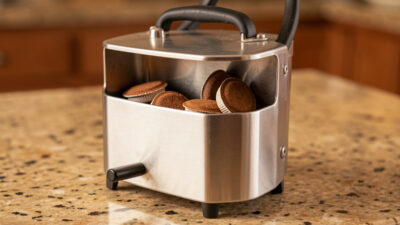
Knock Boxes: The First Workflow Tool I’d Buy
A knock box is a vented container with a padded bar you knock the spent puck against. It sounds trivial until you’ve banged a wet puck into a kitchen bin twice a day for a month and watched the grounds go everywhere. The right knock box makes puck disposal a half-second motion, which matters more than it looks: anything that makes the cleanup painless makes you more willing to do thorough puck prep in the first place.
What separates a good one from a bad one is the knock bar (rubber that won’t crack and won’t dent a portafilter), the height match to your drip tray, and whether it actually holds a week of pucks without smelling. I go deep on sizing, bar material, and the under-grinder versus standalone choice in the knock box selection guide. The short version: buy the one that fits your specific counter gap, not the prettiest one. A solid mid-size knock box runs about $20-30 and is the last one you’ll buy.
Tampers and the 58mm vs 58.35mm Question
A tamper’s job is to compress the puck flat and level so water meets even resistance. The flat-versus-fit debate that trips up new owners is basket diameter: most “58mm” baskets actually want a tamper closer to 58.35mm for a tighter fit that leaves no gap for grounds to escape up the sides. That fit gap is a real, repeatable source of channeling, and it’s the kind of thing a bottomless portafilter exposes instantly.
The honest take is that an exact-fit tamper matters more than a heavy or “self-leveling” one. I’d rather have a $25 flat-base tamper that matches my basket to a tenth of a millimeter than a $90 spring-loaded showpiece that’s a hair undersized. The full breakdown of why that 0.35mm matters, how to measure your basket, and when self-leveling tampers are worth it lives in the tamper sizing guide. Pair the right tamp with sound distribution and you remove two of the biggest causes of an uneven shot — which you can confirm by reading the bottomless portafilter pour.
Dosing Cups and Bean Containers
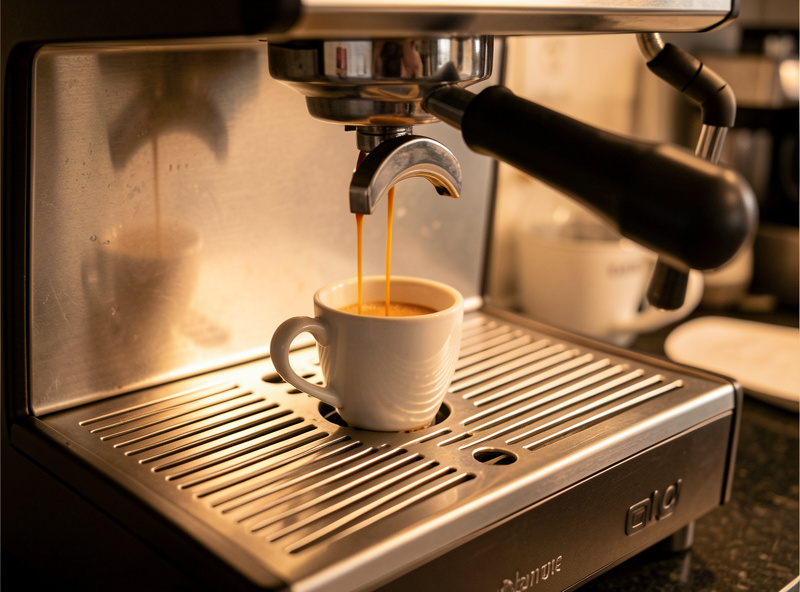
A dosing cup is a small metal cup you grind into, weigh, and then load into the portafilter. It’s the backbone of single-dosing: weigh your beans, grind, knock the cup to settle, transfer to the basket, distribute, tamp. It removes static mess and lets you weigh the dose precisely before it ever touches the basket. On a single-dose grinder it’s close to essential; on a hopper grinder it’s a nice-to-have.
Bean storage is the quieter half of this category. Beans stale fastest from oxygen and light, so a valve-sealed or vacuum container does more for your cup over a two-week bag than most gear costs ten times as much. I cover cup diameters (get one that matches your basket so the transfer is clean), anti-static tricks, and which storage actually slows staling in the dosing cups and containers guide. If you’re running a single-dose grinder, read that one before you buy.
Scales: The One Accessory I’d Never Pull a Shot Without
If I could keep only one accessory, it’s the scale. Dose in, yield out, timed — that’s the whole measurement that turns espresso from luck into a process you can repeat. A 0.1g resolution scale that fits on the drip tray and has a fast refresh and a built-in timer is worth more to your cup than a four-figure machine upgrade. I’ve watched people spend two grand chasing consistency they could have bought for forty.
The traps are real, though: many cheap scales are too slow, too big for the tray, or not water-resistant enough to survive a steamy bench. Resolution, response speed, footprint, and auto-tare behavior are what separate a shot scale from a kitchen scale. The full comparison — including which budget scales actually keep up and why the timer matters — is in the best scales for espresso guide. Once you’re weighing every shot, the ratio and shot time finally become numbers you can act on instead of feelings.
Cleaning Brushes, Cloths, and the Tools That Keep a Machine Alive
The cheapest accessories on the bench do the most to protect the most expensive thing on it. A group brush with heat-safe bristles, a dedicated steam-wand microfiber, and a separate set of cloths for the body keep gaskets, screens, and the wand from the slow death of baked-on residue. Skip them and you’ll be replacing a group gasket and scrubbing a clogged steam tip far sooner than you should.
The mistakes I see most: one cloth used for everything (cross-contaminating milk and group grime), abrasive scrubbers that scratch chrome, and brushes that melt against a hot group. Match the brush to the job, keep milk cloths separate, and your maintenance routine gets faster and gentler. I lay out the exact kit — brush bristle types, microfiber GSM, and what to never use — in the cleaning brushes and cloths guide. These tools are the daily complement to a proper backflush and descale routine. A simple cleaning brush set with a few microfiber cloths is under $15 and pays for itself in postponed gasket swaps.
Mats and Organizers: Keeping the Loop Tight
A bench mat protects the counter from tamping force and catches stray grinds; an organizer keeps the tamper, distribution tool, and dosing cup in arm’s reach so the dial-in loop stays tight. Neither changes the shot. Both change whether you keep pulling good shots when you’re busy, because a workflow with everything in reach is a workflow you actually follow.
The honest framing: this is the most optional category here, and it’s the one where overspending is easiest. A silicone mat that fits your tamping spot and a small tray for your three core tools is all most counters need. I cover mat materials (silicone versus the rubber that holds grind smell), station layouts for small kitchens, and which “barista organizers” are overbuilt in the mat and organizer setups guide. If counter space is your real constraint, my notes on an espresso setup in a small kitchen pair well with it.
The Puck-Prep Accessories That Overlap This List
Three tools straddle the line between “accessory” and “technique gear,” and they’re worth naming because they punch above their price. A WDT tool (a set of fine needles you stir through the grounds) breaks up clumps and is the single most effective anti-channeling tool I own. A dosing funnel keeps grounds in the basket during distribution. Precision baskets give you a more even bed than the stamped baskets that ship with most machines.
I treat these as part of puck prep rather than counter accessories, but if you’re building a kit from scratch, slot a WDT tool in right after your scale and tamper — it’s that good. The deeper mechanics of why distribution beats tamp pressure are in my notes on dosing an 18g basket and the wider grinder guide, since grind quality and distribution work together. And no accessory fixes a grinder that clumps badly — if yours does, read up on burr geometry first.
The Accessories I’d Skip (and Why)
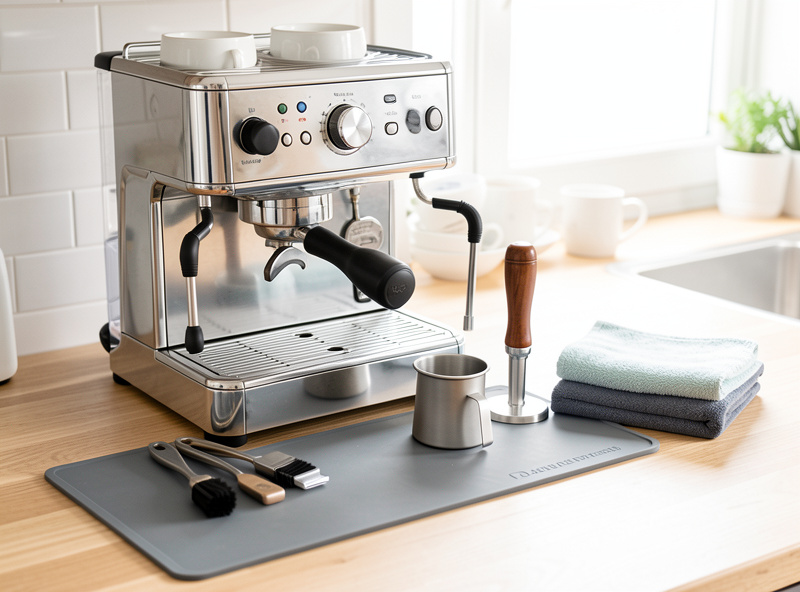
Plenty of espresso accessories exist to be sold, not used. Tamping stations solve a problem a steady hand already solved. “Calibrated” spring tampers add cost for a consistency that good technique gives you free. Branded dosing rings duplicate a dosing funnel. Bottomless portafilters are genuinely useful as a diagnostic, but they’re a learning tool, not a daily upgrade once your prep is sound.
The rule that’s saved me the most money: don’t buy an accessory to fix a technique problem. A leveling distributor won’t fix channeling caused by a bad grinder or sloppy WDT; it just hides it for one shot. Spend on the variable that’s actually broken. If your shots are inconsistent, the fix is almost always grind, dose, or distribution — not another gadget. When a shot goes wrong, work the fix-it order before you reach for your wallet.
Maintenance Consumables: The Boring Accessories That Save Machines
The accessories that prevent repair bills aren’t tools at all — they’re consumables, and most new owners forget them entirely. A blind basket (a solid disk that replaces your perforated basket) is what lets you backflush detergent through the group; without it you can’t clean the three-way valve properly, and that’s where gunk builds into a leak. Espresso machine cleaning detergent and a descaler matched to your water hardness round out the kit. These three sit quietly in a drawer and add years to a machine.
The mistake I see is treating descaling as optional until the machine slows down — by then scale has already coated the boiler and elements. How often you descale depends entirely on your water; on hard water it might be monthly, on soft water twice a year. The early warning signs of scale damage are subtle, and I cover them in detail in the guide to scale damage warning signs. Pair a blind basket and detergent with a sensible descaling schedule and you’ve protected the most expensive thing on your counter for the price of a few coffees. A blind basket and backflush detergent set is a one-time purchase under $20.
Water: The Accessory Nobody Calls an Accessory
Water is 98% of what’s in your cup and the single biggest cause of premature machine death, yet almost nobody counts a water test kit as an accessory. A cheap hardness test strip or a TDS meter tells you two things you can’t otherwise know: whether your water is going to scale up your boiler, and whether it’s flat enough to mute extraction. Both are fixable once you can measure them, and neither is visible without the kit.
I keep hardness strips next to the descaler because the two decisions are linked: test, then choose between a bottled water that hits the right mineral profile or a remineralization recipe. This is taste and machine-protection territory only — never health framing. The full method, including which bottled waters actually work and how to read a hardness result, is in my pick for the best water for espresso machines. Get the water right and half the “my machine tastes flat” and “my shots went sour” problems disappear before you touch the grinder. If yours have, the fix-it order assumes your water is already sorted.
How I’d Spend the First Budget on Accessories
Starting from zero, here’s the order that gets the most cup-improvement per krona. First, a 0.1g scale — non-negotiable, the foundation everything else rests on. Second, a WDT tool, because distribution is where most home channeling lives. Third, an exact-fit tamper matched to your basket. Those three change the shot. Then add the workflow and protection layer: a knock box, a dosing cup, and a cheap brush-and-cloth set. A bench mat comes last, when the rest is dialed.
That whole list lands well under the price of a single machine-class upgrade and does more for daily consistency than any of them. The accessories that earn their place all share one trait: they make the repeatable shot easier than the lucky one. That’s the entire game. Buy in that order, skip the jewelry, and your counter will look less impressive in photos and pour far better in the cup. If you’re still choosing the machine those accessories will sit beside, start with the first espresso machine guide and the Gaggia Classic Pro verdict.
As an Amazon Associate I earn from qualifying purchases.
Frequently Asked Questions
What espresso accessory should I buy first?
A 0.1g scale with a built-in timer. Dose and yield are the two variables that move flavor most and the two people guess at hardest, so locking them down does more for your cup than any machine upgrade in the same price range.
Are expensive espresso tampers worth it?
No. An exact-fit tamper that matches your basket diameter (often closer to 58.35mm than a flat 58mm) matters far more than weight, springs, or brand. A $25 correctly sized flat tamper beats a $90 one that is a hair undersized.
Do I really need a knock box?
You do not strictly need one, but it is the cheapest tool that makes daily cleanup painless. A clean, fast puck-disposal motion makes you more willing to do thorough puck prep, which is the part that actually affects the shot.
Which espresso accessories are a waste of money?
Tamping stations, calibrated spring tampers, branded dosing rings, and most leveling gimmicks. They fix problems good technique already solves. Never buy an accessory to mask a grind, dose, or distribution problem.
What is a WDT tool and is it worth it?
A WDT tool is a set of fine needles you stir through the grounds to break up clumps before tamping. It is the single most effective anti-channeling accessory for home setups and belongs right after a scale and tamper in any kit.
Do dosing cups improve espresso?
Indirectly. A dosing cup does not change extraction, but it makes single dosing clean and precise: weigh, grind, settle, transfer. On a single-dose grinder it is close to essential; on a hopper grinder it is optional.