Manual Lever Espresso Machines: The Complete Guide
How manual lever espresso machines actually work — spring vs direct lever, the pressure curve, temperature limits, and which one fits you.
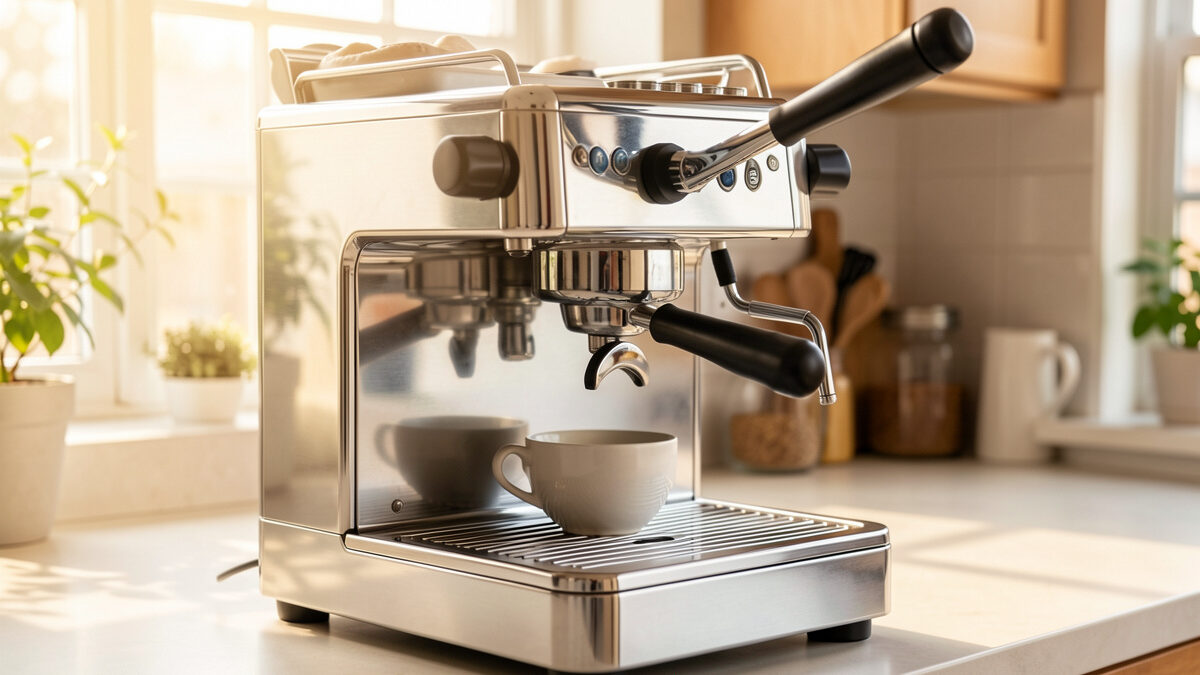
A manual lever espresso machine makes pressure with a spring or your own arm instead of a pump, so you shape the shot by hand rather than letting a 9-bar motor decide everything. On my counter a good lever pulls a sweeter, more forgiving shot than a cheap pump machine at the same price, but it asks for cleaner puck prep and a steadier hand. This guide maps the whole lever class against what I run every day.
I write the rest of this site about single-boiler, heat-exchanger and dual-boiler pump machines because that is what most people buy. The lever is the category I kept circling back to once the pump benches were dialed, because it changes the one variable a pump locks away from you: the pressure curve itself. Here is the honest version of what a lever is, who it is actually for, and how to choose one without buying coffee mysticism.
What a manual lever espresso machine actually is
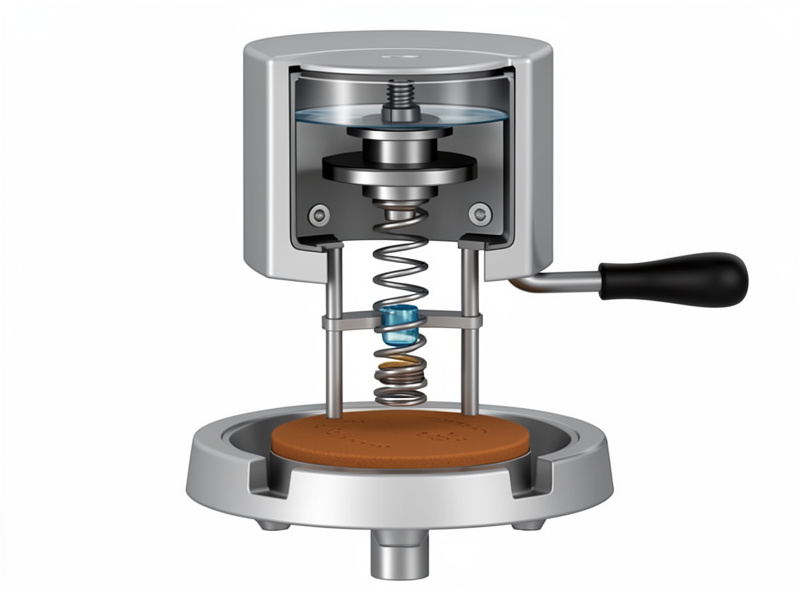
A lever machine replaces the electric pump with a piston you drive through a lever arm. Pull the lever and a piston either compresses a spring (spring-lever) or directly pushes water through the puck (direct-lever). Pressure peaks around 8 to 10 bar and then tapers as the spring relaxes or your arm tires — that declining curve is the whole point. A pump holds a flat line; a lever draws a slope. The spring-piston lever that started it all was Achille Gaggia’s 1948 design, and the core mechanics have barely changed since.
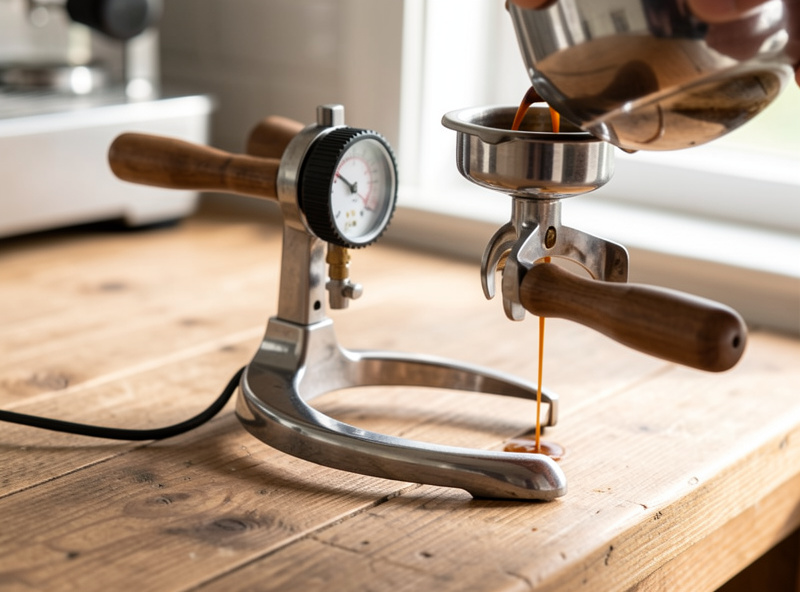
That difference is not marketing. On my bench I run a pressure-gauge portafilter on the pump machines to watch the line, and the lever’s natural decline is the curve those pump owners spend extra money chasing with flow-control kits. The lever does it mechanically, for less money, in exchange for handing you the timing. If you want to understand the curve itself before anything else, read what the lever actually does to your pressure curve — it is the most important page in this cluster.
Spring-lever versus direct-lever: the split that matters
The lever class divides cleanly in two, and choosing the wrong half is the most expensive mistake people make. A spring-lever (think La Pavoni Europiccola, Olympia Cremina, the Profitec/Bezzera spring groups) stores energy in a calibrated spring: you cock the lever, the spring delivers a repeatable curve, and the machine does the pressure work. A direct-lever (the Flair, the Cafelat Robot, the old Pavoni Professional in manual mode) means your arm is the pump — you feel the puck resistance in real time.
Spring-levers buy you repeatability; direct-levers buy you feedback and portability. I keep coming back to the spring group when I want the same shot twice without thinking, and to the direct press when I want to learn what a puck is doing. The full breakdown lives in spring lever vs direct lever espresso, and it is worth reading before you spend a krona, because the two halves suit completely different people.
How a lever shot compares to a pump shot
Pulled against the same bag of Nordic light roast, my lever shots run sweeter in the body and softer in the finish than the Gaggia Classic Pro’s pump shot at the same dose and ratio. That is the declining pressure flattering the extraction tail. But the lever is less forgiving of bad puck prep: the bottomless portafilter shows channeling on a lever just as brutally as on a pump, and you cannot brute-force past a bad puck with a motor that does not care.
| Trait | Manual lever | Pump machine |
|---|---|---|
| Pressure source | Spring or your arm | Electric pump |
| Pressure curve | Naturally declining | Flat 9 bar (unless flow control) |
| Shot-to-shot repeatability | Spring: high / Direct: skill-dependent | High |
| Learning curve | Steeper first month | Gentler |
| Back-to-back shots | Limited by boiler size | Strong on dual boiler |
| Works off-grid | Direct-lever: yes | No |
| Moving parts to fail | Few (gaskets, spring) | Pump, valves, electronics |
If you are weighing a lever against your first pump machine, my first espresso machine buying guide and the single boiler vs heat exchanger piece set the pump baseline a lever has to beat for your situation.
The grinder still outranks the machine
I will say this on every machine page on this site and I will say it here: the grinder matters more than the machine, lever or not. A lever cannot fix a grinder that throws boulders and fines in the same dose — if anything it exposes the problem faster, because the declining pressure gives channels more time to form. Before you spend on a lever, make sure the grinder in front of it is honest. My espresso grinder guide explains why, and flat vs conical burrs covers what burr geometry actually changes in the cup.
The practical floor: a lever deserves a grinder with genuinely flat, repeatable particle distribution. Pair a $700 Cremina with a $40 blade grinder and you have wasted the Cremina. Pair a $90 Cafelat Robot with a good hand grinder and you can pull shots that embarrass machines costing five times as much.
Temperature: the lever’s honest weakness
This is where I refuse to sell romance. Most small spring-levers and every direct-lever press are thermally less stable than a PID dual boiler. On a La Pavoni-style group the temperature climbs shot to shot as the group heats, and on a direct press the water cools from the moment you pour it into the chamber. You manage this — preheating the chamber, timing your pull, letting the group settle — but you do not get set-and-forget stability. I lay out exactly how far you can push it in lever espresso temperature stability, including the limits no amount of technique removes.
If rock-steady brew temperature is your non-negotiable, a PID dual boiler is the honest answer, and my espresso upgrade path shows where that money lands. The lever is for people who want to shape the shot, not for people who want the machine to remove every variable.
The learning curve is real, and then it is not
The first month on a lever feels worse than your first pump machine. You will pull sour, gushing, choked and uneven shots while your hand learns the lever’s language and your puck prep tightens up. Then something clicks — usually around the third or fourth week in my logs — and the lever becomes the most rewarding way to make espresso at home, because you are finally driving the shot instead of pressing a button. I wrote the honest week-by-week version in the lever espresso learning curve so you know what is normal and what is a real problem.
Two habits flatten that curve fast: a bottomless portafilter so you can read the pour, and a shot log. Change one variable, read the result, write it down, repeat. It is the same loop I run on every other bench in my workshop — espresso is just the calibration you drink.
When a lever makes real sense (and when it does not)
A lever earns its place in four situations. First, you want to learn extraction deeply and feel the pressure rather than read a number. Second, you want espresso somewhere with no power — camping, a cabin, a boat — where a direct press is the only real option (see no-electricity espresso). Third, you want a beautiful, near-indestructible machine with almost nothing to break. Fourth, you simply enjoy the ritual.
A lever is the wrong call if you need three milk drinks back to back every morning before work, if you refuse to manage temperature, or if you want the machine to hide your puck-prep mistakes. For high-volume mornings, a dual boiler wins. Be honest about which person you are. If you want the ranked picks by exactly this kind of use case, go to best manual lever espresso machines, ranked by use case.
What it costs to get into the lever class
The lever class spans an enormous price range, and unlike pump machines the cheap end is genuinely good. A direct-lever press like the Cafelat Robot or a Flair sits in entry territory and pulls excellent shots. A used La Pavoni Europiccola lands in the mid range and gives you a spring group with real character. A new Olympia Cremina is genuine heirloom money. None of that buys you a grinder, so budget the grinder first.
| Tier | Example class | What you get |
|---|---|---|
| Entry | Direct-lever press (Flair, Cafelat Robot) | Excellent shots, portable, no electricity, gauge feedback |
| Mid | Used spring-lever (La Pavoni Europiccola) | Spring repeatability, classic group, steam wand |
| Heirloom | Olympia Cremina, new spring groups | Build quality, longevity, refinement |
For where each upgrade krona actually lands across the whole hobby, my upgrade path guide is the map. And whichever tier you pick, the water you brew with matters more than most of the machine — soft, balanced water protects the boiler and tastes better in the cup.
Living with a lever: maintenance and milk
Mechanically the lever is a gift. There is no pump to fail and no flow-control electronics to confuse. You replace group gaskets and a piston seal periodically, keep the group clean, and that is most of it. Spring-levers with a boiler still need descaling on the same water-hardness schedule as any machine — my maintenance and backflushing habits transfer directly, minus the three-way solenoid most levers do not have.
Milk is the honest limitation on small levers. A La Pavoni’s little boiler steams one cappuccino’s worth of milk competently, then needs to recover; a direct press with no boiler does not steam at all. If you live on flat whites, pair a non-steaming lever with a separate steamer or accept the limit. My milk steaming guide covers technique once you have the steam to work with.
Dialing a lever in
The triangle is the same everywhere: dose, yield, time. I dose to a repeatable headspace, target a 1:2 ratio as the default starting point, and read the shot by taste and pour rather than chasing a magic number. What changes on a lever is that time is partly yours to set — you control pre-infusion length by how you ease the lever, and the total shot time stretches as pressure declines. My core method in how to dial in espresso, the ratio explainer, and how long a shot should take all apply, with the caveat that the lever turns shot time into a read-out of your own technique as much as the grind.
If you want the deeper theory behind why the declining curve tastes the way it does, espresso extraction science connects the pressure curve to extraction yield. A refractometer spot-check on my bench consistently shows lever shots landing in a comfortable extraction window with a softer, sweeter profile than the flat-9-bar equivalent — the curve doing exactly what its fans claim.
Frequently Asked Questions
Is a manual lever espresso machine harder to use than a pump machine?
Yes, for the first few weeks. A lever asks for cleaner puck prep and a steadier hand because you control the pressure curve. In my shot log the click usually comes in the third or fourth week, after which it feels natural and rewarding.
Do you need electricity for a lever espresso machine?
Not for a direct-lever press like a Flair or Cafelat Robot — you supply the pressure with your arm and only need hot water. Spring-lever machines with a built-in boiler do need power to heat water, so the off-grid option is specifically the direct-lever class.
Does a lever machine make better espresso than a pump?
It makes a different shot. The declining pressure curve tends to produce a sweeter, softer profile, and on my counter lever shots beat a cheap pump machine at the same price. But a good PID dual boiler holds temperature better, which matters more for some people than the curve.
What is the difference between spring-lever and direct-lever?
A spring-lever stores energy in a calibrated spring that delivers a repeatable pressure curve, so the machine does the work. A direct-lever uses your arm as the pump, giving real-time feedback but depending on your technique for consistency.
Do I still need a good grinder for a lever machine?
Absolutely, and arguably more. A lever exposes grind problems faster because the declining pressure gives channels time to form. A great grinder in front of a cheap lever beats a great lever fed by a poor grinder every time.
Can a small lever machine steam milk?
Spring-lever machines with a boiler can steam roughly one drink’s worth before needing to recover. Direct-lever presses have no boiler and do not steam at all, so milk-drink lovers should pair one with a separate steamer or accept the limit.
How to pull a lever shot, step by step
The mechanics are simple once you separate them from the mystique. Grind and dose into the basket exactly as you would for any machine, WDT to break up clumps, level and tamp flat. On a spring-lever you raise the lever to draw hot water into the chamber above the puck, pause for a few seconds of pre-infusion at low pressure, then release the lever and let the spring do the work as it presses down. On a direct-lever you push the lever down yourself: ease in gently to pre-infuse, then apply steady pressure and ride it down as resistance fades.
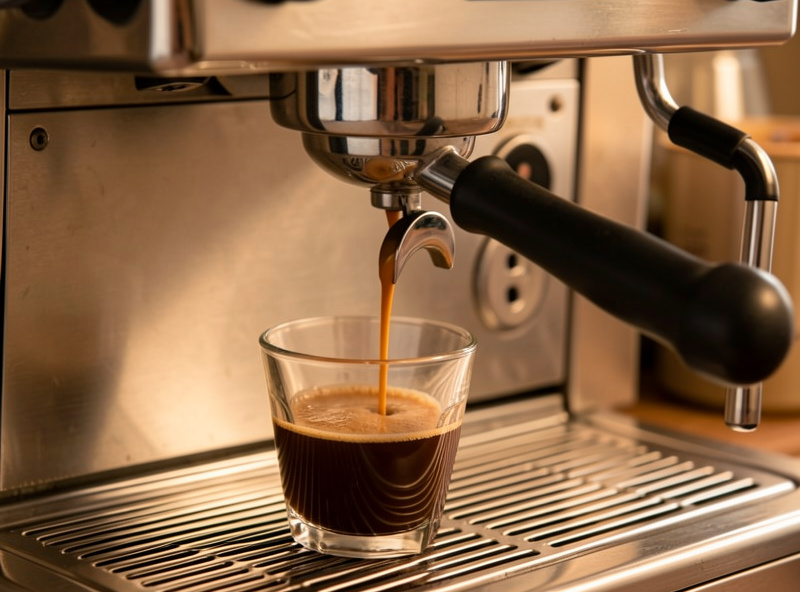
The part beginners miss is the pre-infusion. That low-pressure pause lets the puck saturate evenly before full pressure hits, and it is the single biggest reason lever shots taste sweeter — the puck has no dry spots for water to blast a channel through. I treat the lever’s pre-infusion as a deliberate, controllable stage, the same way a flow-control pump owner does, except mine costs nothing and I feel it in my hand. Watch the first drops appear at the bottomless portafilter: dark, slow, then blooming into a single steady cone is the read you want.
The mistakes that wreck lever shots
Almost every bad lever shot I have pulled traces to one of four causes. Grinding too coarse because the lever feels easy to pull — the shot gushes and tastes sour and thin. Skipping pre-infusion and slamming straight to full pressure — instant channeling, visible as a jet from one side of the bottomless. Letting a small group overheat across back-to-back shots — the second and third taste increasingly harsh. And letting a direct press cool while you faff with the grinder — pour your water and pull promptly, because the chamber is bleeding heat the whole time.
None of these are mysterious and none need a refractometer to diagnose. They need a bottomless portafilter so you can see the pour, a shot timer, and the discipline to change one thing at a time. The lever rewards process control and punishes guessing, which is exactly why I like it. If a shot goes wrong, the lever usually told you why in the pour — you just have to be watching.
Buying a used spring-lever without regret
The mid-tier sweet spot — a used La Pavoni Europiccola or similar — is also where people get burned. Three things to check before you hand over money. First, the group and piston seals: a machine that has sat unused for years will need new gaskets, which is cheap and routine but factor it in. Second, scale: lift the lid and look inside the boiler; heavy limescale on a hard-water machine tells you it was never descaled and may have pitting. Third, the spring and lever action: it should cock smoothly and return with even resistance, not grind or stick.
A tired-looking Pavoni with good bones is one of the great espresso bargains, because almost everything on it is rebuildable with simple tools and standard seal kits. That serviceability is the lever’s hidden value — there is no proprietary pump assembly or control board to orphan the machine when a part dies. I would take a forty-year-old serviceable spring group over a five-year-old pump machine with dying electronics any day.
Lever myths worth ignoring
The lever world carries more folklore than any other corner of espresso, so let me clear three claims off the bench. “Levers pull 15 bar so they extract harder” — no; the peak is around 8 to 10 bar and the curve declines, which is gentler, not harder. “A lever guarantees a better shot” — it guarantees nothing; it hands you control, and control is only an advantage if you use it. “Lever machines are vintage and fragile” — the opposite is true mechanically; a spring group has fewer failure points than any pump machine and rebuilds with hand tools.
The one claim that holds up is the sweetness. Across my shot log, lever pulls on the same bean land softer and sweeter than the flat-pressure equivalent, and a refractometer check puts them in a healthy extraction window without the harsh edge a held 9 bar can push into a light roast. That is not magic — it is the declining curve treating the puck more kindly as extraction finishes. Everything else is counter romance.
So is a lever right for you?
Buy a lever if you want to feel and shape the shot, if you want a beautiful machine that will outlive your other gear, or if you need espresso where there is no power. Skip it if you need volume milk drinks every morning or you want the machine to erase your mistakes. Whichever way you lean, spend on the grinder first, get your water right, and keep a shot log — those three habits matter more than the badge on the boiler. The lever simply puts the most interesting variable in espresso, the pressure curve, back in your hands.
The polymath case for a lever
I run a lot of benches, and the lever is the espresso machine that thinks most like the rest of my workshop. Dialing a lever shot and trimming a 3D printer’s first layer are the same loop: change one variable, read the result, log it, repeat. The lever puts that loop in your hand instead of behind a pump curtain. The 0.1-gram scale under my portafilter is the same scale discipline as every other bench I run — espresso is just the calibration you drink, and the lever is the version where you, not a motor, close the loop.
That is ultimately who a lever is for: the person who wants to understand and shape the process, not just receive the output. If that is you, start with the spring versus direct decision, get honest about temperature limits, and pick from the ranked machines by use case. If it is not you, there is no shame in a great pump machine — the cup is what matters, not the mechanism.
Related Guides
- Spring Lever vs Direct Lever Espresso: The Real Difference
- What the Lever Actually Does to Your Pressure Curve
- Best Manual Lever Espresso Machines, Ranked by Use Case
- The Lever Espresso Learning Curve: What the First Month Feels Like
- Temperature Stability on a Manual Lever: Honest Limits
- Living With a Lever Press Like the Flair: An Honest Review
- No-Electricity Espresso: When a Lever Makes Real Sense