Flash Brew: Japanese Iced Coffee Technique
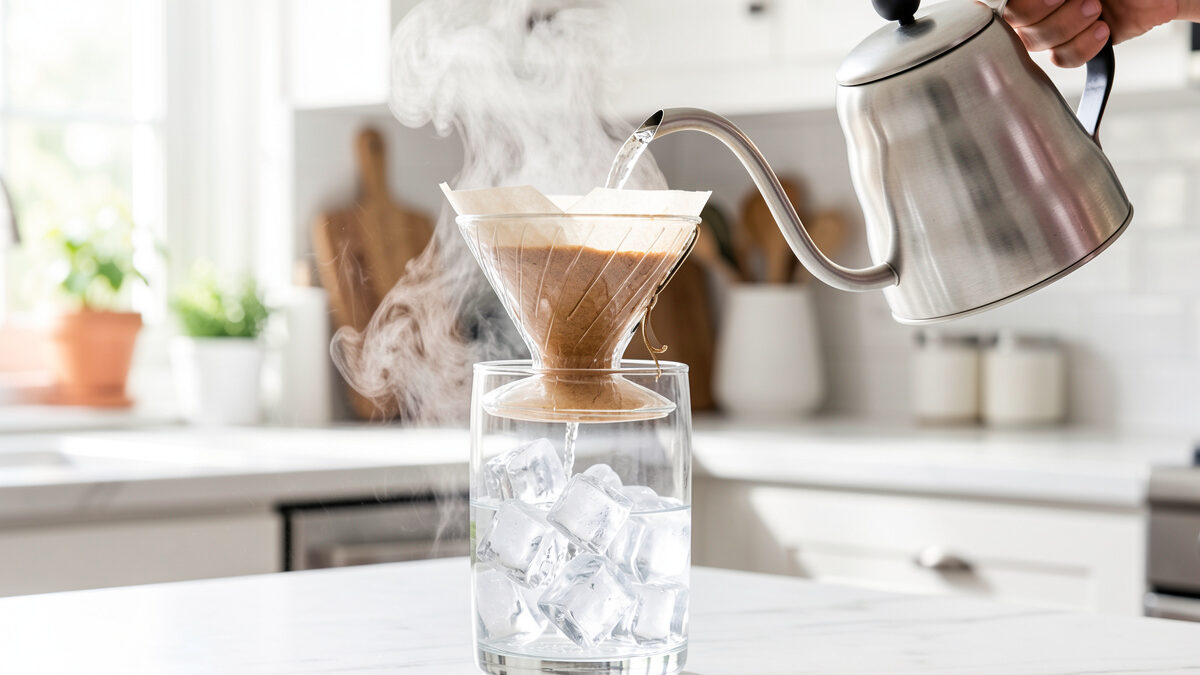
Flash brew — Japanese iced coffee — is filter coffee brewed hot directly onto ice, so it extracts fully in minutes and chills instantly. The method that works on my counter: brew a normal pour-over but replace about a third of your water weight with ice in the carafe, so for a 300-gram brew you put roughly 100 grams of ice below and pour 200 grams of hot water through. The result is the brightest, cleanest iced coffee there is — everything cold brew leaves on the table, kept in the cup.
This is the iced coffee for people who actually want to taste the coffee. Cold brew is smooth but muted; flash brew is hot-extraction flavor frozen in place. It takes four or five minutes, needs nothing but a dripper and a scale, and beats cold brew on aromatics every single time. Here is the technique, the ice math, and why the speed of the chill is the whole point.
Why Brew Hot Onto Ice?
Hot water extracts the aromatic compounds and bright acids that cold water physically cannot reach — that is settled brewing chemistry, not preference. The problem with normal hot coffee left to cool is that slow cooling lets those volatile aromatics escape and oxidize, so it tastes dull by the time it is cold. Flash brewing solves this by crashing the temperature the instant the coffee is brewed: the hot coffee hits ice and drops to cold in seconds, locking the aromatics in place before they can boil off. You get full hot extraction with the freshness of a flash freeze.
That is the entire trick, and it is why flash brew tastes so different from both cold brew and iced-then-refrigerated coffee. The speed of the chill preserves what slow cooling destroys. It is the same logic as crashing an espresso shot over ice, which I cover in the cold brew and iced espresso guide — hot extraction, instant chill, nothing lost in between.
The Ice Math: Replace, Do Not Add
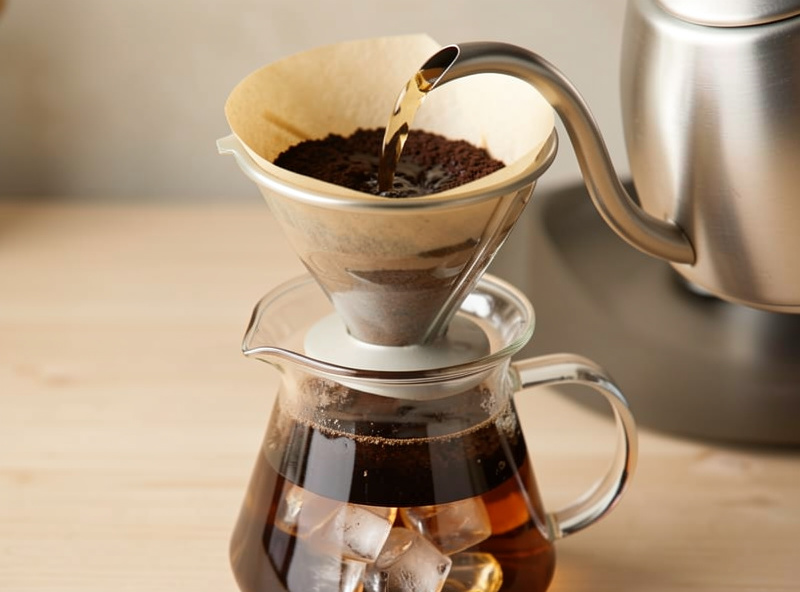
The key number is that the ice is part of your brew water, not extra. A standard pour-over might use a 1:16 ratio — say 25 grams of coffee to 400 grams of water. For flash brew you keep the same total liquid but split it: put about 130 to 160 grams of that as ice directly in the carafe, and pour the remaining 240 to 270 grams as hot water through the grounds. As the hot coffee drips onto the ice, the ice melts and makes up the difference, landing you at full strength and fully chilled. Add ice on top of a full water dose instead and you get watery coffee.
I weigh the ice the same way I weigh everything — a third of total water as ice is my starting point, adjusted to taste. Too much ice and the brew is under-concentrated; too little and it does not chill fully and tastes lukewarm. This is pure ratio discipline, the same instinct as espresso ratio, just applied to a split between hot and frozen water. Write down the split that worked and flash brew becomes completely repeatable.
Grind, Beans, and Pour
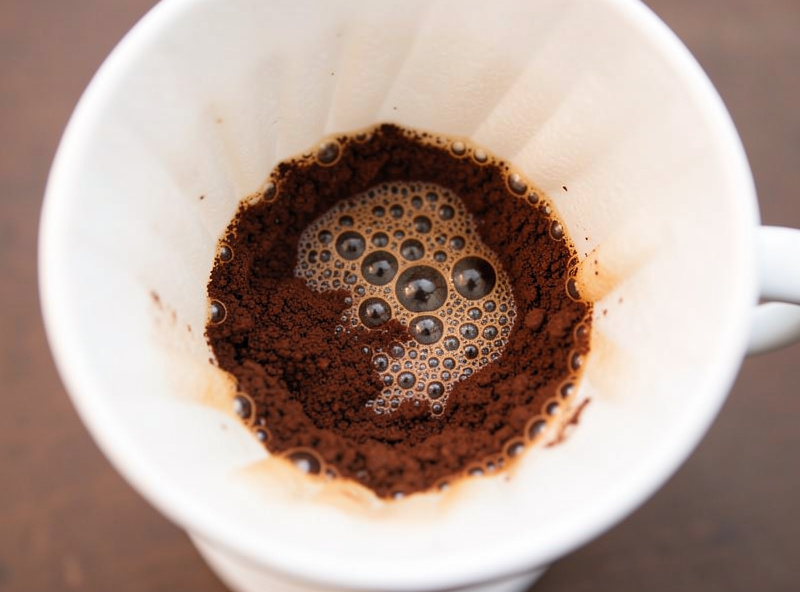
Grind for flash brew like a slightly finer pour-over — medium, a touch finer than you would for a hot V60, because the cold carafe and the dilution want a bit more extraction to compensate. Use a bright, aromatic bean: this is the method that rewards a good light or medium roast with floral, fruity, or citrus notes, because those are exactly the aromatics flash brewing preserves. A dull dark roast works but wastes the method. Pour in the same controlled circular pulses as a normal pour-over, blooming the grounds first with a small amount of hot water.
The grinder matters here as much as it does for espresso — even particle size is what keeps the cup clean rather than muddy, and a bright bean exposes a bad grind instantly. If you are using a blade grinder or a cheap stepped one, that is the upgrade that will improve your flash brew more than any dripper, and my grinder guide and burr comparison explain why consistency beats everything. Fresh beans are non-negotiable: flash brew showcases aromatics, and stale beans have none to show.
Flash Brew vs Cold Brew
| Factor | Flash Brew | Cold Brew |
|---|---|---|
| Brew temperature | Hot onto ice | Cold immersion |
| Time | 4-5 minutes | 12-18 hours |
| Flavor | Bright, aromatic, clean | Smooth, low-acid, heavy |
| Acidity | Higher (preserved) | Lower |
| Best bean | Bright light/medium roast | Medium-dark, chocolatey |
| Stores? | Best fresh, hours | Yes, about a week |
| Gear | Dripper + scale | Jar or brewer |
Serving and Common Mistakes
Once brewed, swirl the carafe to melt any remaining ice and even out the temperature, then pour over fresh ice in a serving glass if you want it colder. Flash brew is best within an hour or two — it is a fresh drink, not a batch one, so make it to order. The most common mistake is treating it like cold brew and trying to store a big batch; it loses its aromatic edge as it sits, which defeats the whole purpose. Make a single carafe, drink it bright.
The second mistake is the ice math — adding ice on top of a full water dose instead of replacing part of the water, which gives you weak, watery coffee. Get the split right and the cup lands at full strength. The third is using a flat, dark roast that has nothing to preserve; flash brew is wasted on it. Treat it as the bright, fresh, hot-extraction iced coffee it is, and it becomes the most flavor-forward thing you can make without an espresso machine. For where it sits against the other cold methods, the three-way comparison puts it in context.
Frequently Asked Questions
What is flash brew coffee?
Flash brew, or Japanese iced coffee, is filter coffee brewed hot directly onto ice so it extracts fully and chills instantly. Part of the brew water is replaced with ice in the carafe. The instant chill locks in bright aromatics that slow cooling would lose, making it the brightest iced coffee method.
How much ice do you use for flash brew?
Replace about a third of your total brew water with ice. For a 1:16 pour-over using 400 grams of water, put roughly 130 to 160 grams as ice in the carafe and pour the rest as hot water. The ice is part of the water, not extra, or the coffee comes out watery.
Is flash brew better than cold brew?
It depends on what you want. Flash brew is brighter, more aromatic, and ready in minutes; cold brew is smoother, lower in acidity, and batchable for a week. Flash brew tastes more like the coffee itself, while cold brew is mellower and more forgiving. Neither is strictly better.
What grind should I use for flash brew?
A medium grind, a touch finer than a normal hot pour-over, to compensate for the cooling and dilution. Even particle size matters as much as it does for espresso, so a quality burr grinder makes a noticeable difference. Grind too coarse and the cup is sour and thin.
Can I store flash brew coffee?
It is best within an hour or two. Flash brew preserves volatile aromatics that fade as it sits, so unlike cold brew it does not store well. Make a single carafe to order rather than a large batch. If you want something to keep in the fridge for the week, cold brew is the better choice.