Reading a Bottomless Portafilter Pour: What Your Shot Is Telling You
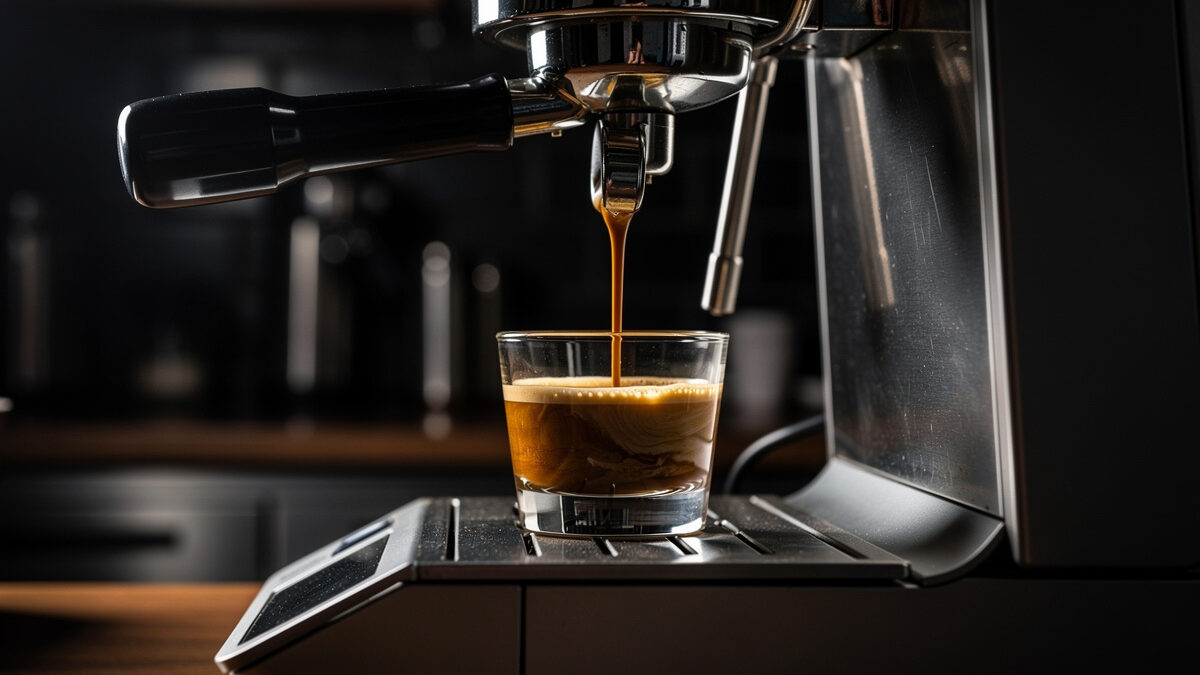
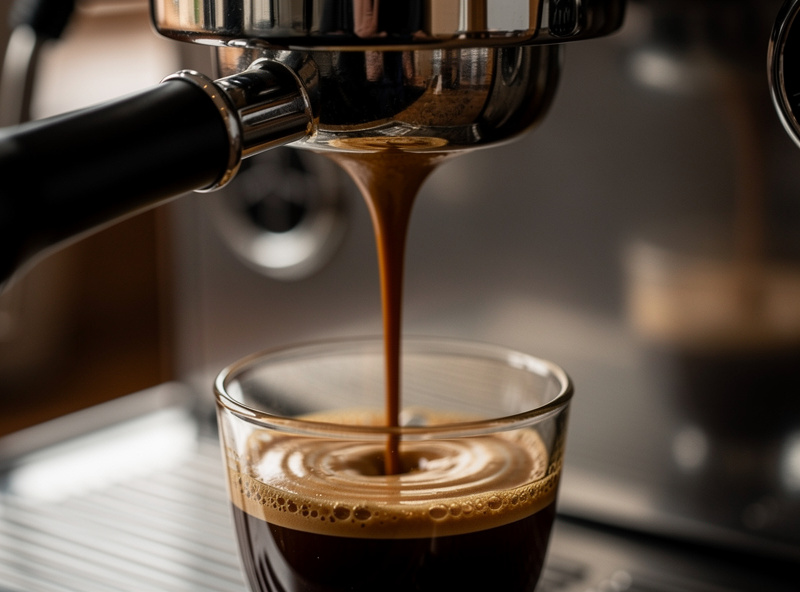
A good espresso pour from a bottomless portafilter looks like a single, centred, even stream that starts as a few separate droplets, comes together into one “mouse tail,” and tapers smoothly — with no sideways jets, sprays, or sudden pale spurts. The bottomless (or naked) portafilter removes the spouts so you watch the underside of the puck extract directly, and that view is the most honest feedback in espresso. Your taste buds guess; the pour shows. Once you can read it, you stop changing the grind to fix problems that were really puck-prep problems — which is most of what stalls beginners.
I run a bottomless on nearly every dial-in shot for exactly this reason: it’s the cheapest honesty device on the counter and it can’t be fooled. A channeling puck looks beautiful from the front of a spouted portafilter and tastes terrible; on a bottomless, the failure is right there in the open. Let me walk through exactly what to look for, what each pattern means, and what to do about it.
What a good pour looks like, second by second
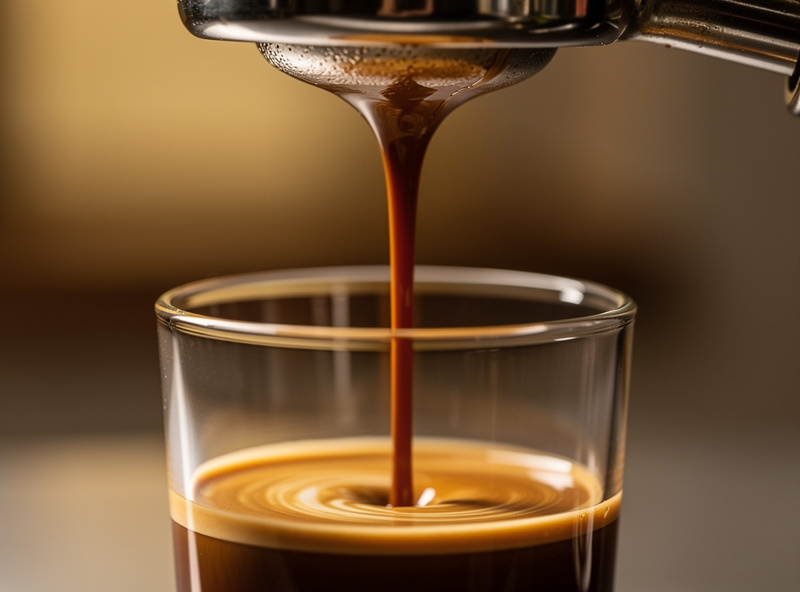
A healthy shot has a recognisable arc. For the first few seconds (during pre-infusion and the start of the pull) you’ll see the underside of the basket darken and wet, then individual droplets appear at a few points. Within a few more seconds those droplets converge into a single stream from the centre of the basket — the “mouse tail.” That stream should be steady, glossy, an even reddish-brown, and roughly central. As the shot progresses it gradually thins and the colour pales (blonds) near the end as the available coffee solubles run down. A pour that does this — converges to one centred tail, stays even, tapers gently — came from a well-distributed, evenly tamped puck. That’s your target, and it correlates strongly with a balanced cup.
The failure patterns and what they mean
Everything that goes wrong shows a signature. Here’s the diagnostic map I read in real time:
| What you see | What it means | What to fix |
|---|---|---|
| Single centred even tail | Well-prepped, even extraction | Nothing — this is the target |
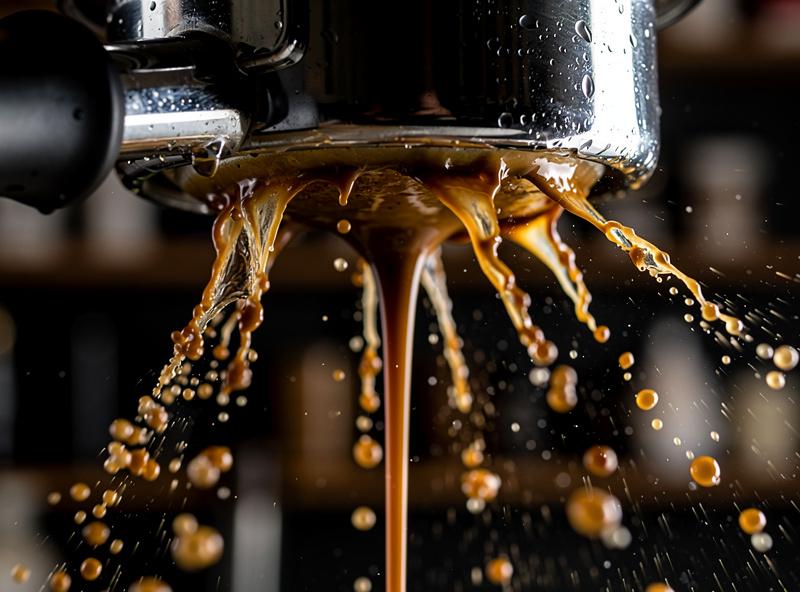
| Sideways jets / sprays | Channeling — water broke through a weak spot | Distribution & tamp (WDT, level) |
| Spurts from the basket edge | Edge channeling — puck not sealed at the rim | Even tamp; check dose/headspace |
| Very fast, pale, gushing stream | Under-extraction — grind too coarse or low dose | Grind finer; check dose |
| Blonds (goes pale) very early | Over-running the puck for the yield | Shorter ratio, or grind finer |
| Dripping / barely flowing | Choked — grind too fine or overdosed | Grind coarser; check dose |
The most important distinction here is between flow-rate problems (fast/gushing or choked/dripping — fix with grind and dose) and evenness problems (jets, sprays, edge spurts — fix with puck prep). Confusing the two is what sends people grinding in circles. If the stream is even but too fast, that’s a grind conversation. If the stream is spraying sideways, no grind setting fixes it — the puck is the problem.
Channeling: the single most useful thing the bottomless reveals
Channeling is when water finds a path of least resistance through the puck — a crack, a gap, a soft spot — and races through it, over-extracting that narrow channel while leaving the rest of the bed under-extracted. The cup tastes confusingly sour-and-harsh at once. From a spouted portafilter you’d never know; on a bottomless it’s unmistakable as a jet of espresso firing sideways or a spray fanning out instead of a clean tail.
When you see it, resist the urge to touch the grinder. Channeling is almost always a preparation fault, and the fixes are upstream of the grind: break up clumps thoroughly with a WDT tool so there are no dense and loose patches, level the bed before tamping, and tamp flat and even so the puck presents uniform resistance. Sometimes the dose is wrong and the puck isn’t sealing against the basket walls, or there’s debris on the rim breaking the seal. Fix the prep, pull again, and watch the spray collapse into a clean tail. That feedback loop — change prep, watch the pour — is how you actually learn puck prep instead of guessing.
Reading colour and taper
Beyond evenness, the colour and taper of the stream tell you about extraction. A rich, glossy, reddish-brown tail that holds colour through most of the shot and only blonds near the end is a well-extracted shot. If it blonds very early — goes pale and watery well before you reach your yield — you’re running the puck past its useful extraction for that yield, which often means a shorter ratio or a finer grind would serve better. If the whole pour is pale and thin from the start and gushes, that’s under-extraction shouting at you: too coarse, or too little coffee. The taper matters too: a good shot thins gracefully, while a shot that suddenly accelerates and pales mid-pour often signals a channel opening up partway through. Watching the whole arc, not just the start, is what separates reading the pour from glancing at it.
Subtler tells: the wobble, the off-centre tail, the late split
Once you’ve got the obvious sprays sorted, the bottomless starts showing finer faults that still matter. A tail that wobbles or wanders rather than holding steady usually means mild, intermittent channeling — not a dramatic jet, but enough unevenness to cost you some sweetness. A stream that pours consistently off-centre (always favouring one side of the basket) points to an uneven tamp or uneven distribution on that side — you’re packing one edge harder than the other. And a tail that starts clean but splits into two or sprays late in the shot tells you a channel opened up partway through, often because the puck cracked as it gave up structure near the end.
None of these are emergencies, but they’re the difference between a decent shot and a genuinely excellent one. The fix is almost always the same boring discipline: more thorough WDT distribution and a more deliberately level tamp. What the bottomless gives you is the ability to see the improvement — tighten your prep, and watch the wobble settle into a stable centred tail. That visible reward is what makes the practice stick, where a spouted portafilter would leave you blind to whether you’d actually improved anything.
Using the bottomless to dial in faster
The real payoff is speed. Because the bottomless separates prep faults from recipe faults visually, you stop wasting shots. Pull a shot: if it sprays, fix prep and ignore the grinder; if it’s even but too fast or slow, fix grind and ignore your prep. You’re no longer changing two things at once and guessing which helped. Combine that with weighing your dose and yield and you’ve isolated every variable — which is the entire philosophy behind the dial-in method: change one thing, read the result, log it, repeat. The bottomless is the “read the result” step made visible. It’s also genuinely satisfying to watch a clean shot pour, which keeps you practising the prep that matters.
The gear that makes the pour readable
You need exactly two things to start reading pours. A bottomless portafilter in your machine’s basket size (most commonly 58mm) is the device itself — it turns every shot into a visible diagnostic. And a WDT distribution tool is what you’ll reach for the moment the pour shows channeling, because even distribution is the fix for almost everything the bottomless exposes. Between them you’ve got the see-it-and-fix-it loop that makes puck prep click — and if you’re thinking about upgrading your burrs to sharpen that feedback further, understanding flat vs conical burrs for espresso will help you decide which direction is worth pursuing.
As an Amazon Associate I earn from qualifying purchases. These are tools I use on my own bench daily; the links cost you nothing extra.
Keep building
Reading the pour is the diagnostic layer over the rest of the method. Tie it back to the full dial-in guide, and when the pour confirms a flow problem, the too-sour and too-bitter fixes tell you which way to move the grind. If the pour looks fast and pale, the dose and basket headspace covered in the 18g dose guide is often the real culprit.
Frequently asked questions
What should a good bottomless portafilter pour look like?
It should start as a few separate droplets that quickly converge into a single, centred, even stream — the ‘mouse tail’ — which stays glossy and steady before tapering and blonding gently near the end. No sideways jets, sprays, or spurts from the edges. A clean centred tail means the puck was evenly distributed and tamped.
Why is my espresso spraying from the bottomless portafilter?
That’s channeling — water has broken through a weak spot in the puck and is jetting sideways instead of flowing evenly. It’s a puck-preparation problem, not a grind problem. Fix it by breaking up clumps with a WDT tool, leveling the bed, and tamping flat and even so the puck offers uniform resistance.
Does a bottomless portafilter make better espresso?
The portafilter itself doesn’t change the coffee, but it dramatically improves your feedback. By showing you exactly how the puck is extracting, it reveals channeling and prep faults that a spouted portafilter hides, so you can fix them and dial in faster. Better information leads to better shots.
What does it mean when the shot blonds early?
Blonding is the stream going pale as the easily-extracted solubles run out. If it happens very early — well before you reach your target yield — you’re running the puck past its useful extraction for that ratio. Try a shorter ratio or a finer grind so the shot stays rich for the yield you want.
Should I fix the grind or the puck prep when I see channeling?
Fix the puck prep. Channeling — sprays and sideways jets — is an evenness problem that grind changes won’t solve. Distribute thoroughly with a WDT tool, level, and tamp flat. Only adjust the grind for flow-rate problems: an even stream that’s too fast (grind finer) or too slow (grind coarser).
More from This Cluster
- “Espresso Yield by Drink Type: Match the Shot to the Cup”
- “How Long Should an Espresso Shot Take? (Time Is a Read-Out)”
- “The Right Dose for an 18g Basket: It Is All About Headspace”
- “Espresso Shot Too Bitter? The Fix
- “Espresso Ratio Explained: Why 1:2 Is Your Default (and When to Break It)”
- “Espresso Shot Too Sour? The Fix
- “How to Dial In Espresso: Dose