Espresso Shot Too Sour? The Fix, in Order
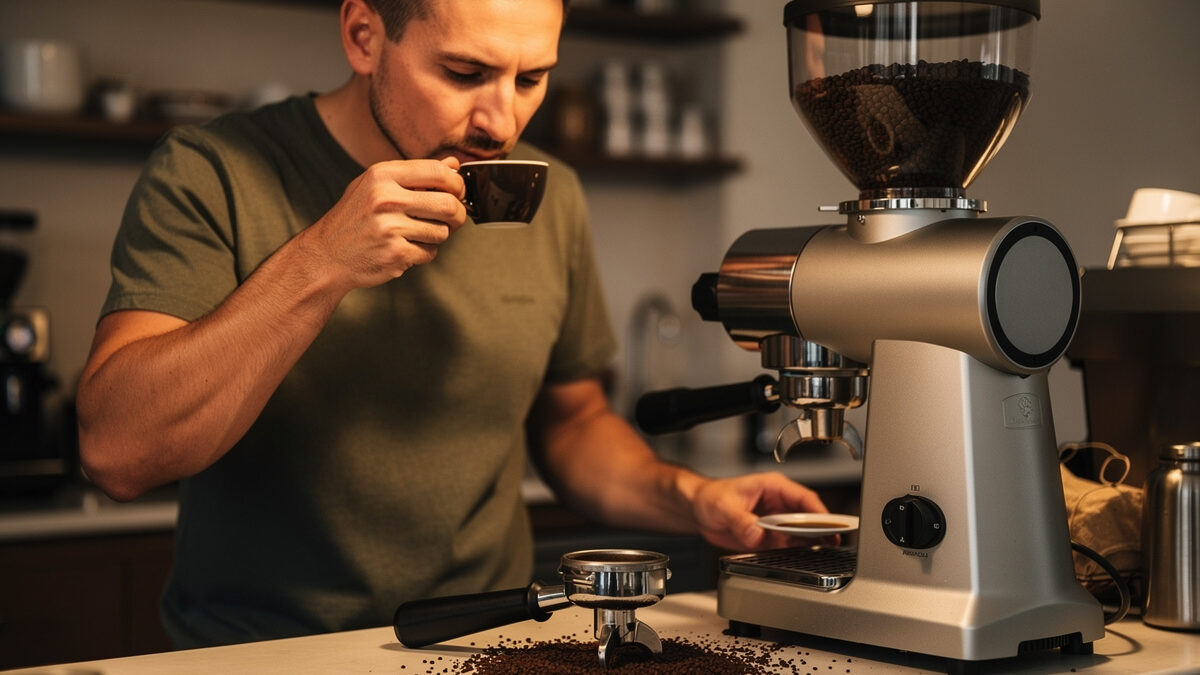
An espresso shot that tastes too sour is under-extracted: the water didn’t pull enough out of the puck, so the bright, acidic compounds dominate and the sweetness never arrives. The primary fix is to grind finer. That’s the headline, and nine times out of ten it’s the answer. But “grind finer” is only the first move in a short, ordered checklist — and if you skip the diagnosis you’ll chase the wrong variable in circles. Sour is the most common complaint I hear from people new to dialing in, and it’s almost always fixable in two or three shots.
Sour means sharp, tart, lemony, makes-you-wince acidity with an empty, thin finish — like biting underripe fruit. Don’t confuse it with bitter, which is a dry, ashy, lingering harshness at the back of the tongue. The two faults sit at opposite ends of extraction and their fixes are opposite, so getting the diagnosis right is everything. If you’re not certain which you’re tasting, assume sour first: under-extraction is more common on home setups, and an unbalanced sour shot often reads as generally “bad” in a way people mislabel.
Why a shot goes sour: under-extraction
Extraction is the water dissolving flavour out of the coffee over the course of the shot. It happens in a rough order: acids and bright notes come out first, then sweetness and balance, then — late — the bitter, heavy compounds. A sour shot is one where the water exited before pulling enough of the middle. You got the acidic front of the extraction and stopped, metaphorically, before the sweetness developed. Everything that fixes sour does the same underlying thing: it increases extraction so the water reaches the sweet middle.
The levers, in the order I reach for them:
The sour-fix checklist, in order
- Grind finer. This is the big one. A finer grind means more surface area and more resistance, so water spends longer in the puck and extracts more. Make a clear, perceptible adjustment — not a timid nudge — pull again, and taste. On most grinders one meaningful step noticeably moves a sour shot toward balance.
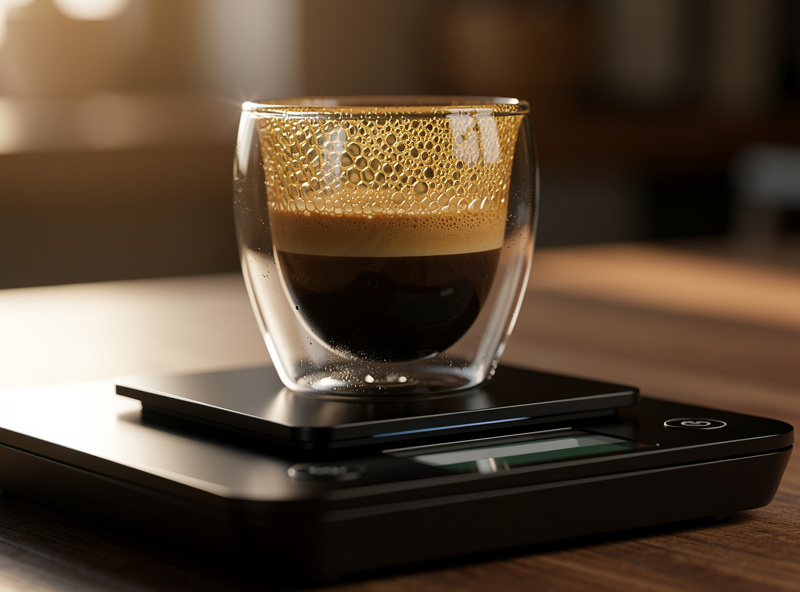
- Pull a longer ratio. If you’re stopping at a 1:2 (e.g. 36 g from 18 g), let it run to 1:2.3 or 1:2.5 (42–45 g). More water through the puck pulls more total extraction. If the longer pour tastes sweeter and rounder, your ratio was simply too short for this bean. (Ratio thinking is the backbone here — I cover it fully in espresso ratio explained.)
- Raise the brew temperature. Hotter water extracts more efficiently. If your machine has a PID, nudge it up a degree or two; if it’s a single boiler, adjust your temperature-surfing routine to brew slightly hotter. This is especially effective on light roasts, which are dense and resist extraction.
- Check your puck prep. Channeling — water blasting through a crack instead of soaking the whole bed — under-extracts most of the puck and produces sourness even at a “correct” grind. If the fixes above aren’t landing, the puck, not the recipe, is the suspect.
Work the list top to bottom and change one thing at a time. The whole point of an ordered checklist is that you learn which lever fixed it, so next bag you go straight there.
Sour-fix cheat-sheet
| Lever | Move to fix sour | How much | When to reach for it |
|---|---|---|---|
| Grind | Finer | One clear step, then halve | First, always. Biggest effect. |
| Ratio | Longer (1:2.3–1:2.5) | +5–10 g yield | If finer grind alone isn’t enough. |
| Temperature | Higher (+1–2 °C) | 1–2 degrees | Light/dense roasts; machine holds temp. |
| Puck prep | Improve distribution | WDT + level tamp | When grind changes don’t behave logically. |
The trap: channeling that masquerades as sour
Here’s the failure mode that sends people in circles. You taste sour, you grind finer, and it gets worse or stays the same. You grind finer again. Now the shot chokes and goes bitter in places but still tastes thin and sour overall. What’s actually happening is channeling: a weak spot in the puck where water races through, over-extracting that narrow path while under-extracting everything around it. The result tastes simultaneously sour (the bulk of the bed) and harsh (the channel) — and no grind setting fixes a prep problem.
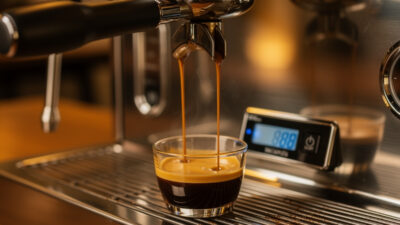
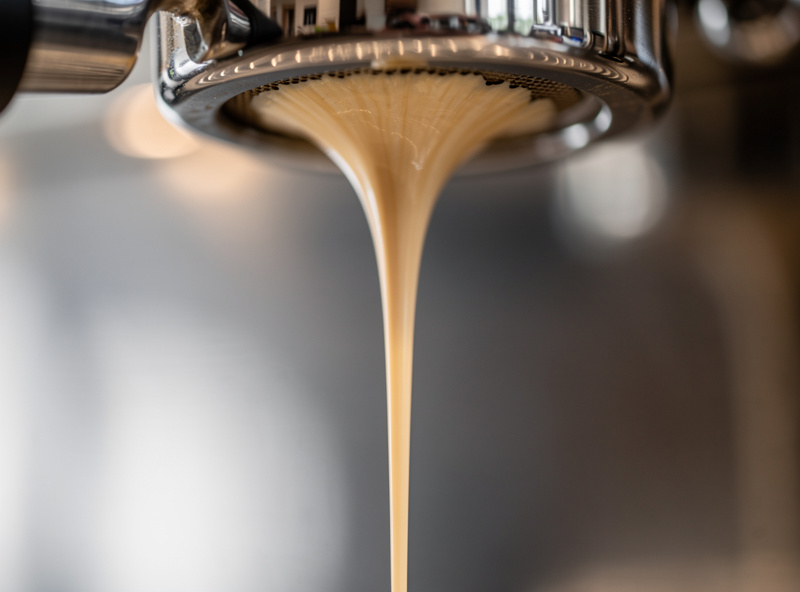
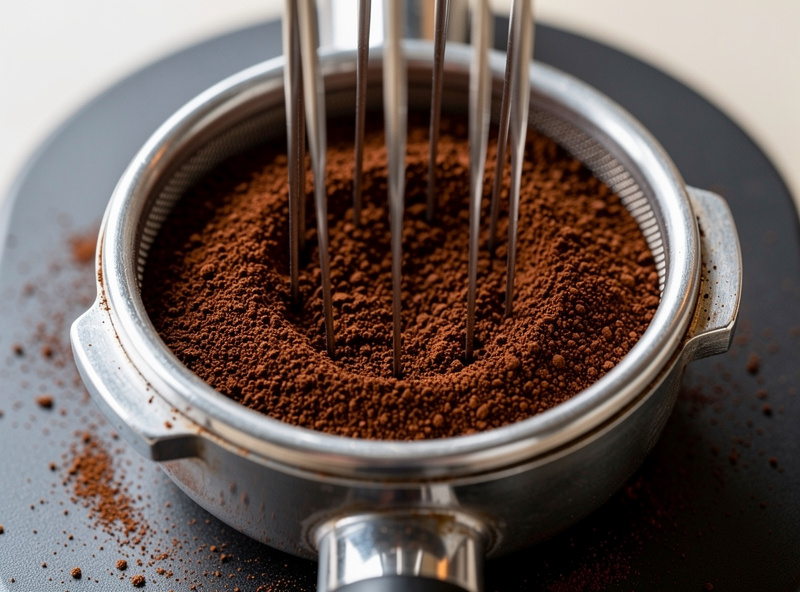
The tell is the pour. On a bottomless portafilter, a channeling shot sprays, jets sideways, or blonds unevenly instead of forming one clean centred stream. If you see that, stop touching the grinder and fix the puck: distribute thoroughly with a WDT tool to break up clumps, level the bed, and tamp flat. I run every dial-in shot on a bottomless precisely so this doesn’t hide from me — it’s the cheapest honesty device in espresso. Once the prep is clean, your grind changes start behaving predictably again.
Light roasts: why they go sour so easily
If you’ve jumped from a supermarket dark roast to a fashionable light roast and suddenly everything tastes like lemon juice, you haven’t lost your touch — light roasts are genuinely harder to extract. They’re denser and less soluble, so they want a finer grind, a hotter brew temperature, and often a longer ratio than the dark roast you were used to. The sourness is the bean telling you it’s under-extracted for the settings you’re using. Push all three levers in the “more extraction” direction and a good light roast rewards you with a sweetness and clarity a dark roast can’t match. Don’t be shy about grinding noticeably finer than your old default — light roasts often want it. That extra precision is where a better grinder starts earning its keep; the best espresso grinder under $300 guide covers which options produce the consistent particle size light roasts demand without a four-figure spend.
Temperature: the lever single-boiler owners forget
If you run a single-boiler machine without a PID, temperature is probably the variable you’re least in control of — and it’s a sneaky cause of stubborn sourness. The boiler cycles between an upper and lower setpoint, so the temperature at the group depends on exactly when in that cycle you pull. Brew right after the heating element switches off and you’re hot; brew while it’s recovering and you’re cool, and a cool brew under-extracts and tastes sour even with a perfect grind.
The fix is temperature surfing: a fixed routine that puts you at the same point in the cycle every shot. On my OPV-modded Classic I run a short flush and a consistent wait so the group sits at a repeatable, slightly-hotter point before I pull — which on light roasts is often the difference between sour and sweet. The exact routine varies by machine; the principle is that consistency beats guesswork. If your shots are sour at random rather than always, an inconsistent temperature is a prime suspect.
When sour is actually correct (and the bean is the problem)
Occasionally you’ll do everything right — fine grind, long enough ratio, hot enough water, clean puck — and it’s still tart. At that point, consider that the coffee itself may be very acidic by design (some light, fruity naturals lean hard into acidity), or stale in a way that flattens sweetness and leaves acidity exposed. There’s a limit to how much dialing can rescue a bean that’s either built around bright acidity or past its best. Knowing when to stop adjusting and accept the coffee is itself part of the skill — and it’s why I log every bean, so I can tell a dialing problem from a bean problem at a glance.
The gear that ends the sour guessing
Two tools turn sour-shot guesswork into a quick diagnosis. A bottomless portafilter in your basket size shows you instantly whether you’re fighting under-extraction or channeling — it’s the single most useful diagnostic on my counter. And a WDT distribution tool eliminates the clumping that causes the channeling that fakes sourness in the first place. Between them, they remove the two biggest sources of “I ground finer and it got worse” confusion.
As an Amazon Associate I earn from qualifying purchases. These are tools I actually use on my bench; buying through the links costs you nothing extra.
Related guides
- How to dial in espresso: the full dose-yield-time method
- Espresso ratio explained: why 1:2 is your default
Frequently asked questions
Why is my espresso so sour?
A sour espresso is under-extracted — the water didn’t dissolve enough from the coffee, so the bright, acidic compounds dominate and the sweetness never develops. The most common causes are too coarse a grind, too short a shot (ratio), brew water that’s too cool, or channeling from poor puck prep.
How do I fix a sour espresso shot?
Grind finer first — it has the biggest effect, increasing extraction so the water reaches the sweet middle of the shot. If that isn’t enough, pull a longer ratio (more yield) and raise the brew temperature a degree or two. Change one variable at a time and taste after each.
Is sour espresso under-extracted or over-extracted?
Sour is under-extracted. Bitter is over-extracted. They sit at opposite ends of extraction, so their fixes are opposite: grind finer (or pull longer, or go hotter) for sour, and grind coarser (or pull shorter, or go cooler) for bitter. Getting the diagnosis right is the whole game.
Why does my shot stay sour even after grinding finer?
Usually channeling. If water blasts through a weak spot in the puck, it over-extracts that narrow path while under-extracting the rest, leaving the shot sour no matter how fine you grind. Check the pour on a bottomless portafilter — spraying or jetting means fix your distribution and tamp, not your grind.
Why do light roasts taste more sour?
Light roasts are denser and less soluble, so they extract less readily than darker roasts at the same settings. They typically want a finer grind, a hotter brew temperature, and often a longer ratio. Push all three toward more extraction and a good light roast turns sweet and clear instead of sharp.
More from This Cluster
- “Reading a Bottomless Portafilter Pour: What Your Shot Is Telling You”
- “Espresso Yield by Drink Type: Match the Shot to the Cup”
- “How Long Should an Espresso Shot Take? (Time Is a Read-Out)”
- “The Right Dose for an 18g Basket: It Is All About Headspace”
- “Espresso Shot Too Bitter? The Fix
- “Espresso Ratio Explained: Why 1:2 Is Your Default (and When to Break It)”
- “How to Dial In Espresso: Dose