Espresso Shot Too Bitter? The Fix, in Order
When an espresso shot tastes too bitter, that is over-extraction: the water pulled too much out of the puck, dragging out the harsh, astringent compounds that come late in the extraction. The primary fix is to grind coarser. That’s the opposite move from a sour shot, which is exactly why diagnosing bitter versus sour correctly matters so much — reach for the wrong lever and you’ll make a bad shot worse. Bitter is the fault people over-diagnose, though: a lot of “bitter” espresso is really just sour or stale or dark-roast-burnt, so the first job is to be sure that’s what you’re actually tasting.
Bitter is a dry, harsh, ashy lingering on the back of the tongue — think over-steeped black tea, burnt toast, or dark chocolate pushed past pleasant into acrid. It clings after you swallow. That’s different from sour, which is a sharp acidic wince up front that fades fast. If the unpleasantness is up front and tart, you have a sour shot, not a bitter one, and the fixes are reversed. Get that call right before you touch anything.
Why a shot goes bitter: over-extraction
Extraction runs in a rough order through the shot: bright acids first, sweetness and balance in the middle, and harsh bitter compounds last. Over-extraction means the water kept dissolving material past the sweet middle and into that bitter tail. Either the water was in contact too long (too fine a grind, too slow a flow), too much water passed through (too long a ratio), or it was too hot. Everything that fixes bitter reduces extraction so you stop before the tail goes ugly.
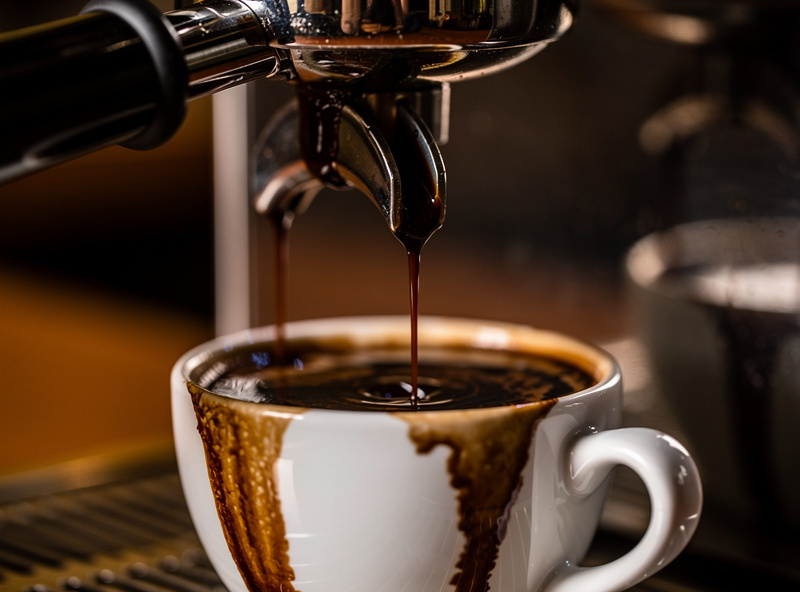
The bitter-fix checklist, in order
- Grind coarser. The main lever. A coarser grind lowers resistance, speeds up flow, and shortens the water’s contact time, so it stops short of the bitter tail. Make a clear adjustment, pull again, taste. This alone resolves most genuinely bitter shots.
- Pull a shorter ratio. If you’re running 1:2 (36 g from 18 g), stop earlier — 1:1.8 or even 1:1.5 (30–32 g). Less total water means less of the harsh late extraction makes it into the cup. The shot will be more intense and syrupy, which suits darker roasts well. (If ratios are new to you, start with espresso ratio explained.)
- Lower the brew temperature. Cooler water extracts less aggressively. Drop a PID a degree or two, or adjust your temperature-surfing routine to brew cooler. This is the go-to for dark roasts, which are already soluble and tip into bitterness easily at high temperatures.
- Look at the roast and the machine cleanliness. A very dark roast is partway to bitter before you start, and a machine overdue for backflushing pushes stale, rancid oils into every shot. If the recipe levers don’t land, these two are the usual culprits.
Change one variable at a time, top to bottom. The discipline is what teaches you which lever this particular coffee needed.
Bitter-fix cheat-sheet
| Lever | Move to fix bitter | How much | When to reach for it |
|---|---|---|---|
| Grind | Coarser | One clear step, then halve | First, always. Biggest effect. |
| Ratio | Shorter (1:1.5–1:1.8) | −4–8 g yield | If coarser grind alone isn’t enough. |
| Temperature | Lower (−1–2 °C) | 1–2 degrees | Dark/oily roasts; machine holds temp. |
| Cleanliness | Backflush + fresh screen | Per maintenance schedule | If every shot from every bean is bitter. |
The most common false alarm: it’s not bitter, it’s burnt or stale
Before you spend three shots dialing, rule out the two things no recipe change can fix. First, the roast: a very dark, oily roast tastes bitter and ashy almost regardless of how well you pull it, because the roast itself carbonised some of those flavours in. If you only ever drink dark roasts and everything tastes bitter, the beans are doing exactly what dark roasts do — try a medium roast and watch the “bitterness” largely vanish. Second, staleness and dirt: old beans go flat and harsh, and a group head crusted with rancid coffee oils contaminates every shot with stale bitterness. A bean weeks past roast and a machine months past its last backflush will both fake a “dialing” problem that’s really a freshness-and-hygiene problem.
Why dark roasts tip into bitterness — and how to pull them
Dark roasts are more soluble than light roasts: the roast has already broken down a lot of the bean’s structure, so water extracts from them fast and easily. That’s a gift and a trap. The gift is that they dial in quickly. The trap is that they over-extract the moment your grind goes a touch too fine, your ratio runs a touch too long, or your water runs hot — they have very little margin before bitterness. So for dark roasts I deliberately run a slightly coarser grind, a shorter ratio (often 1:1.5 to 1:1.8), and a cooler brew temperature than I’d use for a medium roast. Pull them short and cool and they reward you with chocolate and body; push them long and hot and they go acrid. It’s the mirror image of the light-roast problem, and recognising which side of the line your bean sits on is most of the battle.
Don’t forget pre-infusion and pour speed
One under-appreciated cause of bitterness is a pour that runs far too slowly because the grind is much too fine. People sometimes chase a “thick, slow, dramatic” shot thinking slow equals good, but a shot that takes 50 or 60 seconds to reach a normal yield has spent far too long in contact with the water and will almost always be over-extracted and bitter. If your shots crawl, that’s a strong signal to coarsen up — the visual drama isn’t worth the acrid cup. Aim to reach your target yield in a sane window (roughly 25–35 seconds for a 1:2 on most setups); a pour that’s dramatically slower than that is usually telling you the grind is dragging the shot into bitterness, not concentrating it into something special. If you need a grinder that lets you make those precise one-notch adjustments reliably, the espresso grinder guide covers what burr geometry and step size actually mean for dialing in at home.
Channeling can fake bitterness too
Just as channeling can make a shot taste sour, it can also throw bitterness into the cup. When water jets through a narrow channel in the puck, that narrow path is wildly over-extracted — bitter and harsh — while the rest of the bed is under-extracted and sour. The shot ends up confusingly “both,” and grinding coarser to chase the bitterness only makes the under-extracted majority more sour. The fix isn’t the grinder; it’s the puck. Run the shot on a bottomless portafilter: if it sprays or jets sideways instead of forming a single clean stream, fix your distribution and tamp first. This is exactly why I prep every shot against a bottomless — it stops me from “fixing” a prep fault with a recipe change that makes things worse.
The gear that ends the bitter guessing
Two cheap things make bitter shots quick to diagnose and cure. Keeping the machine clean is half the battle, so a tub of espresso backflush detergent and a regular backflush routine strips the stale, rancid oils that make every shot taste bitter no matter how you dial. And a bottomless portafilter shows you whether you’re truly over-extracting or just channeling — the difference between coarsening the grind and fixing your prep.
As an Amazon Associate I earn from qualifying purchases. These are tools I use on my own bench; the links cost you nothing extra.
Related guides
- How to dial in espresso: the full dose-yield-time method
- The opposite fault: fixing a shot that’s too sour
- Espresso ratio explained: why 1:2 is your default
Frequently asked questions
Why is my espresso so bitter?
A bitter espresso is over-extracted — the water pulled too much from the coffee, dragging out the harsh, astringent compounds that come late in the shot. The usual causes are too fine a grind, too long a shot (ratio), water that’s too hot, a very dark roast, or stale oils from a machine that needs cleaning.
How do I fix a bitter espresso shot?
Grind coarser first — it speeds up flow and shortens contact time so the water stops before the bitter tail. If that isn’t enough, pull a shorter ratio (less yield) and lower the brew temperature a degree or two. Change one variable at a time and taste after each.
Is bitter espresso over-extracted or under-extracted?
Bitter is over-extracted; sour is under-extracted. Their fixes are opposite, so the diagnosis matters: grind coarser, pull shorter, or go cooler for bitter, and grind finer, pull longer, or go hotter for sour. Bitter lingers dry and ashy at the back of the tongue; sour is a sharp wince up front.
Why are dark roasts more bitter?
Dark roasts are more soluble because the roast has already broken down much of the bean, so water extracts from them quickly and they tip into the bitter range easily. Pull them with a slightly coarser grind, a shorter ratio, and a cooler temperature than you’d use for a medium roast to keep them in chocolate-and-body territory.
Can a dirty machine make espresso bitter?
Yes. Rancid coffee oils build up in the group head and shower screen and contaminate every shot with stale bitterness, regardless of your recipe. If every shot from every bean tastes bitter, backflush the machine, clean or replace the shower screen, and use fresh beans before blaming your dial-in.
My shot tastes bitter and sour at once. What’s wrong?
That’s the signature of channeling. Water jets through a weak spot in the puck, over-extracting that narrow path (bitter) while under-extracting the rest of the bed (sour). No grind setting fixes it because it’s a puck-prep problem. Distribute with a WDT tool, level, and tamp flat, and check the pour on a bottomless portafilter.
More from This Cluster
- “Reading a Bottomless Portafilter Pour: What Your Shot Is Telling You”
- “Espresso Yield by Drink Type: Match the Shot to the Cup”
- “How Long Should an Espresso Shot Take? (Time Is a Read-Out)”
- “The Right Dose for an 18g Basket: It Is All About Headspace”
- “Espresso Ratio Explained: Why 1:2 Is Your Default (and When to Break It)”
- “Espresso Shot Too Sour? The Fix
- “How to Dial In Espresso: Dose