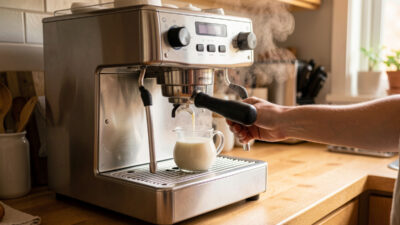
Milk Temperature by Drink Type for Espresso
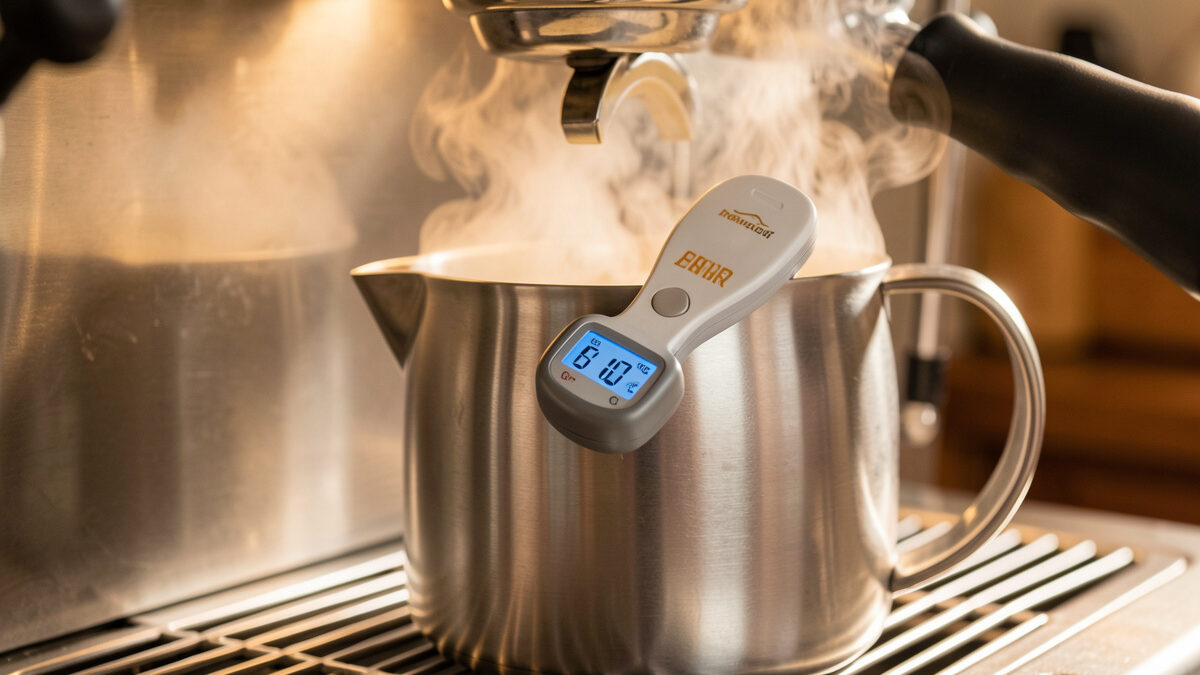
Steam almost every milk drink to 55–60°C and never exceed 65°C. Within that band, the silky drinks meant to taste sweet — flat white, cortado, macchiato — live at the low end near 55°C, while a latte someone wants piping hot can run toward 63°C. Past about 70°C the milk sugars stop tasting sweet and the foam collapses into a scalded, eggy mess.
Temperature is the milk variable people get most wrong, almost always by overheating, because hotter feels like it must be better and because nobody told them lactose sweetness peaks and then falls. On my counter I cut off by feel now, but it took a thermometer and a few hundred drinks to calibrate that hand. This guide gives you the targets by drink, the chemistry behind the ceiling, and how to hit them reliably.
Why milk gets sweeter, then ruined
Heating milk makes it taste sweeter up to a point because warmth increases your perception of its natural lactose sugar, but push past roughly 65–70°C and two things go wrong at once: that perceived sweetness falls away and the whey proteins denature, which both flattens the foam and releases the cooked, sulphurous “scalded milk” flavour. The sweet spot is a genuine window, not a “hotter is better” slope.
This is why a café flat white tastes sweeter and rounder than the scalding latte from a petrol station, even with similar coffee. The café barista cut the milk off in the sweet band; the machine over-steamed it. You can taste the difference instantly once you know to look for it — correctly heated milk has a clean dairy sweetness, while overheated milk has a thin, faintly eggy edge under the heat. The skill is stopping in the window, every time, which is the same read-and-stop discipline behind timing a shot.
The targets by drink
Smaller, milk-light drinks built to showcase sweetness and texture want the lower end of the band, while larger milk-heavy drinks people often want hotter can run a touch warmer. The most important number is the ceiling: nothing benefits from going over 65°C, and most drinks are best a few degrees below it. Here are the targets I steam to, drink by drink.
| Drink | Milk temperature | Why |
|---|---|---|
| Cortado | ~55°C | Small, milk-light; sweetness and silk matter most, drunk quickly |
| Flat white | 55–58°C | Showcase microfoam and dairy sweetness; thin foam layer |
| Macchiato | ~55°C | A dot of milk on espresso; you want it sweet, not hot |
| Cappuccino | 58–62°C | More foam, slightly hotter is traditional and holds up |
| Latte | 60–63°C | Larger volume, often wanted hotter; stays under the ceiling |
| Any drink, hard ceiling | 65°C max | Above this, sweetness drops and foam collapses |
If you serve drinks to guests who expect “really hot” coffee, the latte at 63°C is your hottest honest option — explain that hotter genuinely tastes worse rather than chasing 70°C. For yourself, try a flat white at 55°C against one at 65°C, same shot, and the sweetness difference will retrain your instinct fast. The drink also dictates the milk volume and foam, which ties back to choosing the right pitcher.
How to hit the temperature reliably
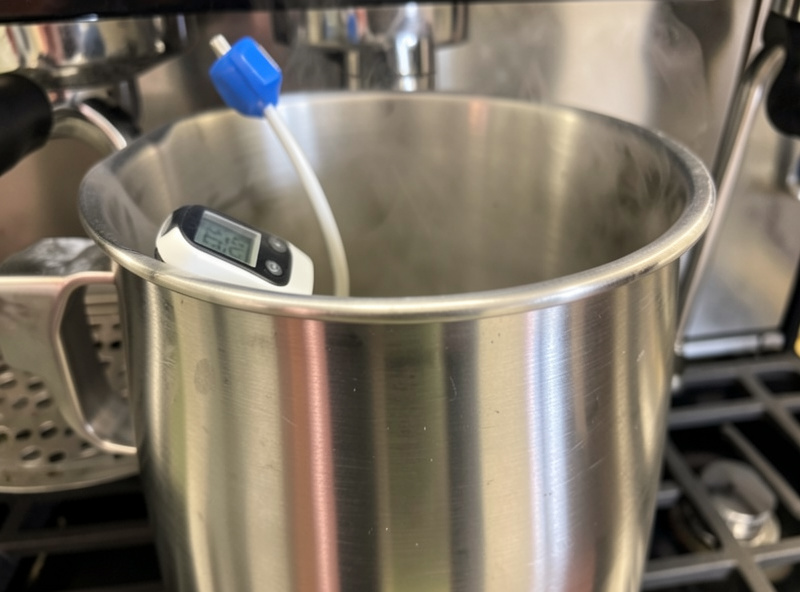
The most reliable method while learning is a clip-on probe or stick-on thermometer that reads the pitcher in real time, so you cut off at your target instead of guessing. Clip the probe to the inside wall of the jug where it sits in the milk but clear of the steam tip, and stop steaming a degree or two early because the milk keeps climbing for a moment after you close the steam. Carry-over heat is real.
The longer-term goal is to cut off by feel, because a thermometer is one more thing to clean and it slows you down. The hand method is simple: wrap your palm around the base of the pitcher and steam until it becomes uncomfortable to hold for more than a second — that is about 60°C on most jugs. It is genuinely reliable once calibrated, but calibrate it against a thermometer first for a couple of weeks. The technique that gets you there is in the complete milk steaming guide.
Steam power changes how fast you get there
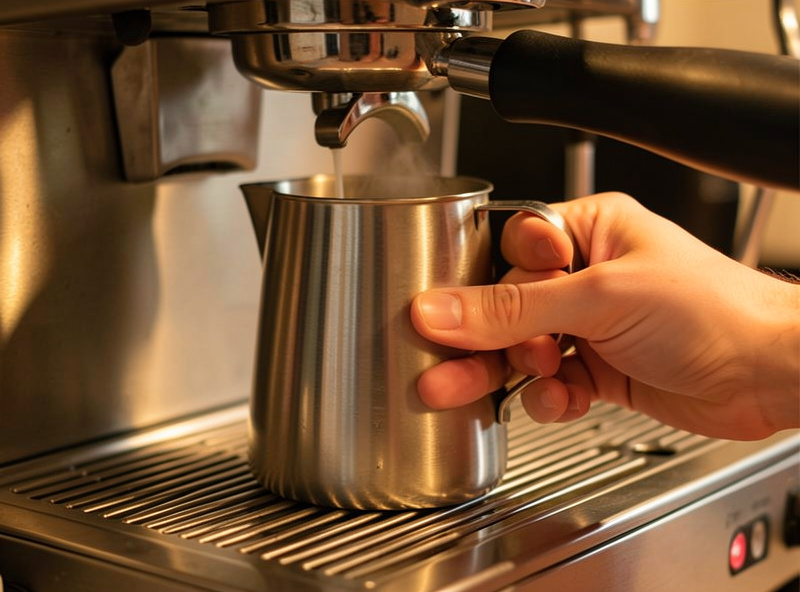
How quickly your milk reaches the cut-off depends almost entirely on your machine’s steam power, and that changes how much margin you have for error. A powerful dual boiler or heat exchanger heats a small pitcher of milk to 60°C in seconds, which leaves almost no room to relax — you have to add air fast and watch the temperature like a hawk. A single boiler heats more gently, giving you a slightly longer, more forgiving ramp.
The practical upshot is that thermometer discipline matters most on a powerful machine, because the window between “perfect” and “scalded” is only a second or two of fierce steam. On a strong machine I cut the steam noticeably below target and let carry-over finish the job. On a gentler single boiler I can hold closer to target because the temperature is climbing slowly enough to read by hand. If you have just upgraded to a more powerful machine and your milk suddenly tastes scalded, this is almost always why — your old timing is now too slow. The single-boiler microfoam method covers the opposite case, where the steam is the gentler limiting factor.
Milk fat and the temperature feel
Whole milk, semi-skimmed and skimmed all reach the same target temperatures, but they feel and taste different at those temperatures, which trips people up. Whole milk’s higher fat gives a rounder, sweeter mouthfeel and a more stable, velvety foam, so it is the most forgiving milk to learn temperature on. Skimmed milk foams up bigger and stiffer but tastes thinner and goes from sweet to scalded faster, so it punishes overheating harder.
None of this changes your 55–60°C targets — it changes how much the same overshoot costs you. If you are learning, start on whole milk because it is the most tolerant of small temperature errors and gives the clearest sweet-spot feedback in the cup. Once your cut-off is reliable, the milk choice becomes preference. Plant milks are a separate case entirely, running cooler with a narrower window, which is why they get their own guide.
Cold milk, carry-over, and the little things
Start with fridge-cold milk every time, because cold milk gives you a longer window to add air and texture before it reaches temperature, while milk that starts warm reaches the cut-off before you have finished building microfoam. A chilled pitcher helps for the same reason. The colder the milk starts, the more forgiving the whole process is — especially on a powerful machine where the milk heats fast.
Carry-over is the other thing beginners miss: after you close the steam, the milk’s temperature continues to rise by a degree or two from residual heat, so a pitcher you cut at 60°C may settle at 62°C. Cut off slightly below your real target to land in the window. And never re-steam milk that has already been heated and cooled — the proteins are spent, it will not foam properly, and it tastes flat. Steam only what you will pour, fresh, every time.
Put all of this together and the temperature rule becomes simple to live by: cold milk in, steam to a touch under your target, let carry-over settle it into the 55–60°C window, and pour it straight away. Get those four habits down and you will stop scalding milk for good — and you will taste the sweetness you have been cooking away.
Frequently Asked Questions
What is the best temperature to steam milk for coffee?
Aim for 55 to 60 degrees Celsius for most drinks, with a hard ceiling of 65. Smaller milk-light drinks like flat whites and cortados taste best near 55, while a larger latte can run toward 63. Above 65 the milk loses sweetness and the foam collapses.
What temperature should a flat white be?
A flat white is best at about 55 to 58 degrees Celsius, the low end of the milk band. The drink is built to showcase microfoam and natural dairy sweetness, both of which are strongest when the milk is not overheated. Hotter milk tastes flatter and less sweet.
Why does overheated milk taste bad?
Past roughly 65 to 70 degrees Celsius, the milk’s whey proteins denature, which flattens the foam and releases a cooked, faintly eggy, sulphurous flavour. At the same time your perception of the milk’s natural lactose sweetness falls. The result tastes thin and scalded rather than sweet and silky.
Do I need a thermometer to steam milk?
Not forever, but it helps enormously while learning. A clip-on probe lets you cut off at your target instead of guessing. After a couple of weeks you can calibrate your hand: steam until the base of the pitcher is too hot to hold for a second, which is about 60 degrees on most jugs.
Should milk be cold before steaming?
Yes, start with fridge-cold milk every time. Cold milk gives you a longer window to add air and build microfoam before it reaches temperature. Milk that starts warm hits the cut-off before the foam is finished. A chilled pitcher helps too, especially on a powerful machine that heats milk quickly.
Can I re-steam milk that has gone cold?
No. Once milk has been heated and cooled, its proteins are spent, so it will not foam properly and it tastes flat and cooked. Always steam only the amount you will pour, fresh each time. Re-steaming is a false economy that ruins both the texture and the flavour of the drink.
Related Guides
- The Complete Milk Steaming Guide — the whole skill in one place
- Microfoam Technique on a Single Boiler — hitting temperature on modest steam
- Choosing a Steaming Pitcher Size — the jug that reads temperature best
- Steaming Plant Milks for Espresso — why plant milks run cooler
- Cleaning the Steam Wand — consistent steam, consistent temperature