Third-Wave Water Recipe for Espresso, Step by Step
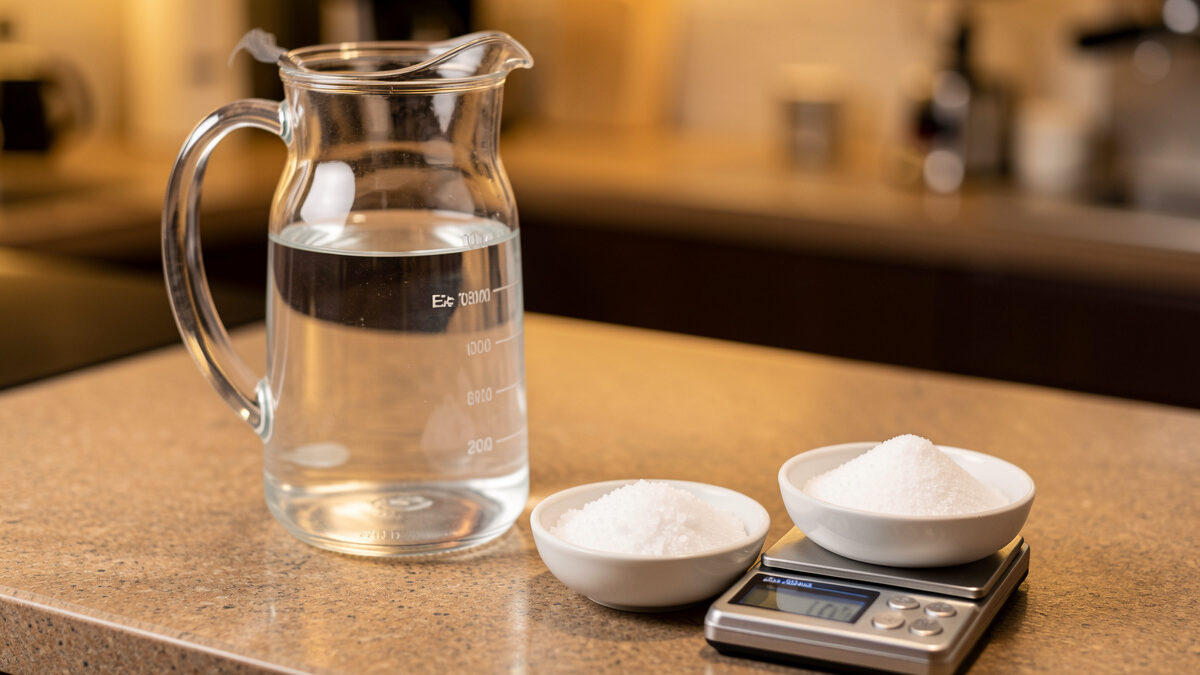
A third-wave water recipe builds espresso water from the ground up: start with near-zero distilled or reverse-osmosis water, then add back exactly the minerals you want — magnesium for flavor and bicarbonate for buffer. Done right, it gives you water sitting in the target band of roughly 50–70 ppm hardness with low alkalinity, identical every single batch.
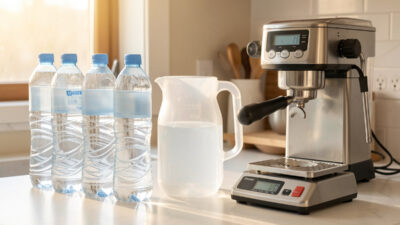
This is the control freak’s answer to water, and it is the same instinct that has a 0.1-gram scale under every shot I pull. You stop hoping a bottled water is consistent and start making your water a known quantity. It is also the cheapest option per liter once you own the additives. Here is the method I actually use, framed by the broader espresso water guide.
Why Build Water Instead of Buy It
Three reasons. First, repeatability: a built recipe is identical batch to batch, so when I change a bean or a grind, the water is a constant rather than a hidden variable. Second, control over flavor versus buffer: you set magnesium and bicarbonate independently, so you can chase brightness or stability deliberately instead of accepting whatever a spring happened to dissolve. Third, cost and machine safety: distilled is cheap, the additives last for ages, and you keep scale-forming hardness low while still protecting the boiler — the USGS hardness scale classes anything under 60 ppm as soft, which is the zone you are aiming for. The catch is that you must never run the distilled base neat — mineral-starved water tastes hollow and can corrode metal. The recipe exists precisely to fix that.
The Two Building Blocks
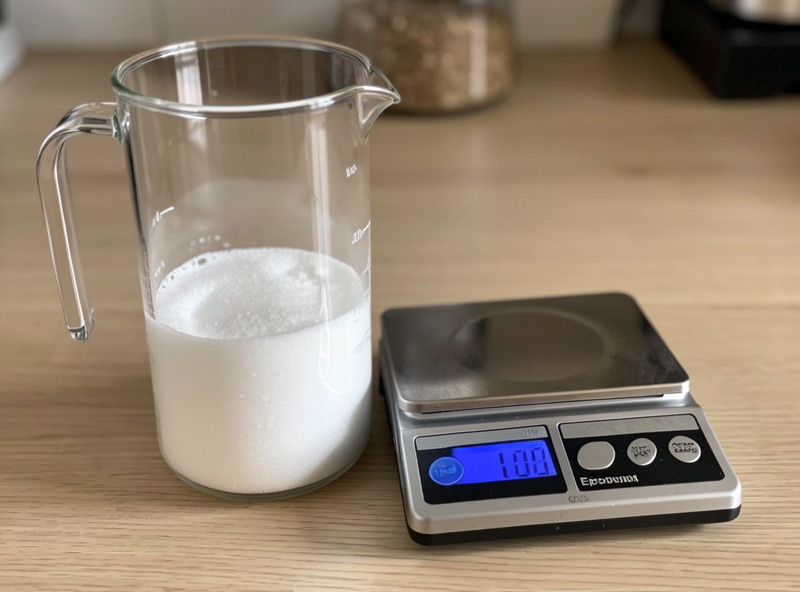
Almost every home recipe uses two food-grade additives. Epsom salt (magnesium sulfate) supplies magnesium — the mineral that grabs coffee acids and pulls out brightness, fruit, and clarity. Baking soda (sodium bicarbonate) supplies the carbonate buffer that resists pH swings and keeps the cup from going harsh. Some recipes add a calcium source for extra body, but a magnesium-and-bicarbonate pair is the clean, reliable starting point and the one I run. Magnesium leans toward brightness and fruit; calcium leans toward heavier body and mouthfeel, which is why people who want a rounder cup add a little.
You do not dose these into a glass one grain at a time — the amounts are too small to weigh accurately per liter. Instead you make strong concentrates, then add a measured splash of each to fresh distilled water. That is the trick that makes the whole thing repeatable on a home scale.
The Concentrate Method, Step by Step
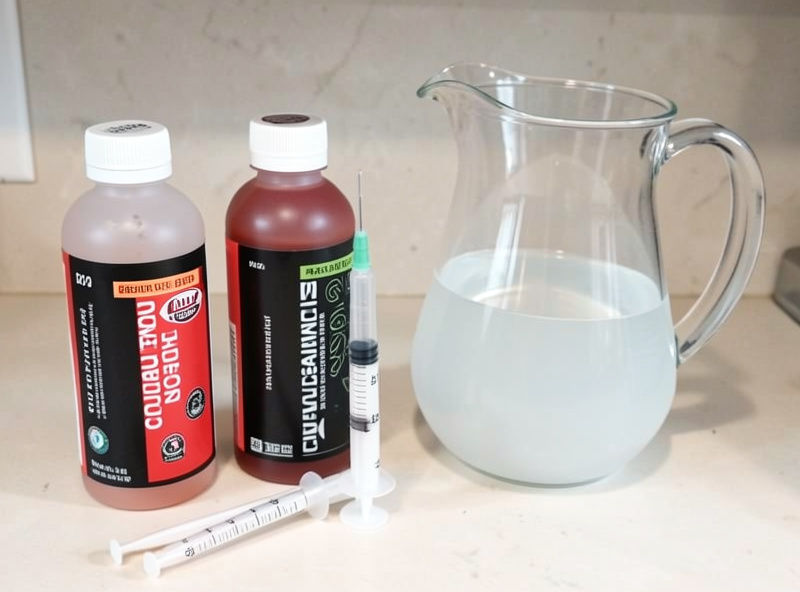
Make two concentrate bottles. In bottle A, dissolve a measured amount of Epsom salt into a known volume of distilled water; in bottle B, do the same with baking soda. Because the concentrate is strong, you only add a small, easy-to-measure dose of each into a fresh batch of distilled to land in the target zone. Keep both concentrates labeled and refrigerated, shake before use, and treat the dosing as a fixed ratio once you have dialed it in. Then — and this is the step people skip — verify the finished batch with a GH/KH test kit until your dosing is proven, because every batch of distilled and every scoop has small variance.
| Component | Provides | Effect in the cup | Role |
|---|---|---|---|
| Distilled / RO base | Near-zero minerals | Clean blank slate | Base — never used alone |
| Epsom salt (magnesium sulfate) | Magnesium hardness | Brightness, fruit, clarity | Flavor minerals |
| Baking soda (sodium bicarbonate) | Alkalinity / buffer | Stability, rounds harshness | Buffer — keep modest |
| Optional calcium source | Calcium hardness | Heavier body, mouthfeel | Optional body tweak |
Dialing the Recipe to Your Taste
Once you can reliably hit the target band, the recipe becomes a tuning knob. Want more brightness on a light Nordic roast? Nudge the magnesium up and keep the buffer low. Finding the shot harsh or unstable? Add a little more bicarbonate to round it. Chasing body on a darker Italian-style roast? A touch of calcium fills out the mouthfeel. This is where building water beats buying it: I can run the same bean against two slightly different waters on the same morning, read the cups against my shot log, and keep the one that tastes better — the same change-one-variable loop I run when dialing grind. Keep the buffer modest, though; over-buffer the water and you flatten the very brightness you built the recipe to capture.
Is It Worth the Effort?
For a single-boiler machine on decent tap, honestly, maybe not — good bottled water is simpler. But for a heat-exchanger or a sealed dual-boiler like the Breville, where descaling is a genuine chore and scale hides where you can’t reach it, building low-scale water from distilled is the smartest insurance you can buy, and the flavor control is a real bonus. It is the same discipline as every other bench I run: define your inputs, measure them, log the result, repeat. Espresso is just the calibration you get to drink. If the recipe route feels like too much, the best bottled water guide gets you most of the benefit for none of the mixing.
Frequently Asked Questions
What is a third-wave water recipe for espresso?
It is espresso water built from a near-zero distilled or reverse-osmosis base with minerals added back, typically magnesium from Epsom salt for flavor and bicarbonate from baking soda for buffer. The goal is to hit the target band of roughly 50 to 70 ppm hardness with low alkalinity, identical every batch.
What ingredients do I need to make espresso water?
At minimum, distilled or reverse-osmosis water, food-grade Epsom salt for magnesium hardness, and baking soda for the carbonate buffer. A 0.1-gram scale and a GH/KH test kit make it repeatable. Some recipes add a calcium source for extra body, but magnesium plus bicarbonate is the reliable starting pair.
Why use concentrates instead of adding minerals directly?
The per-liter amounts of Epsom salt and baking soda are too small to weigh accurately. Making strong concentrate bottles and then dosing a small measured splash into fresh distilled water makes the recipe repeatable on a home scale. Label, refrigerate, and shake the concentrates before each use.
Can I just drink or brew with distilled water alone?
Not for espresso. Pure distilled water has almost no minerals, so shots taste hollow and sour and the mineral-hungry water can corrode boiler metal over time. Distilled is only the base ingredient; the whole point of the recipe is to add minerals back before it touches the machine.
How do I know my recipe hit the target?
Test the finished batch with an aquarium-style GH/KH drop kit until your dosing is proven. Distilled batches and additive scoops vary slightly, so verify the first several mixes. Once your concentrate dose reliably lands near 50 to 70 ppm hardness with modest alkalinity, you can trust the ratio.
Is built water better than bottled for espresso?
It is more consistent and cheaper per liter, and it lets you tune magnesium and buffer independently. For sealed dual-boiler or heat-exchanger machines where descaling is hard, that low-scale consistency is worth the effort. For a simple single-boiler on good tap, known-good bottled water may be all you need.