Single Boiler vs Heat Exchanger Explained
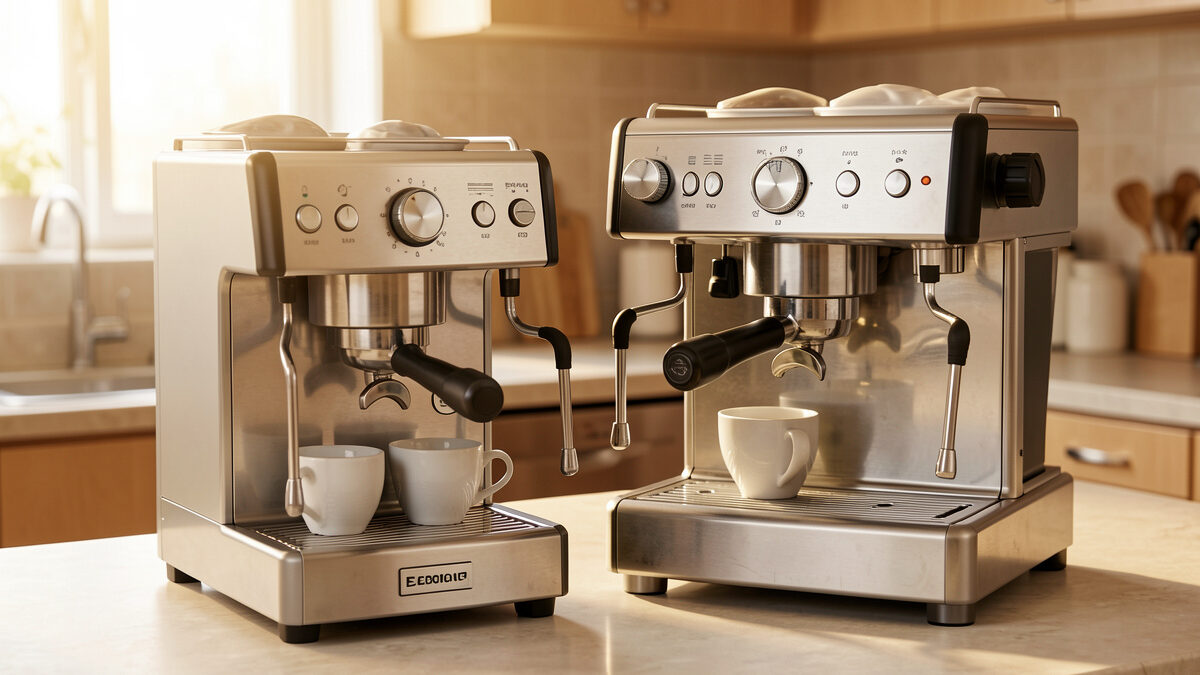
The difference between a single boiler and a heat exchanger comes down to one thing: a single boiler brews and steams one at a time, while a heat exchanger does both at once. That single design choice drives the price gap, the workflow, and which machine is right for how you actually drink. For one or two drinks a single boiler is plenty; for back-to-back milk drinks a heat exchanger earns its keep.
I run both on my counter, and the honest framing is that this is not a “better versus worse” question. It is a “what is your morning like” question. Once you see what each design is actually solving, the right answer for your kitchen becomes obvious, and you stop paying for capability you will not use or wishing for capability you skipped. This is one of the central decisions in choosing a first espresso machine, so it is worth getting right.
What Is a Single Boiler Espresso Machine?
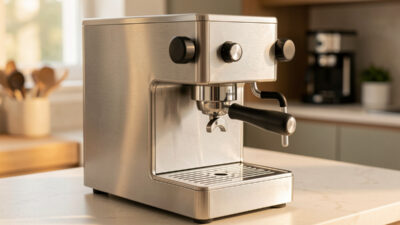
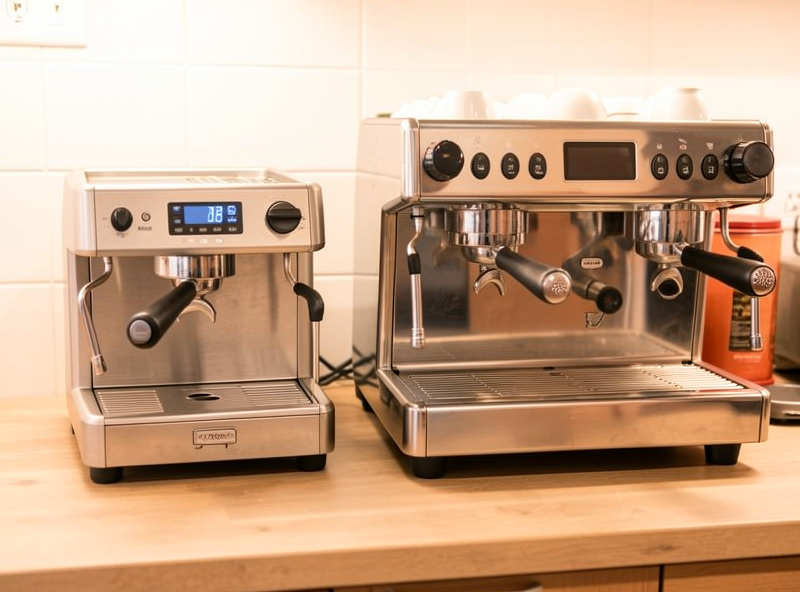
A single boiler uses one boiler for both brewing and steaming, switching between two temperatures. You pull your shot at brew temperature, then flip a switch and wait roughly 30-40 seconds for the boiler to climb to steam temperature. It is simple, affordable, and the classic first-machine architecture.
The simplicity is the point. Fewer components means lower cost, easier servicing, and a machine you can actually understand. The trade is the wait: you cannot brew and steam simultaneously, so a single boiler suits people who pull a shot and then steam milk for one or two drinks rather than running a café rush at home. My OPV-modded Gaggia Classic is my reference single boiler precisely because it does so little for you that every result is something you did, which makes it the best teacher in the lineup.
There is a temperature nuance worth understanding because it shapes the whole single-boiler experience. A basic single boiler uses a thermostat that cycles the heating element on and off around a target, which means the brew temperature drifts by a few degrees depending on where in that cycle you pull. Skilled single-boiler users time the shot to the cycle, a technique called temperature surfing, and it genuinely works once you learn the rhythm of your machine. It is also exactly the kind of small ritual that either delights you or annoys you, and which camp you fall into is a fair predictor of whether a stock single boiler will satisfy you long term or send you reaching for a PID kit.
What Is a Heat Exchanger Espresso Machine?
A heat exchanger keeps one boiler hot at steam temperature and passes fresh brew water through a coil running inside it, so the machine can brew and steam at the same time. This eliminates the wait, which is why heat exchangers dominate the prosumer tier for milk-drink households.
The clever part is also the catch. Because brew water sits in a coil inside a steam-hot boiler, the first water out can be too hot, so you run a short cooling flush before pulling a shot after the machine has been idle. On my E61 heat exchanger that flush routine is muscle memory now, but it is a genuine skill you build, not a button you press. In exchange you get simultaneous brew and steam, strong steam power, and the heft and thermal stability of a serious machine. For someone making several milk drinks every morning, that workflow is transformative.
The cooling flush is worth demystifying because it scares off more buyers than it should. After the machine sits idle, you run water through the group for a couple of seconds until the temperature settles, and on an E61 group you can often hear and feel when it is ready. It becomes automatic within a week of daily use, the same way checking a tool is at working temperature becomes automatic. What it is not is a dealbreaker, and anyone framing the heat exchanger as fussy because of the flush has usually not lived with one. The payoff, steaming a pitcher of milk while a shot is already running, is exactly what a busy morning needs, and the flush is a small price for it.
Single Boiler vs Heat Exchanger: The Core Differences
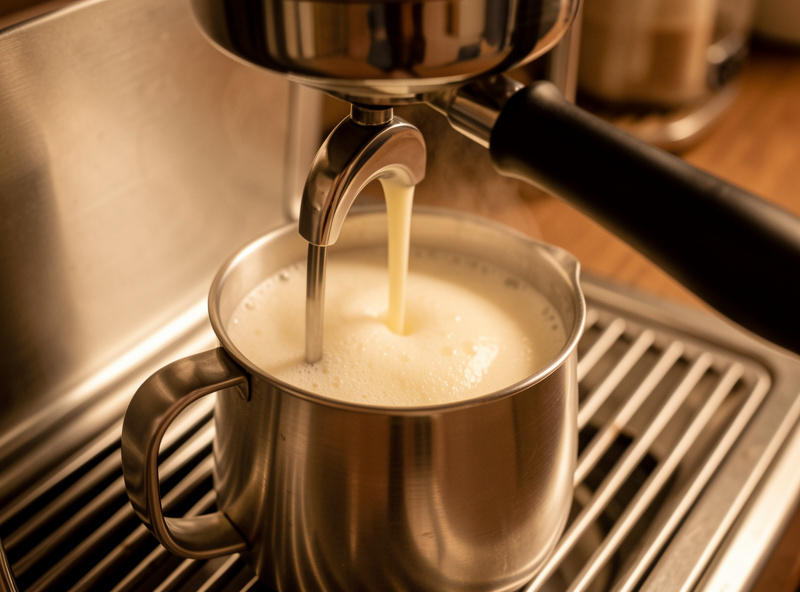
The core differences are simultaneity, steam power, price, and learning curve. A single boiler is cheaper and simpler but makes you wait between brew and steam; a heat exchanger costs more and asks you to learn a cooling flush but lets you brew and steam at once with far stronger steam.
Neither is more capable in the cup for straight espresso. A well-dialed single boiler and a well-dialed heat exchanger can pull the same quality shot, because grind and puck prep dominate the result on both. The heat exchanger’s advantages are all about milk and workflow, plus the build quality that tends to come with the price. If you drink mostly espresso or one milk drink, you are paying for benefits you will rarely touch. If you drink several milk drinks back to back, the single boiler’s wait becomes the daily friction that pushes people to upgrade.
It is also worth saying that build quality usually rides along with the architecture, which muddies the comparison if you are not careful. Heat exchangers tend to come in heavier bodies with E61 groups, rotary or vibration pumps, and plumbing-in options, while single boilers tend to be lighter consumer machines. Some of what people attribute to the heat exchanger design is really just the better hardware that happens to come at that price point. When you compare, separate the architecture question from the build question, because a beautifully built single boiler and a cheaply built heat exchanger both exist, and conflating the two leads to spending more than the actual workflow benefit justifies.
| Attribute | Single Boiler | Heat Exchanger |
|---|---|---|
| Brew + steam at once | No, switch and wait | Yes, simultaneous |
| Steam power | Modest | Strong |
| Cooling flush needed | No | Yes, after idle |
| Typical price tier | $300-600 | $900-1,400 |
| Learning curve | Temperature surfing | Cooling flush routine |
| Best for | Espresso, 1-2 milk drinks | Back-to-back milk drinks |
Which Should You Choose for a First Machine?
For a first machine, choose a single boiler unless you genuinely make several milk drinks back to back every day. The single boiler is cheaper, simpler to learn, and teaches you the process without hiding your mistakes, which matters more early than the convenience a heat exchanger buys.
The reason is not just money. A single boiler forces you to understand temperature, timing, and puck prep, and that foundation makes you better on any machine you own later. Jumping straight to a heat exchanger is fine if your drink volume justifies it, but many beginners buy the bigger machine for the spec sheet and then never use the simultaneous brew-and-steam because they make one latte a day. Match the machine to your real morning, not your aspirational one, and the single boiler wins more first-machine decisions than the heat exchanger does. When your milk volume genuinely outgrows it, the upgrade will be obvious and well-earned.
What About PID and Dual Boilers?
A PID controller can be added to a single boiler to hold brew temperature precisely, which removes the need for temperature surfing and narrows much of the stability gap with pricier machines. A dual boiler goes further, using two independent boilers so brew and steam each get their own controlled temperature.
These options matter because they reshape the comparison. A PID-modded single boiler is a genuinely different machine from a stock one and competes well above its price on temperature stability, even if it still cannot brew and steam at once. A dual boiler is the no-compromise answer: simultaneous operation like a heat exchanger, plus independent temperature control and no cooling flush, which is why I rate the Breville Dual Boiler as the best temperature stability per krona at the prosumer tier. For a first machine, though, both are usually more than you need on day one. Start with the architecture that fits your drinks, learn the craft, and let any upgrade be driven by a limit you have actually hit.
How I Decide Between Them on My Own Counter
My rule of thumb is the milk-drink count. One or two milk drinks a day, or mostly straight espresso, and a single boiler is all the machine you need; three or more milk drinks back to back, and the heat exchanger’s simultaneous workflow pays for itself in saved time and frustration every single morning. The cup quality is a wash for espresso; the difference is entirely about milk and throughput.
When friends ask me to pick for them, I do not start with budget or brand. I ask what they actually drink on a normal weekday and how many people are queuing for the machine. A solo espresso drinker is overserved by a heat exchanger and perfectly served by a modded single boiler. A household of three latte drinkers will resent a single boiler within a month no matter how good its shots are, because the bottleneck is steam timing, not coffee. Answer the drinks question honestly and the machine chooses itself, which is a far better way to spend money than buying the most impressive spec sheet you can afford.