Espresso Machine for a Small Kitchen: How to Choose
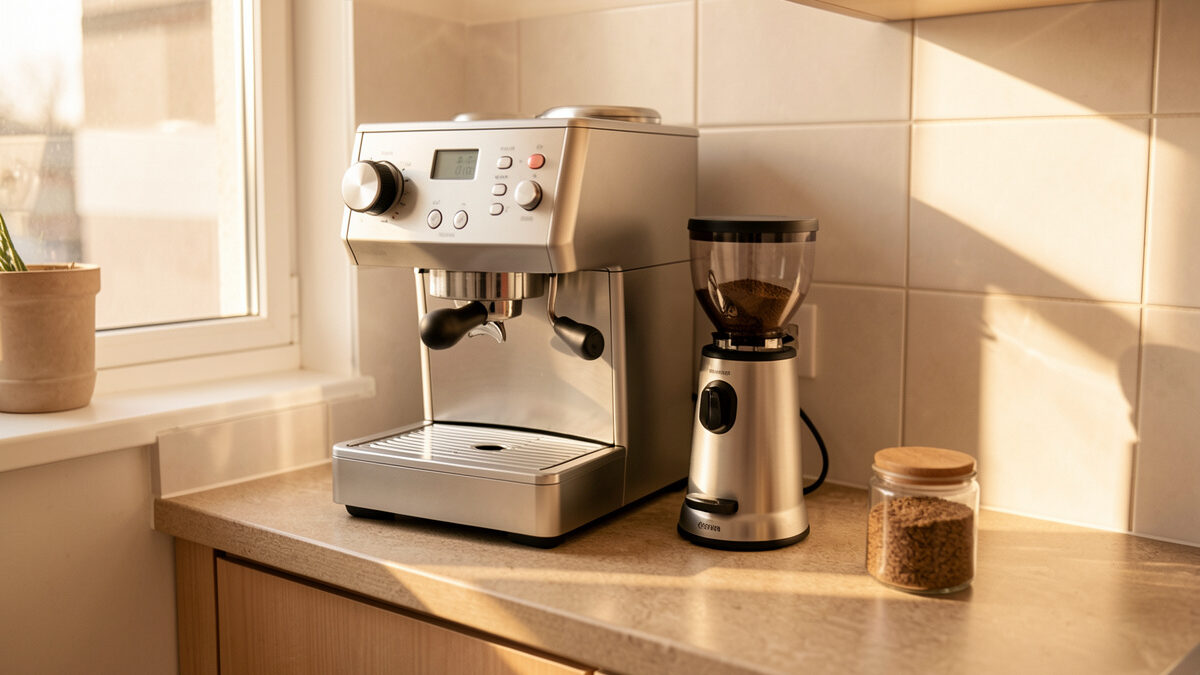
The best espresso machine for a small kitchen is a fast-heating thermoblock machine with a footprint under about 8 inches wide, like the Breville Bambino class, paired with a single-dose grinder that does not store beans on the counter. In a small kitchen, footprint, depth, and heat-up time decide the right machine more than boiler type does.
This is a planning problem before it is a shopping problem. I have set up espresso on cramped counters more than once, and the machines that win are never the most impressive ones. They are the ones that fit, heat fast, and pair with a grinder that disappears when you are done. Get the spatial plan right first, then choose within what actually fits.
What Is the Best Espresso Machine for a Small Kitchen?
For a small kitchen, a compact thermoblock machine such as the Breville Bambino class is usually the best choice, because it takes a footprint roughly 8 inches wide, heats in under a minute, and steams enough for one or two milk drinks. Its small mass is an advantage here, not a compromise.
The thermoblock design heats water on demand rather than keeping a large boiler hot, which means a smaller body and near-instant readiness, both of which matter enormously when counter space and patience are limited. A single boiler like the Gaggia Classic also fits many small kitchens and is more serviceable, but it heats slower and runs a little larger. Either makes excellent espresso; the small-kitchen tiebreaker is usually footprint and heat-up speed, and the thermoblock tends to win both.
There is a subtle quality-of-life angle that matters more in a small kitchen than anywhere else: how the machine vents heat and where the water goes. A machine wedged into a tight corner needs a little breathing room around it, and one with a removable drip tray that is awkward to reach becomes a daily irritation when it sits flush against a wall. These are not spec-sheet items, but in a cramped space they shape whether you enjoy the machine or resent it. I always picture the full daily cycle, filling, pulling, steaming, emptying the tray, wiping down, in the exact spot the machine will live, before committing to anything.
Measure Before You Buy: The Three Dimensions That Matter
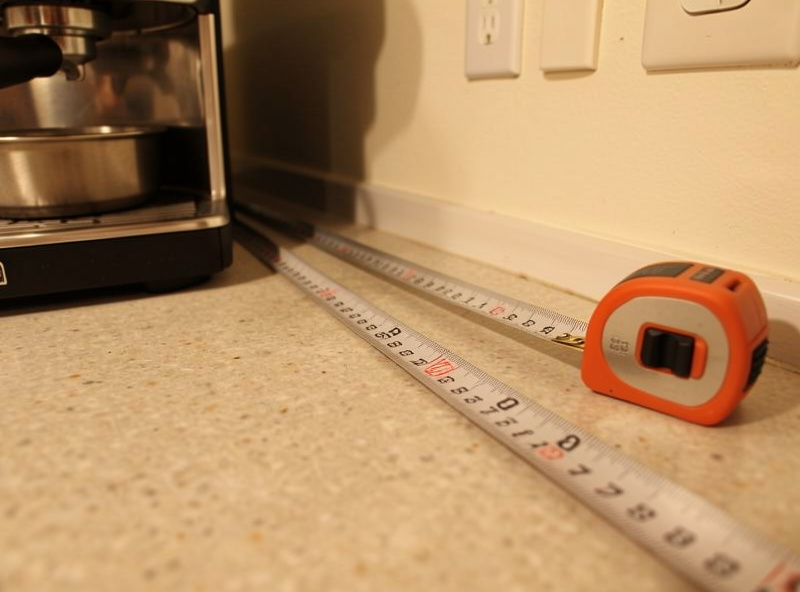
Measure width, depth, and the height needed to fill the water tank or remove it before you buy. Depth is the dimension people forget: many machines need 13-15 inches from the wall plus clearance to swing the portafilter out and lift the lid or tank.
Width is obvious; depth and overhead clearance are the traps. A machine that fits the counter footprint can still be unusable if the water tank lifts out the top and your cabinets sit too low, or if the portafilter cannot swing clear of a backsplash or wall. I always measure from the wall to the front counter edge, check the cabinet height above the intended spot, and confirm there is room to lock and unlock the portafilter comfortably. Five minutes with a tape measure prevents the most common small-kitchen mistake, which is a machine that technically fits but is miserable to actually use.
I learned to respect the depth dimension the hard way, having once set up a machine whose water tank lifted out of the top right where a cabinet hung low. Every refill meant pulling the whole machine forward, which got old fast. The fix would have cost nothing if I had checked the overhead clearance before buying. Now I treat the measurement step as non-negotiable, and I recommend taping out the machine’s footprint on the counter with painter’s tape before ordering, so you can see exactly how much working space is left beside it. It feels fussy until it saves you from a return.
Why a Single-Dose Grinder Wins in Small Spaces
A single-dose grinder is ideal for a small kitchen because it stands narrow, holds no beans in a tall hopper, and lets you store coffee in a sealed bag in a cupboard instead of on the counter. You grind only what you need, so the grinder’s footprint is the only space it costs you.
Hopper grinders are designed to sit full of beans, which means a tall profile and beans living in the open on your counter going stale. A single-doser flips that: you weigh in a single dose, grind it, and the machine takes up minimal width with nothing stored on top. On a small counter that difference is real estate you get back. It also pairs naturally with the dose-and-yield discipline that makes espresso repeatable, since you are already weighing every dose. For tight spaces I reach for a single-doser every time, and a hand grinder for espresso is an even smaller option that needs no counter space at all.
| Space Factor | What to Check | Small-Kitchen Pick |
|---|---|---|
| Footprint width | Under ~8 inches ideal | Compact thermoblock |
| Counter depth | 13-15 inches plus clearance | Measure wall to edge first |
| Overhead clearance | Room to lift tank or lid | Front-fill or removable tank |
| Heat-up time | Faster is better when rushed | Thermoblock under a minute |
| Grinder footprint | Hopper vs single-dose | Single-dose or hand grinder |
Combo Machines: Worth It to Save Space?
An all-in-one machine with a built-in grinder saves counter space but almost always compromises the grinder, which is the worst place to compromise in espresso. For most small kitchens, a separate compact machine and a single-dose grinder beats a combo on cup quality while taking only slightly more room.
The appeal of a combo is obvious when space is tight, and I understand the temptation. The problem is that the built-in grinder is rarely good enough to be the grinder you would have chosen separately, and grind quality is the biggest lever over your cup. You end up saving a few inches at the cost of the component that matters most. If space is so tight that a combo is genuinely the only option, choose one with the best grinder you can, but for nearly everyone a compact machine plus a real grinder is the better small-kitchen answer. Plan them as a single footprint and the space cost is smaller than it looks.
One honest exception: if you truly have only enough room for a single device and you are choosing convenience over the last 15% of cup quality, a good combo is a reasonable, deliberate trade rather than a mistake. The error is buying a combo by default to save space you did not actually need to save. Measure first, confirm a compact machine plus a slim grinder genuinely will not fit, and only then accept the combo’s grinder compromise. Made as a conscious decision with the trade-off understood, it is fine; made by accident, it is the thing people most often regret.
Setting Up Espresso in a Tight Space
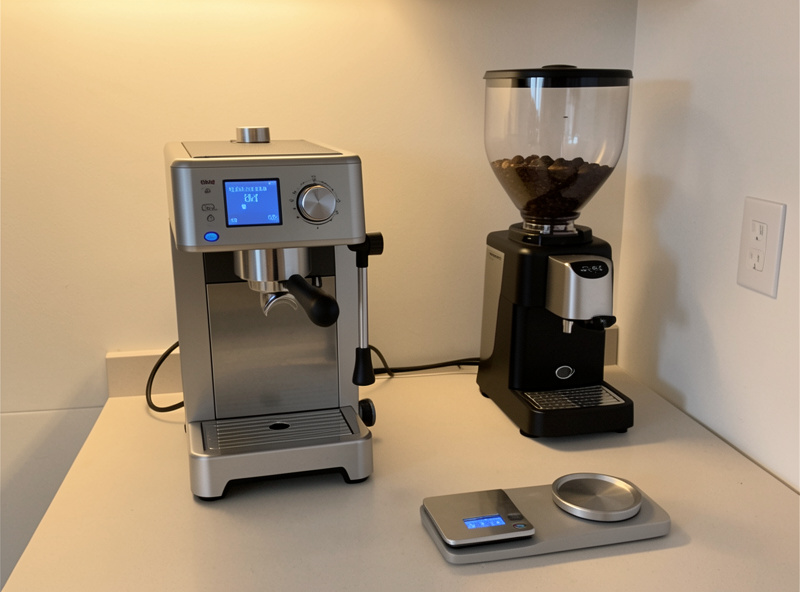
The workable small-kitchen setup is a compact machine, a single-dose grinder, a 0.1g scale, and a small mat to catch grounds, arranged so the portafilter has room to swing and the tank is reachable. Vertical thinking and a tidy workflow matter more than raw counter area.
I keep the footprint disciplined: machine and grinder side by side, scale in front, beans and tools in a nearby drawer, and a small silicone counter mat to corral the mess so cleanup is one wipe. The trick to espresso in a tight space is not finding more room, it is choosing gear that respects the room you have and a workflow that does not sprawl. Done that way, a small kitchen is no barrier at all to genuinely good espresso, and the compactness even encourages the tidy, repeatable routine that makes better shots.
As an Amazon Associate I earn from qualifying purchases.
Frequently Asked Questions
What is the best espresso machine for a small kitchen?
A compact thermoblock machine such as the Breville Bambino class, with a footprint around 8 inches wide and under-a-minute heat-up. Pair it with a single-dose grinder so no beans live on the counter. Footprint and heat-up time matter more than boiler type here.
How much counter depth does an espresso machine need?
Many machines need 13-15 inches of depth from the wall, plus clearance to swing the portafilter out and lift or remove the water tank. Always measure wall to counter edge and check overhead cabinet height before buying.
Are combo espresso machines good for small kitchens?
They save space but usually compromise the built-in grinder, which is the worst component to compromise. For most small kitchens a separate compact machine and a single-dose grinder beats a combo on cup quality for only slightly more room.
Is a single-dose grinder better for small spaces?
Yes. A single-dose grinder stands narrow, holds no beans in a tall hopper, and lets you store coffee in a cupboard. You grind only what you need, so its footprint is the only space it costs, which suits tight counters perfectly.
Can you make good espresso in a small kitchen?
Absolutely. A compact machine, a single-dose or hand grinder, a scale, and a tidy workflow produce espresso as good as any large setup. The compactness even encourages the repeatable routine that makes better shots.