Best Water for Espresso Machines: An Honest Pick
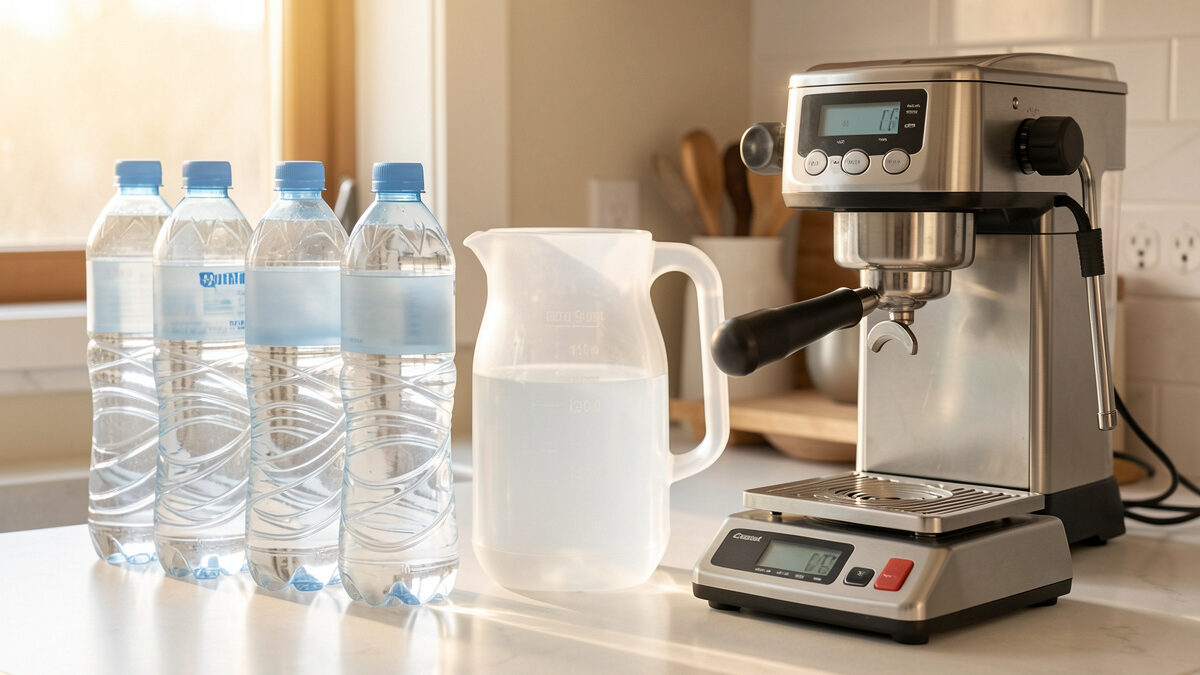
The best water for an espresso machine sits around 50–70 ppm total hardness with a lower alkalinity buffer, near-neutral pH, and low enough bicarbonate that scale forms slowly. On my counter that means either a known-good bottled water or a distilled-plus-minerals recipe — and almost never raw tap water poured in blind.
I have run this comparison the boring, repeatable way: same Nordic light roast, same 18-gram dose, same 1:2 ratio and shot time, swapping only the water and reading the cup against my shot log. “Best” turns out to be a narrow band, not a single magic bottle, and the goal is to land inside it consistently while keeping the boiler clean. This is the practical buyer’s answer that the broader espresso water guide sets up.
What “Best” Actually Means in Numbers
Best water balances two competing jobs: extract flavor and protect the machine. The Specialty Coffee Association target lands near 68 ppm total hardness, about 40 ppm alkalinity, and roughly 150 mg/L total dissolved solids at neutral pH. Hit that band and the shot tastes sweet and clear while scale builds slowly enough to be a once-or-twice-a-year chore. Those are the published targets I aim for; everything below is how to reach them in a real kitchen.
The single most useful selection rule is to watch the bicarbonate (alkalinity) figure, because that is what drives scale and what flattens flavor when it runs high. I want hardness in the target zone and bicarbonate kept modest — ideally below roughly 50 mg/L on a label. Water that is hard and heavily buffered is the worst of both worlds: it scales fast and dulls the cup. Soft water with almost no minerals is the opposite failure — clean but hollow and faintly corrosive.
The Three Sources, Ranked by Effort
There are only three honest answers, and the right one depends on your tap and your patience.
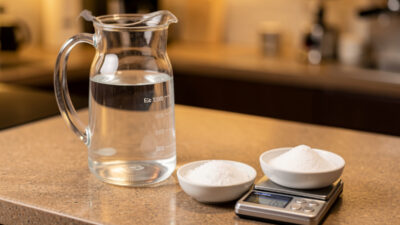
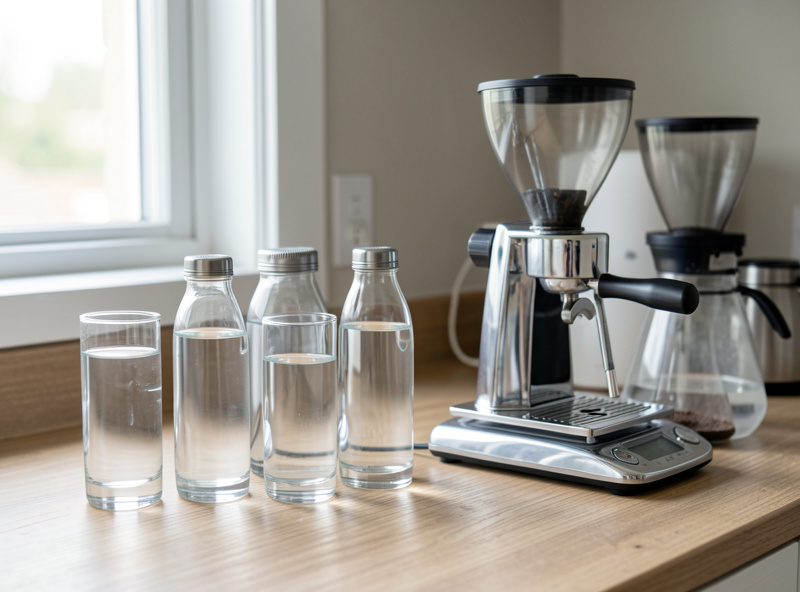
Bottled water is the lowest-effort fix that actually works: find a bottle whose label sits near the target band and pour it. The catch is that bottled water varies wildly — some spring waters are scale bombs — so you choose by the mineral panel, not the marketing. Build-your-own from distilled or reverse-osmosis water plus measured minerals is the highest-control option and the cheapest per liter over time; it is the same instinct that has me logging every shot, applied to the solvent. Treated tap is best when your municipal water is already close — a carbon filter for chlorine and you are done, no chemistry required.
| Source | Effort | Repeatability | Best for |
|---|---|---|---|
| Known-good bottled | Low | Good (until recipe changes) | Anyone wanting a one-step fix |
| Distilled + minerals | Medium | Excellent — identical every batch | Control freaks, sealed dual-boilers |
| Filtered tap | Low (if tap is good) | Varies with your supply | Soft-water regions |
| Raw tap (untested) | None | Unknown — gamble | Nobody who cares |
Why Not Just Use Distilled or RO?
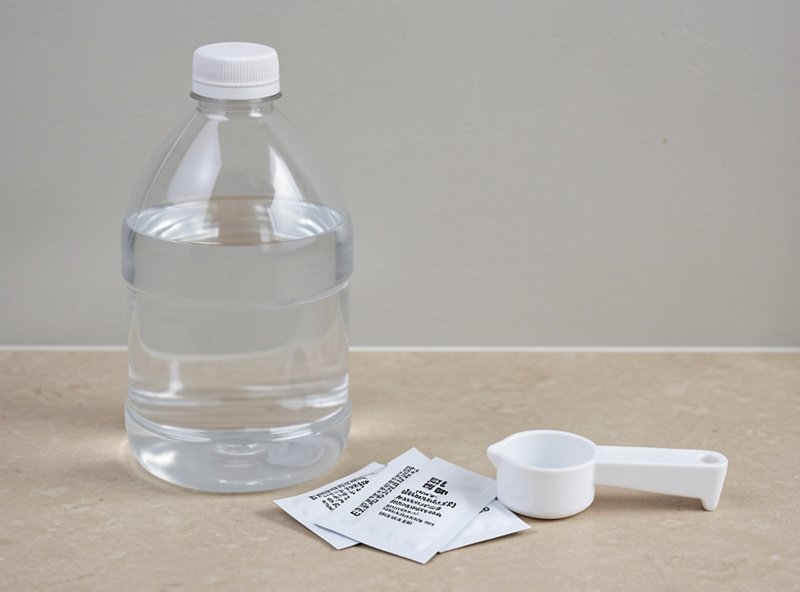
This is the most common shortcut and it backfires. Pure distilled or reverse-osmosis water has almost no dissolved minerals, so two things go wrong at once. In the cup, there is no magnesium to grab onto the coffee acids, so the shot reads hollow and sour no matter how finely you grind — I have tasted it side by side and it is unmistakably thin. In the machine, mineral-starved water is mildly aggressive and can corrode boiler metal and seals over time. Distilled water is a perfect base ingredient and a terrible finished one. If you want the control distilled gives you, add the minerals back with the third-wave water recipe rather than running it neat.
Matching Water to Your Machine
The best water also depends on what it is flowing through. A single-boiler machine like my OPV-modded Gaggia Classic Pro is forgiving and trivial to descale, so you have more latitude — good bottled water and a sensible descaling interval cover it. A heat-exchanger E61 has long, narrow passages that scale loves, and a dual-boiler like the Breville hides its boilers behind electronics where descaling is a real job. On those, prevention wins decisively, which pushes you toward the most consistent water you can make: a remineralized distilled recipe. The blunt rule is that the more your machine costs and the more sealed it is, the more your water is an insurance policy, not a preference. The single boiler vs heat exchanger breakdown explains why the platform changes the math.
How I Actually Choose
My standing answer for most people who do not want a chemistry hobby: test your tap first with a cheap hardness test kit. If it lands in the target band, filter for chlorine and you are finished — the cheapest possible win. If your tap is hard or heavily buffered, pick a known-good bottled water for convenience or build from distilled for control and cost. Whatever you land on, set a descaling cadence that matches it, because even the best water still asks for occasional maintenance — just far less of it. Get the water right and the rest of the chain, from puck prep to dialing, finally tells you the truth about your beans instead of fighting a flawed solvent.
Frequently Asked Questions
What is the best water for an espresso machine overall?
Water near 50 to 70 ppm total hardness with modest alkalinity and near-neutral pH is the best all-round choice. It extracts sweet, clear shots and forms scale slowly. In practice that means a known-good bottled water near the SCA target or a distilled-plus-minerals recipe, not untested tap water.
Is bottled water better than tap for espresso?
Only if your tap is hard or heavily buffered. Some tap supplies are already in the target band and just need a carbon filter for chlorine. Bottled water is better when it lets you pick a known mineral profile, but plenty of bottled waters are too scale-prone, so check the label first.
Can I use bottled mineral water straight from the bottle?
Sometimes. Choose a bottle whose hardness sits near 50 to 70 ppm and whose bicarbonate is modest, ideally under roughly 50 mg/L. Many spring and mineral waters are heavily buffered scale bombs, so the specific label matters far more than the word mineral on the front.
Why does my espresso taste flat with bottled water?
Usually high alkalinity. A heavily buffered water neutralizes the coffee acids and flattens brightness into a dull, beige cup. Switch to a water with lower bicarbonate, or build your own from distilled so you control the buffer directly and keep the fruit and sweetness in the shot.
Does the best water change by machine type?
Yes. A single-boiler machine is forgiving and easy to descale, so good bottled water is fine. Heat-exchanger and sealed dual-boiler machines scale in places that are hard to reach, so the most consistent low-scale water, usually a remineralized distilled recipe, is the safer long-term choice.
Is filtered tap water good enough?
If your tap is naturally soft and lightly buffered, a carbon filter that removes chlorine is genuinely all you need and the cheapest solution. If your tap is hard, a basic carbon filter will not fix the hardness, and you should move to known-good bottled water or a distilled recipe.